
With Obama’s backing, Democrats aim to flip two seats on the Georgia Supreme Court
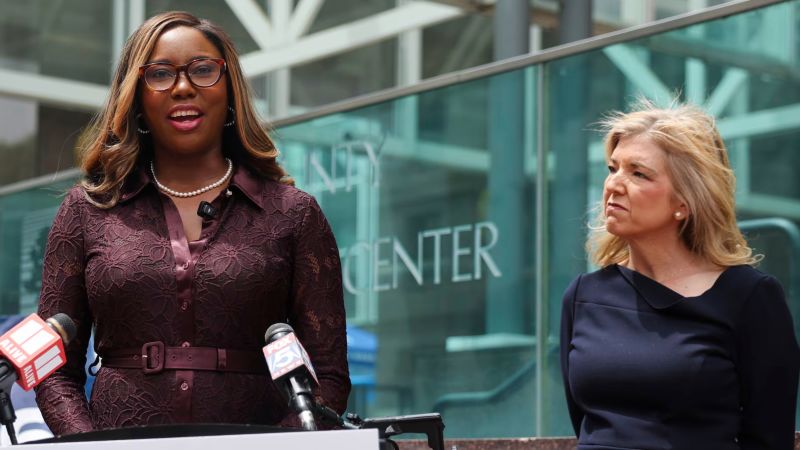
With Obama’s Backing, Democrats Target Georgia Supreme Court Seats
With Obama s backing Democrats aim – The Georgia Supreme Court has long been a less prominent stage in the state’s political landscape, overshadowed by legislative battles and gubernatorial races. However, this year’s election has transformed the court into a focal point of national attention, as two liberal-backed candidates aim to reshape the ideological balance of the judiciary. The contest, set for Tuesday, could signal a significant shift in power, with Democrats targeting two conservative justices in an effort to challenge their dominance. This strategic move comes amid heightened tensions over voting rights and election integrity, themes that have dominated headlines in recent years.
The Candidates and Their Supporters
At the heart of the race are former state Senator Jen Jordan and personal injury attorney Miracle Rankin, both running against established justices. Jordan, who previously served in the state legislature, faces Sarah Warren, the current presiding justice. Rankin, a first-time candidate, is challenging Charlie Bethel, a justice known for his support of strict voting laws. The court’s third seat, however, remains unopposed, with Justice Benjamin Land securing a position as a safe incumbent.
Barack Obama, the former president, has thrown his weight behind Jordan and Rankin, a decision that has amplified their campaigns. His endorsement carries considerable influence, particularly among younger voters and progressive activists. Meanwhile, Governor Brian Kemp, a two-term Republican leader, has rallied behind the current justices, his leadership PAC contributing $500,000 to their cause. Kemp’s backing underscores his belief in maintaining a conservative majority on the court, which he argues is essential for upholding election standards and legal consistency.
The Ideological Battle and Future Implications
Currently, eight of the nine justices on the Georgia Supreme Court were appointed by Republican governors, including Kemp. If Jordan and Rankin succeed in Tuesday’s vote, the court could see its first Democratic majority in a generation. This development would have ripple effects, particularly in 2028, when three more GOP-appointed justices are up for reelection. A shift in the court’s composition could alter the trajectory of legal decisions affecting voting rights and redistricting efforts.
Recent high-profile election litigation has placed the Georgia Supreme Court under a magnifying glass, with its rulings shaping the outcomes of presidential elections and state-level political battles. The court’s decisions on the 2020 election, voting law regulations, and the prosecution of former President Donald Trump have become touchstones for national debates over electoral fairness. Now, the question of who controls the court has taken on even greater urgency, as the U.S. Supreme Court’s decision in Louisiana v. Callais has weakened a key provision of the Voting Rights Act, paving the way for a new wave of redistricting initiatives.
Political Stakes and Campaign Dynamics
The Callais ruling has intensified the stakes of the Georgia race, as state courts are now poised to play a decisive role in approving new electoral maps. Kemp has already called for a special legislative session to address redistricting, emphasizing the need for a conservative judiciary to safeguard the integrity of voting procedures. “This is a moment where the state courts become the battleground for the future of our democracy,” he stated, calling on voters to prioritize the incumbents.
Meanwhile, the Democratic candidates have framed their campaigns as a defense of equitable representation. Jen Jordan, who expressed surprise at Obama’s endorsement, described the former president’s involvement as a “heavy lift” that highlighted the importance of the race. “I was blown away,” she said, recounting how a brief social media notification led to a sense of validation for her efforts. “He’s always understood the bigger picture, and it’s humbling to have that kind of support.” Miracle Rankin, echoing Jordan’s sentiment, emphasized the personal impact of the contest, stating, “This is about ensuring our state court reflects the values of fairness and transparency that voters demand.”
Charlie Bailey, the chair of the Georgia Democratic Party, noted that the campaign marks a pivotal moment for the party’s strategy. “This is the first time we’ve gone on offense in a state supreme court race,” he said, citing the success of defeating two incumbents on the Public Service Commission last fall as a sign of growing momentum. The $4 million spent on advertising in the race reflects a deliberate push to sway public opinion, though the spending is evenly split between the candidates and their opponents. This parity underscores the high stakes, with both sides recognizing the potential for a paradigm shift.
Partisan Criticism and Judicial Independence
Kemp’s remarks have drawn sharp criticism from the Democratic side, who argue that the race has become a tool for politicizing the judiciary. “It’s unfortunate the other side is turning a nonpartisan race into a partisan spectacle,” Kemp said, defending the current justices’ bipartisan appeal. He claimed that Warren, in particular, enjoys broad support due to her dedication to impartiality, a stance he believes is under threat from increased outside funding.
Heath Garrett, a spokesperson for Justice Sarah Warren, echoed Kemp’s sentiments, describing the campaigns as an attack on Georgia’s judicial independence. “The court has always been a neutral arbiter, but now it’s being weaponized,” Garrett said. “Justice Warren’s commitment to fairness is what makes her a unifying figure, not a partisan choice.” This contrast between the candidates’ messaging highlights the broader divide over the role of the judiciary in shaping political outcomes.
Broader Context and National Relevance
The Georgia race is part of a larger trend, with swing states like Pennsylvania and Wisconsin also witnessing surging interest in Supreme Court elections. Last year, these races saw tens of millions in campaign spending, including notable appearances by figures like Elon Musk in Wisconsin. Democrats have achieved notable victories in these states, with candidates winning in both Pennsylvania and Wisconsin. However, Georgia’s race, while significant, has not yet reached the same financial level, though the $4 million invested in ads demonstrates the seriousness of the contest.
For Georgia voters, the election represents a critical juncture in the state’s political evolution. The court’s role in recent election disputes has made it a symbol of the fight over voting rights and constitutional principles. As the nation grapples with the implications of the Callais decision, the outcome in Georgia could set a precedent for how state courts navigate the intersection of law and politics. The stakes are clear: a win for the Democrats could signal a new era of judicial oversight, while a victory for Kemp’s allies would reinforce the status quo.
With the election looming, the debate over judicial independence continues to intensify. The Georgia Supreme Court’s decisions in the past year have not only influenced the outcome of the 2020 election but have also shaped the legal framework for state-level voter suppression efforts. The current race is seen as a test of whether the court can remain a bastion of impartiality or become a casualty of partisan strategy. As voters cast their ballots, the long-term implications for the judiciary and the nation’s democratic processes will be closely watched.
