
A crocodile crushed this diver’s only functional arm. He returned to the water to fight plastic pollution
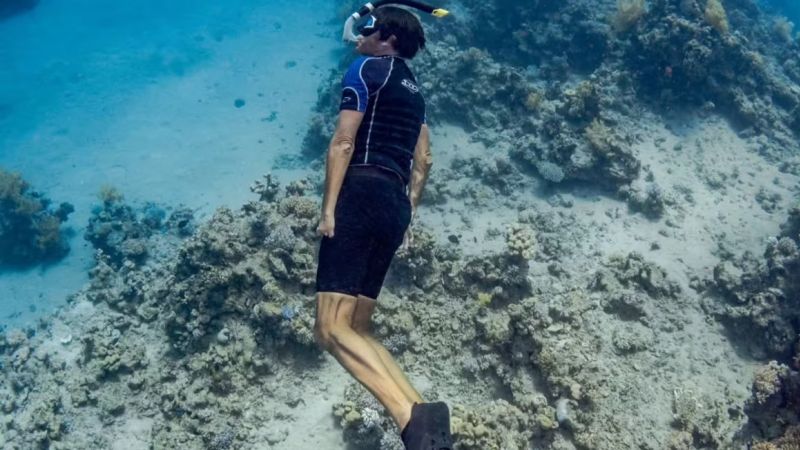
A crocodile crushed this diver’s only functional arm. He returned to the water to fight plastic pollution
EDITOR’S NOTE
A crocodile crushed this diver s only – Call to Earth is a CNN editorial series dedicated to uncovering the environmental challenges threatening our planet and spotlighting the efforts to address them. Rolex’s Perpetual Planet Initiative collaborates with CNN to amplify awareness and education on critical sustainability issues, encouraging meaningful change.
That morning in Botswana’s Okavango Delta, the water was eerily still. Belgian diver Alain Brandeleer, accustomed to navigating vast aquatic expanses, had no reason to fear the calm. He was seeking new frontiers in the ocean, pushing himself to swim with sharks across continents — even great whites, without a cage. Yet, the adrenaline that once fueled his adventures had dulled over time. As he reflected, a question lingered: what would follow if the thrill of risk faded?
On September 6, 2012, that question found its answer in a violent, unexpected way. The water turned murky in an instant, and Brandeleer’s world shifted. He felt a firm grip on his legs, something foreign and strong. At first, he assumed it was a current or a passing creature, but the realization struck quickly. A crocodile had ensnared him, its jaws clamping down on his right arm with crushing force. One of his companions, grasping his oxygen tank, held him steady for over a minute, a lifeline in the chaos. Brandeleer later described how that grip was pivotal: “If he had let go for a second, I was dead,” he said.
Hours later, medics arrived to assess his condition. Brandeleer lay in a helicopter, his mind racing. He couldn’t confirm if his arm was still intact. “I could feel the arm, but I didn’t know if it was there or not,” he recalled. The wetsuit clung to his body, keeping it in place. Doctors decided an amputation was necessary, and the decision felt like a severing of identity. Brandeleer had been born with a left-hand atrophy, a condition that shaped his early life. He had learned to adapt, to move past the limitation and redefine his capabilities. But this was different — this arm had been his only fully functional one.
Rebuilding a Life in the Water
Brandeleer’s resolve was tested. The idea of amputation loomed, but he refused to let it define him. “If that was the only option, I would rather not wake up from the anaesthesia,” he told the doctor, a statement that surprised him even now. It wasn’t just about survival; it was about responsibility. For years, he had supported his father through difficult times, carrying emotional and financial burdens. That experience made him promise himself he would never place his son in the same position.
Despite the risk of infection, surgeons opted to attempt saving the arm. Brandeleer’s recovery was arduous, marked by surgeries, setbacks, and a slow return to movement. He trained daily, adjusting his techniques and relearning how to move through water. The physiotherapist guided him through basic motions, a gradual process of rediscovering his body. But his determination extended beyond personal healing. The ocean, once a source of freedom, had become a canvas for a new mission: confronting the invisible threat of plastic pollution.
Brandeleer’s journey through the Red Sea, the Mediterranean, and remote corners of the globe revealed a startling truth. Even in pristine waters, plastic waste accumulated on shores, drifted beneath the surface, and blended with marine life. “Plastic was everywhere,” he said, his voice steady. “It wasn’t just an obstacle — it was a part of the ecosystem.” This realization reshaped his purpose. The water, which had once been his domain, now demanded more than physical endurance. It required advocacy, awareness, and action.
Months after the attack, Brandeleer set his sights on a symbolic goal: swimming the Strait of Gibraltar. The 8-mile passage, a test of strength and will, became a metaphor for his resilience. He completed it in 2015, three years after the crocodile’s grip. But the journey didn’t end there. In 2023, he swam between Corsica and Sardinia, each crossing a testament to his determination. “Every swim was a way to reclaim who I was,” he explained. “Not just a diver, but someone who had faced loss and chosen to rise.”
His transformation from athlete to environmental warrior was both personal and global. The ocean, which had nearly taken his life, now inspired him to protect it. Brandeleer’s story intertwined with the broader fight against plastic waste, a battle he believed was as critical as the one he had survived. “The sea is a mirror,” he once said. “It reflects our care for the planet. If we neglect it, it will take us down.”
A New Chapter in the Water
Today, Brandeleer continues his work, combining physical challenge with environmental activism. His swims are not just feats of endurance but campaigns to highlight the plastic crisis. In the Okavango Delta, where the attack began, he now leads efforts to clean waterways and educate communities. The crocodile, once an adversary, has become a symbol of nature’s power and the fragility of human connection to it.
Brandeleer’s journey underscores the resilience of the human spirit. The loss of his arm was a profound setback, but it also ignited a new purpose. He no longer saw the ocean as a place of escape, but as a battleground. “The water was my freedom before, but now it’s my responsibility,” he said. This shift in perspective has fueled his advocacy, bringing attention to the unseen dangers that threaten marine life and ecosystems worldwide.
His story resonates with those who face adversity and choose to transform it into purpose. The crocodile attack was a defining moment, but it was the aftermath — the long hours in a helicopter, the uncertainty of his fate, and the promise to his son — that shaped his legacy. Today, as he swims across the globe, Brandeleer carries the weight of his past and the hope of a cleaner future. “I didn’t just survive the attack,” he said. “I survived the question it raised: what comes next?”
Brandeleer’s experiences also highlight the interconnectedness of environmental issues. The plastic pollution he witnessed during his travels is part of a larger crisis, one that demands collective action. From the Okavango Delta to the English Channel, the challenges are vast, but so is the potential for change. His story serves as a reminder that even in the face of danger, humanity can adapt, endure, and fight for the world it loves.
In the years since the attack, Brandeleer has become a beacon of hope. His swims are more than personal milestones; they are calls to action. The ocean, once a place of risk, now symbolizes recovery and renewal. As he pushes himself through the water, he does so with the understanding that every stroke is a step toward healing the planet. “The sea isn’t just a place to conquer,” he said. “It’s a place to protect.”
