
Supreme Court puts off fight over who can sue to enforce what’s left of the Voting Rights Act
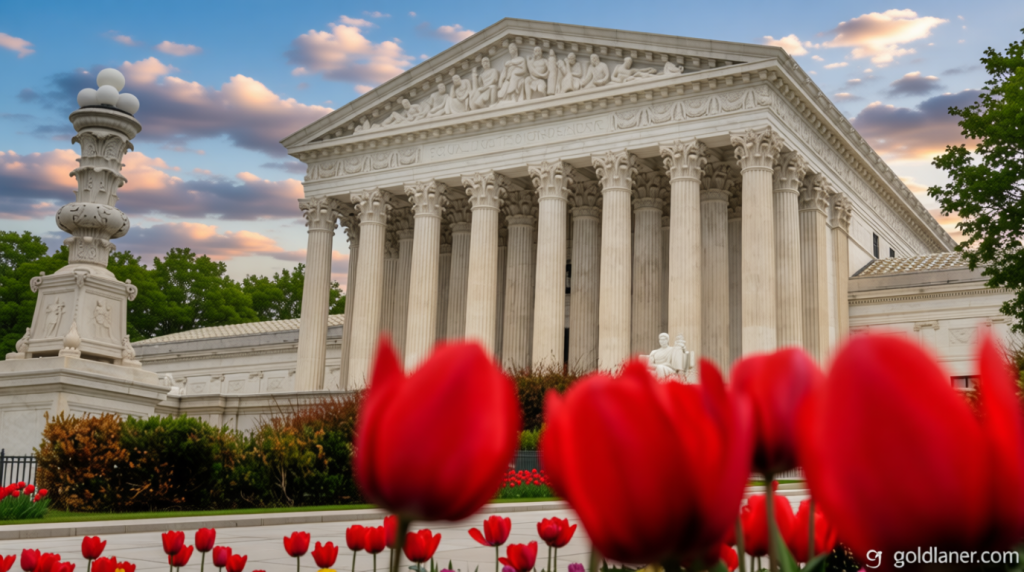
Supreme Court Delays Fight Over Voter Lawsuits
Supreme Court puts off fight over the legal rights of individuals to challenge voting laws under the Voting Rights Act. In a recent ruling, the justices decided to send two cases back to lower courts, leaving the central question unresolved: who can file lawsuits to enforce the VRA’s remaining protections. This decision adds to the growing debate about the law’s viability in the face of shifting judicial priorities. With the VRA already weakened by prior rulings, the court’s choice to delay a final ruling could have significant implications for the future of voting rights litigation in the United States.
Conservative Jurisprudence and Legal Ambiguity
The Supreme Court’s decision to defer the issue underscores the conservative majority’s cautious approach to the VRA’s enforcement mechanisms. By allowing lower courts to determine the scope of individual legal action, the justices have introduced a new layer of ambiguity. This approach aligns with their previous rulings that have steadily narrowed the law’s applicability, particularly in cases involving redistricting. The ruling raises questions about whether the VRA will continue to serve as a shield against discriminatory practices or be sidelined by a more restrictive interpretation of its provisions.
Justice Ketanji Brown Jackson, a vocal advocate for the law’s broad application, expressed dissent, emphasizing the need for immediate clarity. She argued that the VRA’s cause-of-action clause should empower individual voters to challenge voting restrictions directly, ensuring that the law remains a robust tool for justice. In contrast, the majority opinion, led by Chief Justice John Roberts, prioritized procedural deference, signaling a preference for letting state and local courts shape the law’s enforcement framework. This divergence highlights the ideological divide within the court and its impact on the VRA’s future.
Redistricting Battles and Legal Precedent
The cases now returning to lower courts revolve around redistricting disputes in Mississippi and another state, where voters and the Justice Department have clashed over who holds the authority to enforce the VRA. In one case, a Mississippi court had previously ruled in favor of individual enforcement, while the 8th U.S. Circuit Court of Appeals held the opposite view. By remanding these cases, the Supreme Court has effectively handed the responsibility to lower courts to resolve this conflict, creating a potential precedent that could redefine the VRA’s role in protecting voting rights.
Legal experts warn that this delay may allow states to exploit the uncertainty in their favor. The VRA’s provisions, which once required federal oversight for changes to voting districts, have been increasingly challenged. The recent rulings have raised the bar for proving discriminatory intent, making it harder for plaintiffs to succeed. As the lower courts grapple with these questions, the outcome could determine whether the VRA remains a powerful instrument for combating voting discrimination or becomes a relic of the past.
Enforcement Shifts and Advocacy Concerns
Supreme Court puts off fight over the VRA’s enforcement has also sparked concerns about the federal government’s role in safeguarding voting rights. Under the current administration, the Justice Department has shown less willingness to intervene in voting disputes, a trend that aligns with the Supreme Court’s broader skepticism of the law. This shift has left many advocates worried that the VRA may become a tool for partisan advantage rather than a shield against systemic inequality.
Despite these challenges, the VRA continues to play a critical role in maintaining voting access. Its provisions have historically been used to challenge restrictive measures, such as voter ID laws and gerrymandering. However, the Supreme Court’s reluctance to finalize enforcement rules has created a legal vacuum, forcing lower courts to interpret the law with limited guidance. This ambiguity could shape the trajectory of voting rights litigation for years to come, depending on how the courts navigate the issue.
