
Dodging the drones: Aerial attackers stalk Ukrainian troops, and a CNN team, on a key road to the front
Dodging the Drones: Aerial Attackers Stalk Ukrainian Troops and a CNN Team on a Critical Frontline Route
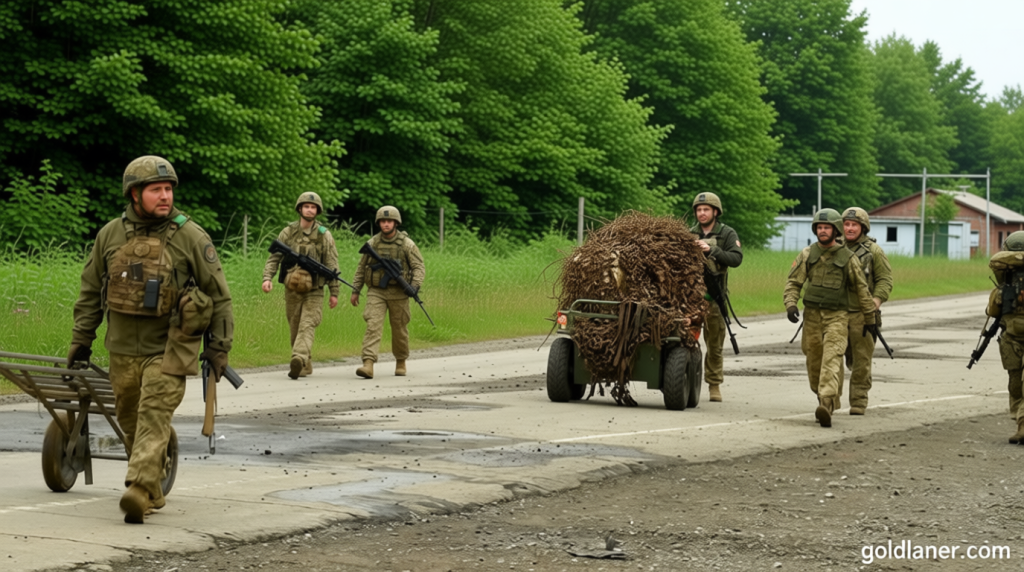
Dodging the drones – The “Road of Life,” a vital artery for Ukrainian forces in the eastern Donbas, is far from its namesake. This stretch of asphalt between Druzhkivka and Kostyantynivka is now a battleground of its own, riddled with craters and dotted with the remnants of vehicles reduced to smoldering wreckage. The road is covered in protective netting, a measure designed to deter Russian drones, yet its purpose remains unchanged: survival. Despite its name, it is not a path of hope but one of constant vigilance, where every step is a gamble against the unseen threat above.
Aerial Dominance and the New Frontline
Drone warfare has transformed the nature of conflict in Ukraine, placing Russia’s aerial prowess at the heart of the war’s dynamics. The enemy’s relentless attacks have forced Ukrainian troops to abandon their usual methods of movement, relying almost entirely on foot. This shift has made the road a dangerous corridor, where the hum of drones is as constant as the sound of gunfire. The Ukrainian soldiers, often exhausted from months of static combat, must navigate this treacherous terrain with split-second precision, knowing that even a moment’s hesitation could spell disaster.
The CNN team, accompanied by Kosta, Sasha, and Bohdan from the 24th Mechanized Brigade, ventured along this route to document the challenges faced by frontline troops. What was initially planned as a brief hour-long journey became a five-hour ordeal, with at least 14 drone strikes or near-misses shaking the group’s confidence. The first attack struck unexpectedly, just after a rare pair of tanks had passed, their tracks still fresh on the road. The drones’ buzz was followed by the crack of gunfire, as Ukrainian forces hidden in the woods and shattered houses opened fire at the sky, their movements a blur in the overcast atmosphere.
Tactics and the Cost of Survival
Every encounter with a drone demands a response. The team was instructed to seek cover in the foliage, where the drones’ flight paths are limited. But the protective netting that spans the road—a barrier meant to shield troops from aerial attacks—becomes an obstacle when movement is necessary. Sasha and Kosta, more confident in open terrain, fired from the road’s edge, their rifles and shotguns a testament to the immediate danger. One drone, its explosive payload striking the tarmac about 500 feet away, tumbled into the asphalt without detonating. Whether it was a reconnaissance model or a combat drone, the incident underscored the constant threat posed by Russian technology.
The team’s experience mirrored the daily struggles of Ukrainian forces. After passing the charred remains of a pickup truck struck two days earlier, they encountered a group of frontline soldiers who had emerged from weeks of relentless assaults. These troops, visibly drained, carried supplies via small robotic trucks, their faces obscured by grimy hands to avoid the camera. The air was thick with the sound of drones, a reminder that even in the quiet moments, the war remains an ever-present force.
Human Instincts Under Fire
The dominance of drones has also reshaped human behavior on the battlefield. Traditionally, soldiers would gather in groups for security, but now, splitting up is safer. Being alone reduces the likelihood of becoming a target for Russian pilots, who rely on targeting systems to identify and strike clusters of personnel. This psychological shift has turned the road into a chaotic dance of evasion, where even the act of walking is a calculated risk.
As the CNN team pressed on, the drone’s ubiquitous hum became harder to distinguish—was it the sound of their own nerves, or the relentless presence of the enemy? The initial adrenaline of the attacks faded, replaced by a weariness that settled over the group like a shroud. Yet, the danger never truly receded. A radio warning echoed through the air, prompting the team to scatter once more, their senses hyperaware of the skies. The drone’s shadow passed overhead, a silent predator that could strike at any moment.
Technology and Strategy: A Double-Edged Sword
The technological shift in warfare has given Ukraine a temporary advantage, allowing it to withstand Russia’s overwhelming numbers. Drones, with their precision and persistence, have redefined the battlefield, turning once-static front lines into dynamic zones of uncertainty. Armor, once the symbol of protection, is now a prime target, its vulnerability a stark reminder of the evolving tactics. The Ukrainian forces’ ability to adapt—whether by hiding in the trees or using makeshift defenses—has become their survival strategy.
Yet, this reliance on technology comes with its own costs. The need to move constantly, to avoid being caught in the open, has led to a kind of battlefield fatigue. Troops must juggle the threat of drones with the challenges of traditional warfare, such as artillery bombardments and enemy advances. The road, a lifeline for resupply, is now a symbol of the war’s technological and psychological toll. For every drone that is shot down, another takes its place, ensuring that the struggle for dominance in the skies continues unabated.
“The drones are everywhere,” said Afina, a 25-year-old technical operator, as she greeted the CNN team at a bunker just minutes from their starting point. “We can’t relax, even for a second. The moment you think you’re safe, the next strike comes.” Her words, delivered in a steady tone, captured the unyielding reality of life on the front. The bunker, a modest shelter with tea and water, offered a brief reprieve but no true respite from the war’s unrelenting pace. Afina, like many of her comrades, had become accustomed to the constant hum of drones, a sound that now defines their existence.
A Legacy of Loss and Resilience
As the team walked past the burned-out remains of a pickup truck, they remembered the soldiers who had perished in similar circumstances. Roman, a unit lieutenant, had died in the very spot they now passed, his death a casualty of the drone’s relentless strike. The road, though a symbol of hope, is also a graveyard of those who failed to outrun the enemy’s aerial assault. Yet, the Ukrainian forces continue to push forward, their resilience unbroken by the weight of loss.
The battle for the “Road of Life” is not just a physical one but a psychological one. It represents the war’s transformation into a realm where technology dictates survival, and where every decision carries the risk of being targeted. For now, Ukraine holds its ground, but the question remains: how long can this balance last? As the drones continue their silent march across the sky, the road remains a testament to the ingenuity and grit of those who fight to keep it open.
“Russia’s winning streak in Ukraine is over,” said Afina, her voice steady as she poured tea. “We’re learning to live with the drones, but they’re still the biggest threat. If they keep coming, we’ll have to find a way to stop them, no matter the cost.”
The journey along the “Road of Life” is a microcosm of the war itself—a blend of chaos, calculation, and determination. As the CNN team’s five-hour trek came to an end, the road behind them was a patchwork of destruction and endurance, each crater a story of survival. The drones, now the masters of the skies, continue to test the limits of human resilience, but the Ukrainians, armed with ingenuity and courage, stand firm. For them, the road is not just a path to the front; it is a lifeline in the face of relentless aerial aggression.
