
Meet ‘the Crab’: Why the US keeps talking with Raul Castro’s bodyguard grandson
Meet ‘the Crab’: Why the US keeps talking with Raul Castro’s bodyguard grandson
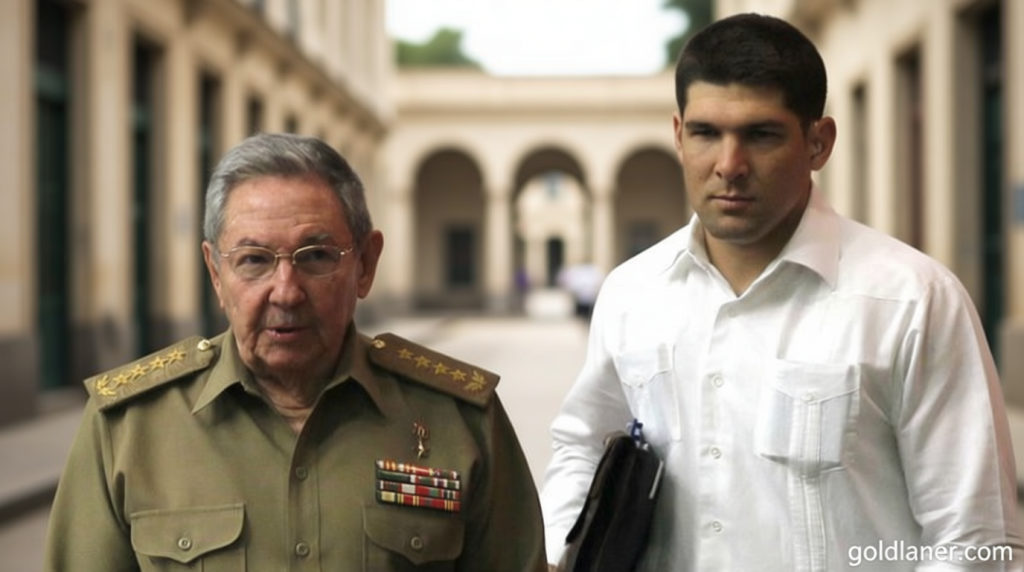
Meet the Crab – In the spring of 2016, as French officials celebrated the arrival of Raúl Castro, the Cuban leader’s visit to Paris took an unexpected turn. During a state event, photographers frantically hollered, “Bodyguard!” at the man trailing the elder Castro. The moment, captured in a blur of confusion, became a viral meme among French comedians. Yet, for this particular bodyguard, the mishap was not a scandal but a sign of his growing influence. His name, Raúl Guillermo Rodríguez Castro, has quietly surfaced in international diplomacy, defying expectations as he steps into the spotlight under a different title: “the Crab.”
The Paris Incident and the Birth of a Moniker
The incident in Paris highlighted the unorthodox nature of Rodríguez Castro’s position. As the elder Castro, now 94, walked the red carpet, the younger Castro remained a step behind, a silent figure in a world of flash. When the photographers’ frustration boiled over, they mistakenly targeted the younger man, not realizing he was part of the Castro family. The nickname “El Cangrejo,” meaning “the Crab,” was born from that moment, a playful jab that stuck in public memory. Though the term is often used in jest, it underscores the unique status of this individual within Cuba’s political hierarchy.
For over a decade, Rodríguez Castro has functioned as a critical link between the Castro family and the Cuban state. As a colonel in the Interior Ministry, he serves not only as a bodyguard but also as a gatekeeper, ensuring that the elder Castro’s public appearances are smooth and secure. His role extends beyond physical protection; he acts as a conduit for information, whispering names of officials into his grandfather’s ear during receptions and alerting him to the presence of foreign journalists in key moments. This behind-the-scenes influence has allowed him to shape the narrative of Cuba’s political scene without seeking the limelight.
A Shadow Behind the Throne
Cuba’s tightly controlled media rarely mentions Rodríguez Castro’s name, keeping him in the background where he belongs. His family connection, however, grants him privileges far beyond those of an average military officer. In Havana’s upscale dining spots, he is a familiar face, often seen in luxury vehicles with a personal security detail. Social media leaks reveal glimpses of his life: private yacht cruises, nights at high-end discos, and a taste for the finer things that most Cubans can only dream of. These indulgences, while modest compared to the Castro family’s wealth, highlight the perks of his position.
Despite his status, Rodríguez Castro remains a figure of intrigue. During the tense period of US-Cuba relations, his role as an intermediary with the Trump administration has taken on new significance. Reports indicate he met with CIA chief John Ratcliffe in Havana, a development that surprised even seasoned observers of Cuban politics. This shift from shadow to spotlight marks a rare opportunity for the younger Castro to influence the island’s future, challenging the notion that his family’s grip on power is unshakable.
The Bodyguard’s Unlikely Role
At a time when the US seeks to reshape Cuba’s socialist economy, Rodríguez Castro’s presence in negotiations signals a potential new chapter. His grandfather, Raúl Castro, has long been a symbol of stability, but the younger Castro’s willingness to engage with American officials suggests a generational change. This subtle but meaningful pivot has not gone unnoticed. “He wants positive changes for Cubans,” said Sandro Castro, the bodyguard’s second-cousin, during a March interview. Sandro, who runs a nightclub and champions a deal with the Trump administration, described his cousin as a man of contrasts: a military officer with a penchant for luxury, yet one who shares his vision for economic revitalization.
Their relationship, though rooted in family, is marked by distinct paths. Sandro and Rodríguez Castro, though close in age and part of the same political lineage, grew up separately and rarely intersect. “Raulito has his life, and I have mine,” Sandro remarked. Yet, he acknowledged their mutual respect, noting that the younger Castro’s dedication to his grandfather has earned him unwavering trust. “He has risked his life for him,” Sandro explained, “which is why they’ve given so much confidence to his efforts.”
The Crab’s Privileges and Lifestyle
Rodríguez Castro’s position grants him access to a world of privilege. While his grandfather’s leadership is tied to Cuba’s political legacy, the younger Castro’s lifestyle reflects a blend of tradition and modernity. His sixth finger, a unique physical trait, has become a symbol of his dual identity—both a Castro and a man of personal flair. This quirk, once a source of amusement, now serves as a reminder of his family’s enduring presence in Cuban society.
Leaked videos of his life in Havana reveal a different side of the Castro family. In one clip, he is seen driving a new SUV, another in which he relaxes on a private yacht, and yet another partying in a discotheque. These images contrast sharply with the austere image of Cuba’s communist regime, showcasing a level of comfort that few outside the Castro inner circle experience. While such luxuries are standard for the family, they also highlight the growing influence of the younger Castro’s circle, who are increasingly shaping the island’s trajectory.
A Family Legacy of Power
Rodríguez Castro’s background is as intertwined with power as his family name. He is the son of Raúl Castro’s daughter, Deborah, and Luis Alberto López-Calleja, a former general and head of GAESA, the military conglomerate that controls much of Cuba’s economy. This legacy of control and privilege has positioned him uniquely to bridge the gap between the US and Cuba. As negotiations with the Trump administration continue, his role may expand beyond security to include economic diplomacy, offering a glimpse into the future of the island’s leadership.
With his grandfather’s retirement, the younger Castro has found himself at a crossroads. While the elder Castro’s policies have long shaped Cuba’s direction, the younger Castro’s approach hints at a more flexible future. “He’s cool,” Sandro Castro noted, “and he isn’t a communist either. He wants things to open up, too.” This sentiment, though understated, suggests a shift in the Castro family’s strategy—one that could redefine their relationship with the United States and the broader international community.
As the Cuban economy continues to face challenges, Rodríguez Castro’s potential role in mediating with the US offers both opportunity and uncertainty. His ability to navigate the complexities of diplomacy, combined with his family’s political weight, could position him as a key player in Cuba’s evolving landscape. Whether he will be remembered as a symbol of continuity or a harbinger of change remains to be seen, but one thing is certain: the Crab is no longer just a figure in the background.
