
Leading challenger to UK Prime Minister Keir Starmer quits government
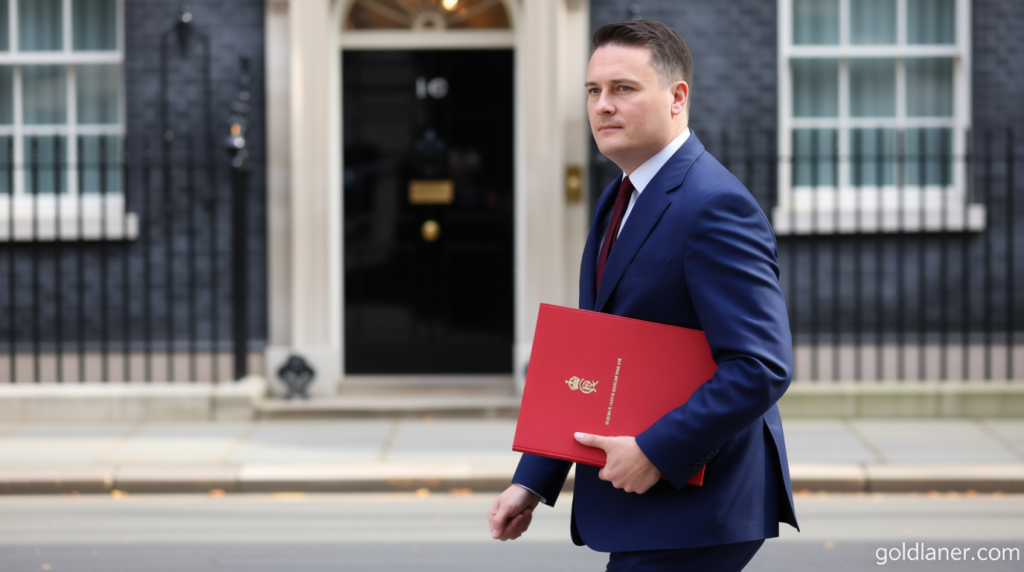
Leading Challenger to UK Prime Minister Keir Starmer Resigns from Government
Leading challenger to UK Prime Minister – Wesley Streeting, the UK’s Health Secretary, has submitted his resignation, citing a loss of confidence in Prime Minister Keir Starmer’s leadership. In a statement released Thursday, he described the decision as both “dishonourable” and “unprincipled,” emphasizing that staying within the government would no longer align with his vision for the nation. The move has intensified speculation about a potential leadership challenge within the Labour Party, though Streeting did not explicitly confirm his intent to run for the top role. His departure marks the first cabinet exit since a wave of dissent began following the party’s recent electoral setbacks.
Electoral Setbacks Spark Internal Turmoil
Streeting’s resignation follows a string of disappointing results in local elections across England, Scotland, and Wales. The Labour Party’s defeat in these contests, which saw nationalist parties and Reform UK gain significant traction, has emboldened a faction of lawmakers to demand Starmer’s resignation. Nearly 90 Labour MPs have publicly called for leadership changes, citing a sense of national disarray and a perceived lack of direction under Starmer’s administration. This internal rebellion has created a vacuum of confidence, with Streeting now positioning himself as a key figure in the growing unrest.
In his letter to Starmer, the health secretary underscored the impact of recent elections, describing the rise of nationalist and right-wing forces as a “threat to the unity of the United Kingdom.” He pointed to the success of Nigel Farage’s Reform UK in England and the nationalist parties in Scotland and Wales as evidence that the public is no longer aligned with Labour’s progressive agenda. “The elections have exposed a fracture in our party’s identity,” Streeting wrote, arguing that the Labour leadership must reassert its core values to avoid fragmentation. His critique extends to Starmer’s leadership style, which he claims has left the party “directionless” and “drifting” in an increasingly polarized political landscape.
Starmer’s Defense and the Road Ahead
Keir Starmer, addressing the resignation in a written response to Streeting, expressed regret over the departure but reaffirmed his commitment to the Labour Party. “The last general election left the country disillusioned with the chaos of the Conservative years,” he wrote, stressing the importance of stability. Starmer’s government has been tasked with reversing the damage of the previous administration, and he emphasized that leadership changes could disrupt this progress. “We must deliver on our promises,” he said, “including the promise to move beyond the instability that defined the last decade.”
Despite Starmer’s assurances, Streeting’s exit has raised concerns about the party’s ability to maintain cohesion. His departure comes as the government prepares for the 2029 general election, a moment Streeting believes Starmer is ill-prepared to lead. “The next election will be a test of our values,” he argued, “and we need a contest rooted in ideas, not personal rivalries.” This sentiment has resonated with some within Labour, who view the leadership crisis as an opportunity to reinvigorate the party’s strategy and messaging. However, critics warn that the focus on personalities could undermine the broader political goals.
NHS Reforms and the Shadow of Past Failures
Streeting’s tenure as health secretary has been marked by efforts to overhaul the National Health Service (NHS), a cornerstone of Labour’s policy platform. Government data released Thursday highlighted a 110,000 drop in NHS waiting lists during March, the largest monthly decline since the early days of the pandemic. This achievement, which Streeting hailed as a “historic milestone,” has been seen as a testament to his leadership in healthcare. Yet, his resignation has sparked debate over whether these gains are enough to counter the growing dissatisfaction within the party.
As health secretary, Streeting inherited a system grappling with years of underfunding and rising demand. His reforms, including investments in staffing and digital infrastructure, have been credited with improving patient access and reducing delays. However, critics argue that the NHS’s challenges remain unresolved, with budget constraints and workforce shortages still threatening its sustainability. “The data shows progress,” Streeting said, “but the broader agenda requires a bold new direction.” His comments suggest a belief that his departure could pave the way for a more dynamic leadership in the upcoming contest.
Other Potential Rivals and the Path to Leadership
While Streeting’s resignation is the most prominent sign of leadership unrest, other figures within Labour are also positioning themselves as possible contenders. Angela Rayner, the former deputy prime minister, recently announced the resolution of a property tax dispute that had led to her earlier resignation. Though the issue appears to be behind her, her return to the political spotlight has fueled discussions about her potential to challenge Starmer. Similarly, Andy Burnham, the mayor of Greater Manchester, has emerged as another potential rival, with his reputation as a pragmatic leader and effective communicator drawing attention.
Streeting’s allies have praised his ability to articulate Labour’s vision, particularly in the context of healthcare. They argue that his departure could signal a shift toward a more cohesive and forward-looking leadership. “Streeting brings clarity and energy to the government,” one supporter noted, “and his exit highlights the urgency of a new direction.” Conversely, his critics accuse him of being overly ambitious, prioritizing personal gain over party unity. “His resignation feels calculated,” one opponent remarked, “and it’s hard to see how it won’t exacerbate the internal divisions.”
The Labour Party’s leadership contest is expected to be a pivotal moment in British politics, with implications for the party’s future strategy and public perception. Streeting’s exit, while not yet triggering the formal process, has set the stage for a broader debate about Labour’s priorities. To initiate a contest, he needs the backing of at least one fifth of Labour MPs, a threshold of 81 lawmakers. With the number of dissenting voices growing, the possibility of a leadership change is now more tangible than ever.
Legacy and the Challenge of Rebuilding Trust
Streeting’s political journey has been defined by both triumphs and controversies. In the 2024 general election, he narrowly retained his parliamentary seat by just 528 votes, a margin that underscored the volatility of Labour’s support. His role as health secretary has since been central to the party’s efforts to rebuild its credibility, particularly after years of Conservative governance. Yet, his resignation has reignited questions about whether Labour can restore its appeal to progressive voters.
“Where we need vision, we have a vacuum,” Streeting declared, “and where we need direction, we have drift.” His words reflect a broader frustration within the party, where many feel Starmer’s leadership has not fully addressed the challenges of the past. The resignation may also serve as a catalyst for a more open debate about Labour’s future, with candidates vying to present a compelling vision for the next election. As the leadership race gains momentum, the party faces the daunting task of uniting its members and redefining its role in a rapidly changing political landscape.
Meanwhile, Downing Street has remained steadfast in its defense of Starmer, dismissing any notion of immediate resignation. In a speech earlier this week, the prime minister emphasized that a leadership change would plunge the country back into the “chaos” of the previous era, when the Conservatives ousted two leaders within two years. “We must avoid repeating the mistakes of the past,” he said, “and ensure stability for the nation.” Whether Starmer can hold onto his position or if the leadership crisis will escalate further remains to be seen. For now, Streeting’s exit has sent ripples through the Labour Party, signaling a shift in the battle for its future direction.
