
On the road to Tehran, Iranians on edge as threat of resumption of war looms
On the Road to Tehran, Iranians on Edge as Threat of Resumption of War Looms
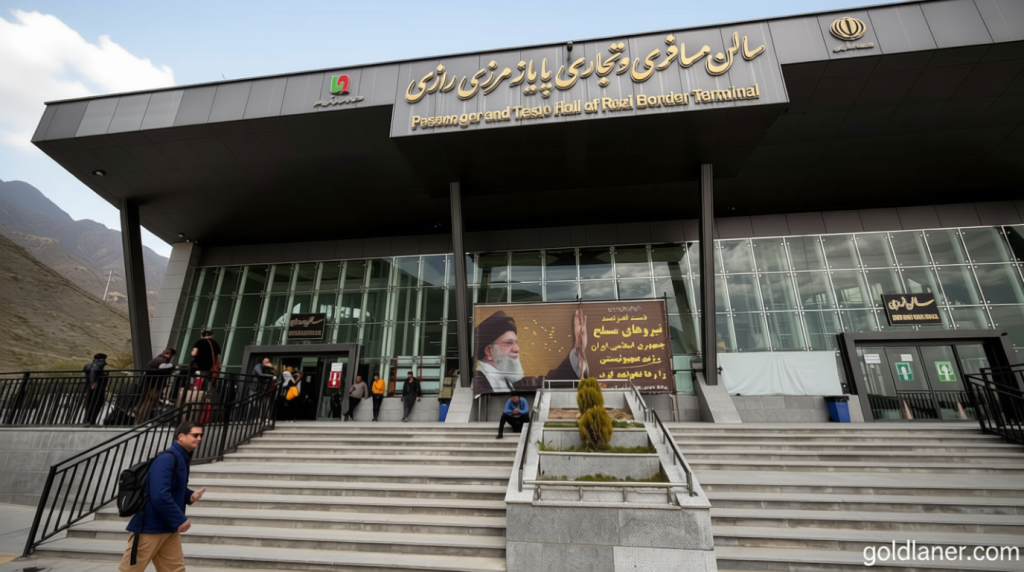
On the road to Tehran Iranians – The path leading to Tehran is framed by towering snow-covered mountains, their peaks gleaming under the midday sun. As we traverse the route, the landscape unfolds with a quiet resilience—valleys dotted with the soft, white blossoms of Tabrizi poplars and fields where the first green sprouts of wheat pierce the earth. The Qotur River, swollen from the thawing spring, carves its way through the terrain, its muddy currents carrying the echoes of a nation on the brink of upheaval. A monumental railway bridge, its steel framework painted in stark white, stretches across the horizon, a symbol of endurance amid the scars left by recent US and Israeli strikes. Yet, for many Iranians, this landmark is more than a feat of engineering; it is a reminder that the war’s shadow lingers, ready to return with a vengeance.
Peace Talks in Peril, Tensions Simmer
Stalled ceasefire discussions and the ongoing closure of the Strait of Hormuz have deepened anxieties across Iran. The strategic waterway, vital for global oil trade, remains a flashpoint as both sides prepare for renewed hostilities. During our journey through the northwestern regions, ordinary citizens expressed their fears with palpable urgency. One young woman, embarking from the United States to Tehran, warned,
“Don’t go to there, it’s far too dangerous now.”
When informed of our shared travel plans, she added,
“I have family there, that is why I am taking the risk.”
Her words, spoken in a hushed tone, underscore the personal stakes in a conflict that threatens to engulf the entire country.
Along the roadside, between stalls offering pistachios and steaming tea, we encountered a somber sight: billboards bearing the blackened faces of the fallen. One banner, in Farsi, declared,
“His shadow has passed over our heads,”
echoing a familiar Persian lament. The loss of Ayatollah Ali Khamenei, the supreme leader, in a February airstrike has left a void, with his son Mojtaba now stepping into the role of “standard bearer” for the nation. However, the younger Khamenei, reportedly wounded in the same attack, has remained elusive since assuming leadership—a sign of the uncertainty that permeates Iran’s political landscape.
Trump’s Shadow Over the Conflict
As US President Donald Trump prepares for his visit to China, the fate of Iran’s ceasefire hinges on the influence of Beijing. Both nations share a common interest in restoring the flow of oil and gas through the Persian Gulf, a lifeline for global markets. For China, the move could serve as a diplomatic gambit, allowing it to position itself as a stabilizing force in a crisis that has disrupted economies worldwide. Trump, meanwhile, has long sought to leverage his global presence to press Iran into concessions, as seen in his earlier characterization of the conflict as his “little excursion.”
Yet, the war’s impact is felt most acutely by the Iranian people. In the dining room of an ancient caravanserai, families gathered to share meals of rice, spiced kebabs, and rich coffee. The setting was idyllic, but the atmosphere carried a subtle tension. Many of the women present had removed their headscarves—a small but defiant act in a country still reeling from the aftermath of the 2022 “Woman, Life, Freedom” protests. Those demonstrations had forced authorities to ease strict dress code enforcement, yet the legacy of resistance remains visible. “We are not just surviving,” said a local merchant, “we are adapting, even as the war looms like a storm.”
Cost of Living Crisis and Political Fallout
Across the border from Turkey, we witnessed the stark realities of economic strain. Crowds of day-trippers—older and younger alike—carried heavy jerrycans of cooking oil, their faces etched with the burden of rising prices. The essential commodity, once a staple in Iranian markets, is now six times more expensive than in Turkey, a direct consequence of the US naval blockade and the war’s toll on infrastructure. This spiraling cost-of-living crisis has fueled widespread discontent, with protests erupting late last year. The demonstrations, rooted in frustration over economic hardship and political repression, were met with a brutal crackdown that claimed thousands of lives, according to Iranian authorities.
Among the survivors, there is a sense of exhaustion. A pensioner, her voice trembling with resolve, recounted how groceries have become a luxury, and basic needs now require sacrifice. “We used to have enough for our families,” she said. “Now, we’re just trying to keep our heads above water.” Her words reflect the daily struggles of Iranians navigating a landscape where survival is the primary concern. Despite these challenges, the people of Iran remain a powerful political force, even under the weight of hardline governance. Their resilience, however, is being tested as the war’s specter looms larger than ever.
Hope in Beijing, Uncertainty at Home
As we continued our journey, the conversation turned to the role of China in brokering peace. The Iranian ambassador to Beijing has hinted that the communist nation could act as a critical mediator between Washington and Tehran, a position that holds both promise and peril. “China’s neutrality is a key asset,” one analyst noted. “They can offer a fresh perspective without the biases of the West or the regional powers.” This potential alliance is driven by mutual interests: unblocking oil supplies and stabilizing the global economy. For China, it’s an opportunity to contrast its diplomatic approach with the erratic policies of the Trump administration.
But even as the prospect of a resolution grows, many Iranians remain skeptical. A man in a market, his face lined with years of struggle, muttered,
“Trump could decide to start the bombing again today.”
He added,
“Maybe not when he is in China, but who knows. Trump likes to be at the center of attention.”
His comment captures the lingering doubt that haunts the nation. While China may offer a temporary reprieve, the ultimate outcome will depend on the will of the Iranian people—a population that has endured years of sanctions, war, and repression without losing its spirit.
The road to Tehran, once a symbol of connection and progress, now serves as a reminder of the stakes at hand. As the capital approaches, the signs of a divided society are unmistakable. Some view the war as a necessary struggle for survival, while others see it as a crisis that threatens to fracture the nation. The energy of the people, however, remains undimmed. Whether through protest or perseverance, they continue to shape the course of their country’s future. For now, the journey is one of endurance, with every step echoing the uncertainty of a world on the brink of renewed conflict.
Amid the trials of war, the people of Iran find moments of quiet defiance. The caravanserai’s dining room, with its unassuming tableware and shared meals, becomes a microcosm of their resilience. Though the hijab is absent from the tables, the spirit of resistance is not. In a nation where every gesture carries meaning, these small acts of rebellion remind us that the war is not just fought on the battlefield, but in the hearts and minds of those who endure it. As the road winds toward the capital, the question remains: will the people of Iran find a way to reconcile their past struggles with the uncertain future that awaits them?
