
Gunshots fired in Philippine Senate, where senator wanted by ICC is resisting arrest
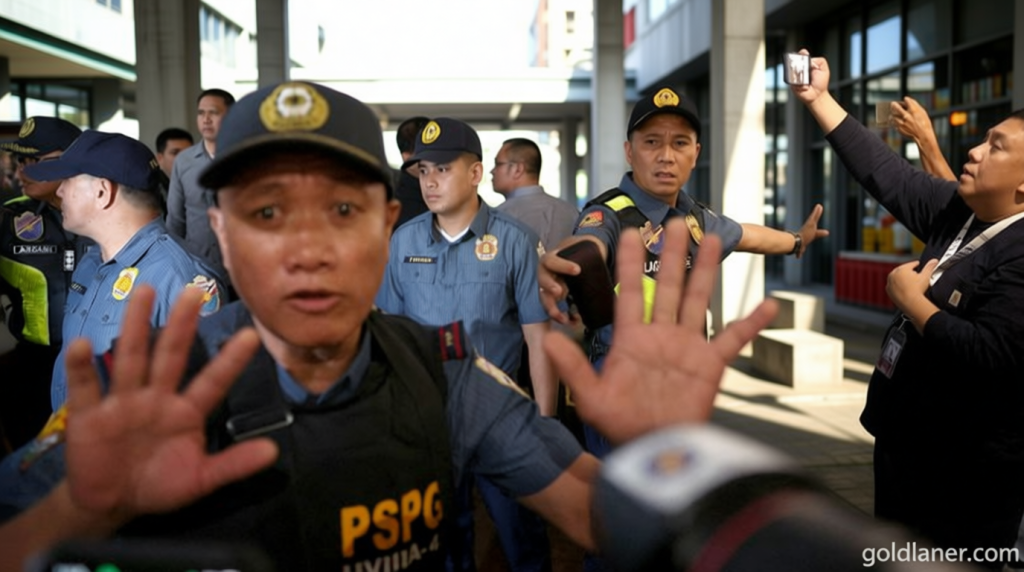
Gunshots Ring Out in Philippine Senate Amid Resistance to ICC Arrest
Gunshots fired in Philippine Senate where – Wednesday evening witnessed gunshots ringing out within the Philippine Senate complex, where Senator Ronald Dela Rosa, a fugitive wanted by the International Criminal Court (ICC), has been holding firm against arrest efforts. The incident, which occurred as authorities attempted to serve a warrant, left no reported injuries and raised questions about the exact sequence of events. Dela Rosa, 64, remains inside the Senate building, where he has been taking refuge since Monday, according to officials. The confrontation has drawn attention to the political and legal tensions surrounding his ICC arrest warrant.
Armed Confrontation at the Senate
Interior Secretary Jonvic Remulla described the situation as a tense standoff between unidentified armed individuals and Senate security forces. The armed men, who tried to breach the second floor of the Senate, were intercepted by a member of the Office of the Sergeant-at-Arms. That individual fired the first shot, prompting the attackers to retreat and discharge rounds into the air. The exact number of shots and the identities of the assailants remain unclear, with Remulla emphasizing that no government forces were directly involved in the incident.
President Ferdinand Marcos Jr. swiftly clarified that federal personnel had not participated in the attempt to apprehend Dela Rosa. He asserted that the arrest effort was entirely separate from any military or police operations. Dela Rosa, a longtime ally of former President Rodrigo Duterte, had evaded capture by local investigative officers earlier in the week. Security cameras captured him fleeing the Senate halls on Monday, a move that sparked multiple lockdowns as riot police cordoned off the building.
ICC Warrant and Legal Battles
Prosecutors at the ICC accuse Dela Rosa of conspiring with Duterte in crimes against humanity during the country’s violent anti-drug campaign. The campaign, which targeted thousands of individuals between 2016 and 2018, is cited as the basis for the arrest warrant. Specifically, the ICC highlighted incidents in which 32 people were killed, linking Dela Rosa to those actions. The senator, known by his nickname “Bato” (meaning “Rock”), has since sought a temporary restraining order from the Philippine Supreme Court to block the ICC’s authority over his arrest.
Despite the gunfire, Dela Rosa has not left the Senate compound and continues to assert that the ICC lacks jurisdiction to detain him without prior approval from the Supreme Court. “I will face it, as long as they follow the proper process,” he said in a Tuesday address, expressing his willingness to defend himself if the warrant is legally valid. However, he described the moment as “the lowest point of my life,” revealing his emotional strain as he faces potential international legal action.
Senate Leadership and Security Measures
Following the gunshots, Senate President Alan Peter Cayetano granted Interior Secretary Remulla access to the building, allowing him to conduct a security sweep. Cayetano, who is also aligned with Duterte, appeared visibly concerned during a Facebook livestream after the incident. “I don’t know what is happening. I do not know if I can keep my people safe here,” he said, vowing to protect Dela Rosa until the situation is resolved. The senator’s resistance to arrest has prompted authorities to implement strict measures, including locking the building’s steel doors to secure the premises.
Video footage from Philippine news outlet Rappler captured the chaos as gunshots echoed through the Senate corridors. The clips show reporters documenting the scene, where soldiers, police, and security personnel were preparing for a lockdown. The source of the gunfire remains ambiguous, though journalists were seen fleeing the area after multiple rounds were fired. Police later directed all media personnel to evacuate, leaving the building under tight control. The event has intensified speculation about whether the confrontation was premeditated or spontaneous.
Political Context and Due Process Concerns
Dela Rosa’s evasion of arrest has become a focal point of broader debates about due process in the Philippines. The senator, a former police officer from the southern Davao region, has long been Duterte’s staunch supporter. During Duterte’s tenure from 2016 to 2022, the anti-drug campaign led to widespread violence, with Dela Rosa’s actions allegedly contributing to the toll. His insistence on the ICC’s lack of jurisdiction underscores a legal strategy to delay his extradition.
President Marcos Jr. emphasized that the arrest warrant for Dela Rosa was not issued with government coordination. “No instructions were given to the Philippine National Police or the National Bureau of Investigation to serve the warrant,” he stated, highlighting the Supreme Court’s role in the process. The president’s stance contrasts with the ICC’s assertion of its authority, creating a rift between national and international legal bodies. Dela Rosa’s current situation reflects the ongoing tension between domestic governance and international justice.
As the Senate complex remains under observation, authorities are balancing security needs with Dela Rosa’s right to remain within the building. Remulla has assured the senator that his arrest will not proceed without due legal process, a promise that has been met with cautious optimism. Meanwhile, the incident has sparked discussions about the role of political allies in shaping legal outcomes, with critics questioning whether the ICC’s warrant is a legitimate pursuit or a political maneuver.
The armed confrontation marks a pivotal moment in Dela Rosa’s legal saga, which began with the ICC’s confirmation of his arrest warrant on Monday. The senator’s refusal to leave the Senate has led to a standoff that has lasted over 48 hours, with his presence inside the building symbolizing a defiance of both national and international law. As the security sweep continues, the question remains: will Dela Rosa’s resistance lead to a peaceful resolution, or will it escalate into a larger conflict?
Legacy of Duterte and Dela Rosa’s Role
Delaware Rosa’s political journey has been closely tied to Duterte’s authoritarian leadership. His rise to prominence, as a former police officer, was fueled by his loyalty to the former president, who implemented a strict regime marked by sweeping crackdowns on drug offenders. The ICC’s accusations against Dela Rosa align with claims that Duterte’s administration authorized extrajudicial killings during the campaign, which Dela Rosa is accused of aiding. The senator’s current defiance has reignited debates about accountability and the legal mechanisms in place to address such allegations.
With the Senate as his sanctuary, Dela Rosa has become a symbol of resistance against the ICC’s reach. His insistence on the Supreme Court’s approval for his arrest reflects a belief in the importance of national legal procedures. As the standoff continues, the events inside the Senate complex are likely to shape perceptions of justice, both within the Philippines and abroad. The incident has also drawn attention to the delicate balance between political alliances and legal independence, raising questions about the future of Dela Rosa’s case and the broader implications for the country’s judiciary.
Authorities remain focused on securing the premises while ensuring Dela Rosa’s safety. The presence of armed individuals outside the building has heightened the stakes, as the senator’s fate hangs in the balance. Whether this confrontation will lead to a resolution or further escalate remains uncertain, but it has already underscored the high level of tension surrounding his arrest. As the Philippine Senate continues to serve as a temporary refuge, the world watches closely for the next developments in the case of this controversial figure.
