
Democrats are going there on attacking the Supreme Court. Here’s what it could mean
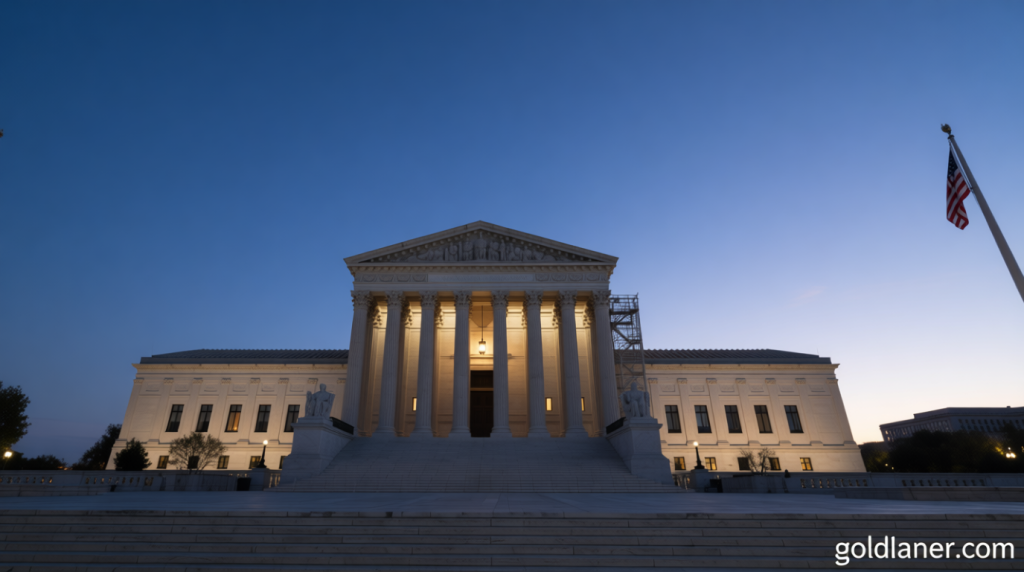
Democrats Intensify Criticism of the Supreme Court: Implications and Escalation
Democrats are going there on attacking – Since the Supreme Court solidified a 6-3 conservative majority in 2020, Democrats have expressed growing frustration with its decisions. The ideological shift has deepened over time, particularly after the court’s reversal of the landmark Roe v. Wade ruling in 2022 and its granting of broad presidential immunity to former President Donald Trump in 2024. These actions have fueled bipartisan discontent, but the recent rulings allowing Southern states to dismantle majority-Black voting districts have pushed Democratic rhetoric to a new level. Now, the party is not only sharply criticizing the court but also questioning its legitimacy, accusing it of corruption and political bias.
Key Rulings and Political Reactions
Democrats’ frustration has escalated in response to the court’s latest decisions. In Louisiana, the Supreme Court’s April ruling weakened the Voting Rights Act, providing Republicans with a strategic advantage in redrawing districts for the 2026 midterms. Simultaneously, the Alabama decision, issued just days before the state’s primaries, sparked outrage by intervening in election processes after votes had already been cast. These rulings, Democrats argue, reflect a clear partisan agenda that prioritizes Republican interests over constitutional principles.
“The Supreme Court is rigged,” stated Sen. Ruben Gallego, a potential 2028 presidential candidate, on social media. He further described the current court as “the most partisan Supreme Court in the history of the nation,” highlighting concerns about its alignment with political parties.
Similar sentiments were echoed by the office of California Governor Gavin Newsom, another 2028 contender, which criticized the court’s actions as “raw power politics.” The statement emphasized how the Alabama ruling disrupted electoral fairness, noting that the decision came despite the state’s primaries being scheduled for the following week and absentee ballots already in circulation. “There’s a reason so many Americans have lost faith in the Trump Court and now view it as a partisan political entity — they have eyes,” the Newsom campaign added, underscoring the public’s growing perception of judicial bias.
Historical Parallels and Controversies
The debate over the court’s legitimacy has drawn comparisons to past eras of judicial controversy. After the Louisiana and Alabama rulings, prominent Black Democrats invoked the legacy of the Taney Court, which infamously upheld slavery in the 1857 Dred Scott decision. “I think that Justice Roberts is going to take his place alongside some other infamous justices like Taney,” said South Carolina Representative James Clyburn, former No. 3 House Democrat, in an interview with CNN’s Jake Tapper. This historical reference frames the current court as a continuation of a long-standing pattern of undermining civil rights.
“The Roberts Court is the worst Supreme Court in American history. Yes, worse than the Taney Court. Full stop,” declared former Democratic National Committee Chairman Jaime Harrison, who has consistently highlighted the court’s role in eroding voting rights. While acknowledging the Taney Court’s overtly racist rulings, Harrison argues that the current court’s impact is more subtle yet equally damaging.
These critiques signal a broader strategy within the Democratic Party to challenge the court’s authority. Senator Cory Booker, a former presidential candidate, called the Supreme Court “a corrupt court” during an appearance on NBC’s “Meet the Press,” reinforcing the narrative that the justices are driven by political motives rather than impartial judgment. As the 2026 midterms approach, Democrats are increasingly framing the court as an obstacle to their policy goals, with some suggesting it should be targeted directly.
Delegitimizing the Judiciary
While sharp criticism of the court is not new, the current tone of Democratic attacks suggests a more aggressive approach. This shift mirrors President Donald Trump’s long-standing efforts to undermine the judiciary, which he often criticized as a “disaster” or “enemy of the people.” However, unlike Trump’s direct accusations, Democrats are framing their criticism as a defense of democratic values, arguing that the court’s actions have crossed into outright corruption.
“They have eyes,” said the Newsom campaign, reflecting the belief that the court’s decisions are transparently aligned with Republican priorities. This sentiment is reinforced by the fact that the Louisiana and Alabama rulings, which both weakened voting rights protections, were seen as deliberate efforts to consolidate political power. Critics, including some prominent Democrats, claim these actions have left the court vulnerable to accusations of being an “undemocratic” institution.
Public Perception and Electoral Impact
Despite the Democratic Party’s intensified rhetoric, the broader public remains divided on the court’s legitimacy. A Reuters and Ipsos poll conducted shortly before the Louisiana decision revealed that while many Democrats are skeptical, a significant portion of Americans still trust the judiciary. However, the frequency of recent rulings that favor Republicans has raised concerns about the court’s impartiality, especially among progressive voters.
“There is much more skepticism of the court on the left,” noted analysts, who observe that Democrats are increasingly using historical parallels to legitimize their current criticisms. This strategy, though effective in rallying base support, risks alienating moderate voters who may view the attacks as overly harsh. The challenge for Democrats lies in balancing their critique with the need to maintain public confidence in the judiciary as a cornerstone of American democracy.
The Fine Line Between Criticism and Delegitimization
Democrats insist that their attacks are justified, pointing to the court’s consistent support for Republican causes. From overturning abortion rights to shielding Trump from legal accountability, the justices have been perceived as advancing a conservative agenda that favors the party in power. Yet, critics warn that this rhetoric could blur the line between constructive criticism and outright delegitimization.
“The court has earned what it’s getting,” argued some Democratic lawmakers, acknowledging the justices’ influence on recent policy outcomes. However, others caution that the current climate of political polarization has made the court a symbol of ideological conflict rather than an impartial arbiter. This dynamic has sparked debates about whether the Democratic Party’s attacks will galvanize voters or erode trust in the judiciary.
As the 2026 midterms draw near, the Democratic Party’s strategy of criticizing the Supreme Court may become a central theme in their campaign. By framing the court as an obstacle to justice, they aim to position themselves as defenders of constitutional principles against a perceived authoritarian shift. Yet, the effectiveness of this approach will depend on how the public interprets the balance between criticism and legitimacy. The stakes are high, with the potential to reshape the political landscape for years to come.
