
Virginia Democrats ask US Supreme Court to let them use new congressional map
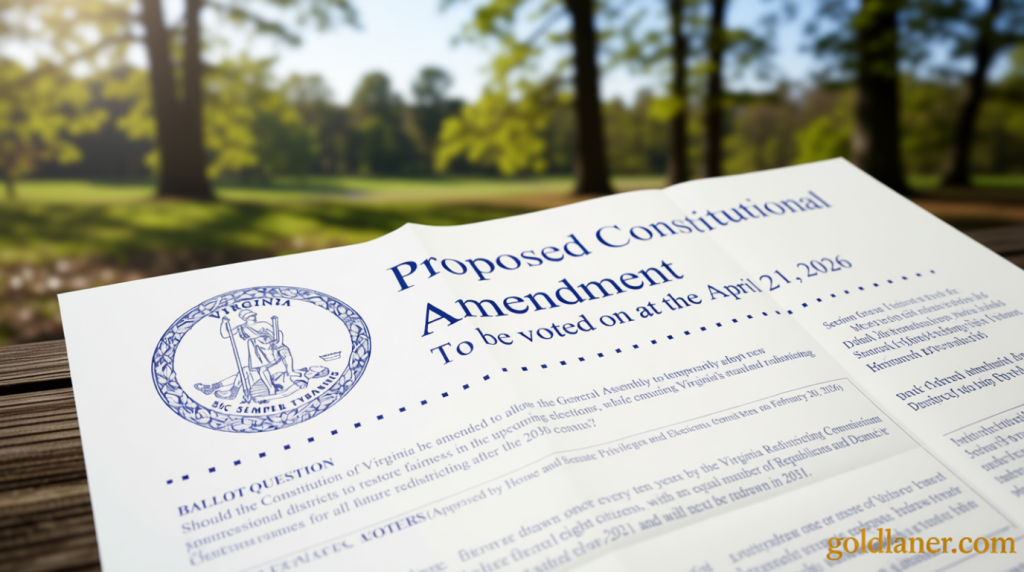
Virginia Democrats Request U.S. Supreme Court to Approve Revised Congressional Map
Virginia Democrats ask US Supreme Court – Virginia Democratic lawmakers have filed an urgent request with the U.S. Supreme Court, seeking approval for a congressional map that could bolster their party’s prospects in this year’s midterm elections. This marks the latest challenge in a wave of redistricting disputes across the nation, as states race to reshape electoral boundaries ahead of the fall vote. The appeal, submitted under emergency circumstances, follows a recent ruling by Virginia’s state Supreme Court that invalidated the Democrats’ attempt to redraw the state’s U.S. House districts through a referendum last April. The decision stripped the party of a potential advantage, leaving them to petition the federal judiciary for a reversal.
State Court’s Ruling Sparks Federal Challenge
Democrats argued that the state Supreme Court’s decision was “deeply mistaken on two critical issues of federal law with profound practical importance to the nation.” The ruling, they claimed, disrupted the legislative process by nullifying a map approved by voters through a constitutional amendment. This amendment, which had already passed, was meant to redefine districts in a way that would secure up to four additional seats for the Democratic Party. The state court, however, ruled that the method used to create the referendum violated the state constitution, effectively halting the process until further review.
“The irreparable harm resulting from the Supreme Court of Virginia’s decision is profound and immediate,” Democrats told the U.S. Supreme Court on Monday. “By forcing the commonwealth to conduct its congressional elections using districts different from those adopted by the General Assembly pursuant to a constitutional amendment the people just ratified, the Supreme Court of Virginia has deprived voters, candidates, and the commonwealth of their right to the lawfully enacted congressional districts.”
This case has become a focal point in the broader national debate over redistricting, particularly as the U.S. Supreme Court continues to weigh in on how states can manipulate electoral lines to maximize political gains. The recent decision in late April that weakened the Voting Rights Act of 1965 has intensified the push for gerrymandering in several southern states, where lawmakers are racing to redraw boundaries to favor their party. Virginia’s redistricting effort, which had been seen as a strategic countermeasure to the GOP’s dominance in the South, now faces an uphill battle against the state’s highest court.
Mid-Decade Redistricting and the GOP Advantage
As the mid-decade redistricting cycle reaches its peak, the U.S. Supreme Court is grappling with a surge of cases that test the limits of partisan influence on voting districts. The ruling in late April that undercut the Voting Rights Act has emboldened Republican-led states to claim greater control over electoral maps, often at the expense of minority voters. In Virginia, Democrats had hoped to reverse this trend by creating a map that would dilute Republican strength and increase their chances of winning more seats. However, the state Supreme Court’s intervention has thrown their plans into uncertainty, prompting a direct appeal to the federal judiciary.
The revised map proposed by Democrats would have reshaped Virginia’s 11 congressional districts to favor the party’s candidates. By clustering Republican voters into fewer districts, the plan aimed to ensure that Democrats could win a significant number of seats, potentially reducing the GOP’s representation in the state to a single district. This strategy is part of a larger effort to counter the advantage Republicans gained from the Voting Rights Act decision, which allowed them to redraw districts with less oversight. The Democrats’ case hinges on the argument that the state court’s ruling disregarded the will of voters who had approved the constitutional amendment, thereby undermining the legitimacy of the redistricting process.
Supreme Court’s Role in State-Level Redistricting
The U.S. Supreme Court’s involvement in Virginia’s case underscores the growing tension between state and federal authority in shaping electoral boundaries. While state courts have traditionally handled redistricting disputes, the federal high court now faces the task of determining whether the state’s decision was lawful. This appeal adds to a backlog of similar cases, as the court reviews how states have used their power to influence election outcomes. The ruling on Virginia’s map could set a precedent for other states, particularly those with politically motivated redistricting efforts.
Virginia’s redistricting process was not only a test of the state constitution but also a reflection of the political climate following the Voting Rights Act’s weakening. The act, which had protected minority voters from discriminatory practices, was recently scaled back, allowing states to redraw districts with more flexibility. This has led to a surge in gerrymandering, with both parties vying to create maps that secure their electoral dominance. Democrats in Virginia, however, contend that their revised map is a necessary response to the GOP’s gains, and that the state Supreme Court’s decision was a misstep in the federal framework.
The state Supreme Court’s ruling has created a ripple effect, highlighting the fragility of redistricting efforts in the current political landscape. By invalidating the referendum process, the court has forced Virginia to rely on a temporary map, which may not fully align with the voters’ intent. This has left the Democratic Party scrambling to present their case to the U.S. Supreme Court, emphasizing the urgency of their request. The court’s decision on this appeal could determine whether the new map is implemented in time for the midterms, ensuring that Virginia’s voters have a fair chance to elect representatives aligned with their preferences.
Broader Implications for Redistricting and Electoral Strategy
Virginia’s case is emblematic of a national trend in which redistricting has become a central battleground for political control. The state’s decision to void the referendum has sparked debates about the balance of power between state and federal courts, as well as the role of public input in shaping electoral boundaries. For Democrats, the appeal is not just about reclaiming a specific map but about preserving the integrity of the redistricting process in a country where partisan gerrymandering is increasingly common.
As the U.S. Supreme Court deliberates, the case has drawn attention to the broader implications of its rulings on voting rights. The court’s recent decision to weaken the Voting Rights Act has created opportunities for states to redraw districts in ways that may disadvantage minority voters. Virginia’s Democrats argue that their map would have protected voting rights by creating more competitive districts, while the state court’s ruling has left the party with fewer tools to counter the GOP’s advantage. The federal court’s response could determine whether states retain the ability to use public referendums to shape their maps, or if such decisions must be reviewed more strictly under federal law.
This dispute also highlights the importance of timely redistricting. With midterm elections approaching, the stakes for both parties have never been higher. The U.S. Supreme Court’s intervention in Virginia’s case could serve as a model for other states facing similar challenges, influencing how lawmakers approach their own redistricting efforts. As the court weighs the arguments, the case remains a pivotal moment in the ongoing struggle over electoral fairness and representation in the United States.
The revised map’s potential impact on the midterms is significant. If approved, it could shift the balance of power in Virginia’s congressional delegation, affecting the state’s overall political influence. Democrats’ argument that the state court’s decision caused “irreparable harm” underscores the urgency of their request, as they seek to ensure that voters have the opportunity to elect representatives based on the latest constitutional amendments. The outcome of this case will not only shape Virginia’s elections but also set a precedent for how redistricting disputes are resolved in the future.
Meanwhile, the U.S. Supreme Court’s broader role in redistricting continues to evolve. As it navigates a series of cases, the court is tasked with defining the boundaries of federal oversight in state-level electoral decisions. Virginia’s appeal adds another layer to this complex issue, emphasizing the interplay between state constitutions and federal law. The decision could influence how other states handle their own redistricting processes, potentially reshaping the political landscape for the upcoming midterms and beyond.
