
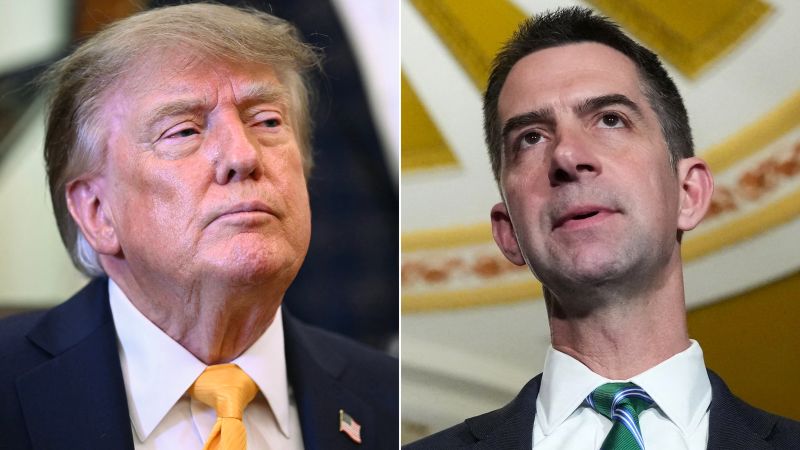
Trump Publicizes Tom Cotton’s Cellphone Number in Daylight Saving Time Dispute
Goldlaner.com – President Donald Trump escalated his disagreement with Sen. Tom Cotton on Saturday by posting the Arkansas Republican’s cellphone number online while pressing for legislation that would end the twice-yearly clock change.
The clash centers on the Sunshine Protection Act, a proposal that would establish Daylight Saving Time throughout the year. Trump has repeatedly argued that Americans should no longer have to adjust clocks in the spring and fall, while Cotton has warned that permanent daylight saving time would create uncomfortably dark winter mornings for many families.
“Everybody in Arkansas, Tom Cotton, a friend of mine, is holding up a very important Bill. It’s called, ‘The Sunshine Protection Act’ or, ‘We Don’t Want to Change Our Clocks Twice a Year Act,’” Trump wrote on Truth Social.
In the same message, Trump urged Arkansas residents to contact Cotton and included the senator’s cellphone number. When calls were placed to that number Saturday, the voicemail box was full. Later attempts produced several rings before an automated message said the wireless customer was unavailable. Cotton’s office was contacted for comment.
A Senate Stalemate Over Clock Changes
The House has already shown broad support for a nationwide switch to year-round Daylight Saving Time. Members passed legislation during the summer by a 308-117 margin. The Senate, however, has not advanced the measure.
Trump’s stance against the semiannual clock change has been consistent in one respect: he has long criticized the disruption caused by moving clocks. His preference between permanent standard time and permanent Daylight Saving Time has shifted at different points, but his latest comments strongly favored retaining daylight saving time all year.
Cotton has taken the opposite view. In 2025, he objected when a bipartisan group of senators sought to pass a similar proposal through unanimous consent. His concern is that a policy designed to add evening light could leave winter mornings especially dark in Arkansas and elsewhere.
“No one likes changing the clock, me included, but Congress has enacted permanent Daylight Savings Time multiple times before and repealed it each time once Americans experienced absurdly late sunrises in the winter,” Cotton wrote on X after Trump’s initial post.
“Arkansans don’t want their kids going to school in the pitch dark, and I’ll always put Arkansas first.”
Trump answered with another Truth Social post, disputing Cotton’s claim that his position put Arkansas first. He argued that residents would gain more usable daylight and avoid the burden of changing clocks at home, on farms and at workplaces twice each year. Trump also attached a letter from PGA Tour CEO Brian Rolapp expressing the tour’s support for the Sunshine Protection Act.
Competing Arguments About Morning Light
The debate over time policy involves more than convenience. Supporters of permanent Daylight Saving Time say eliminating clock changes could reduce disruption to sleep routines, particularly for young children, and could help people who struggle with seasonal changes in daylight. They also emphasize the practical frustration of resetting clocks, appliances and devices each spring and autumn.
Opponents focus on the consequences of pushing sunrise later during winter. In several major American cities, permanent Daylight Saving Time could mean sunrise after 8 a.m. during the coldest months. That issue has particular significance for parents, schools, commuters and agricultural workers who begin their days early. Farmers have often been among those concerned about later winter daylight.
Historical experience also shapes the argument. Congress has previously enacted permanent Daylight Saving Time, only to reverse course after public dissatisfaction with late winter sunrises. Cotton pointed to that history in explaining his resistance to the current proposal.
Before leaving the White House for a Republican midterm election rally in Ohio, Trump declined to explain why he had shared Cotton’s number. Instead, he reiterated his frustration with the clock changes.
“(People) don’t want to have to go around changing clocks. I had the same thing last time, six months ago, we’re changing clocks, and nobody changed the clocks and everybody’s late,” Trump said.
“It makes people — it discombobulates everybody.”
Trump later intensified his pressure on Cotton in a separate message.
“TAKE THE WIN TOM, JUST TAKE THE WIN!” Trump wrote. “YOU NEED IT, AND SO DOES OUR BELOVED REPUBLICAN PARTY!”
Concerns Raised Over Security and Personal Safety
Democratic Rep. Joaquin Castro, a member of the House Permanent Select Committee on Intelligence, said the public release of a senator’s cellphone number could expose Cotton to risks beyond unwanted calls. Castro said a publicly available number could make a device more vulnerable to sophisticated actors, including foreign governments or non-state groups.
“Really, all they need is your number,” Castro said. “And then they’re sophisticated enough to be able to do it.”
It was not Trump’s first disclosure of a sitting senator’s personal phone number. During the 2016 Republican presidential primary, he read Sen. Lindsey Graham’s cellphone number aloud to a rally crowd.
The dispute leaves the Sunshine Protection Act caught between broad House backing and unresolved Senate resistance. For now, the practical question remains unsettled: whether the country should continue changing clocks twice annually, or accept the tradeoff of permanently brighter evenings and darker winter mornings.
Related Reading
Frequently Asked Questions
What is Trump posts GOP lawmaker s phone?
Trump posts GOP lawmaker s phone is the main topic of this guide. The article explains the context, practical details, and next steps readers should understand.
Why does Trump posts GOP lawmaker s phone matter?
Trump posts GOP lawmaker s phone matters because readers are looking for a useful answer, not just a short summary. Good content should match search intent and help them decide what to do next.