
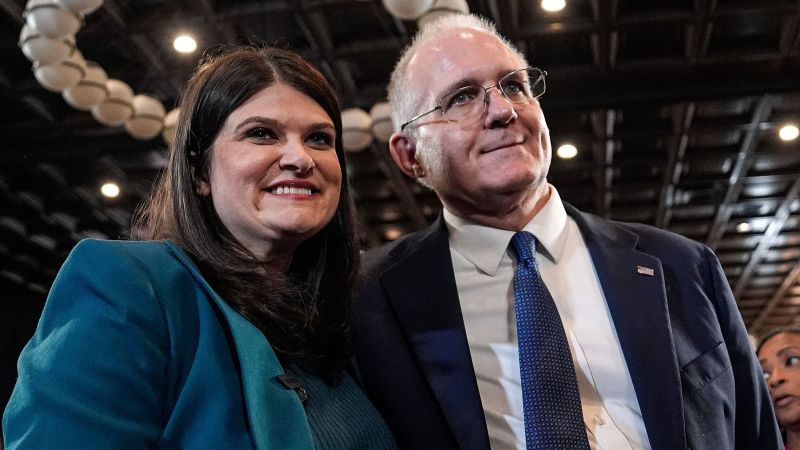
Paul Whelan Helps Craft Bill for Americans Wrongfully Detained Abroad
Goldlaner.com – Paul Whelan helps craft bill that would provide financial compensation to Americans who return home after being wrongfully detained overseas. The proposed measure, announced by Michigan Rep. Haley Stevens, addresses the financial losses that can follow months or years of captivity.
Whelan spent more than five years detained in Russia before his release in 2024. Since returning to Michigan, he has spoken about the challenges faced by former detainees, including lost employment, depleted savings, housing problems and a lack of health insurance.
“For people like me who have come home after five-and-a-half years, we really don’t have very much. House is gone. Cars are gone. Employment’s gone. No health insurance.”
Stevens represents Whelan’s district, and the pair worked on the legislation in the years after his return. The bill seeks to recognize that the consequences of wrongful detention do not end when an American is released.
Financial Support for Former Wrongful Detainees
The proposal would create a one-time financial award for Americans wrongfully detained abroad. Its goal is to help people rebuild after losing income, falling behind on bills or being unable to manage property and other personal obligations while in captivity.
Paul Whelan helps craft bill around the principle that former detainees should have support as they return to their communities and resume their lives.
“A huge step forward in ensuring that all American citizens who are wrongfully detained in the past, present, and future will be properly taken care of once they return home.”
Stevens said Americans should not face additional financial hardship after enduring a prolonged wrongful detention.
“After enduring months or even years of wrongful detention, Americans shouldn’t have to face back taxes, late fees, lost income, and financial instability when they come home.”
She said Whelan’s experience illustrated the long-term toll that captivity can take on a person and their family.
“Paul Whelan’s experience showed our country the extraordinary toll wrongful detention takes not only during captivity, but long after someone returns home.”
Who Could Qualify for Compensation?
The legislation identifies unobligated money from the Department of Justice Assets Forfeiture Fund as the proposed source of compensation. That fund contains proceeds from assets forfeited through federal law-enforcement actions.
Eligibility would generally be limited for people who traveled to a country under a State Department Level 4: Do Not Travel advisory or a destination marked with the “D” indicator warning of detention risks. The restrictions would not apply to people traveling in an official capacity or to journalists.
Whelan said the proposal separates the government’s duty to work for an American’s release from the rules governing financial awards.
“If our citizens knowingly visit a rogue nation the State Department warns against us visiting and they are taken hostage, State will work diligently to bring them home, but they would not be eligible for compensation under the Act.”
Whelan and Trevor Reed, another American wrongfully detained in Russia, both traveled there before Russia received its Level 4 designation.
Trevor Reed Backs the Proposed Measure
Reed was detained in Russia for nearly three years and supports the legislation. He said his return to the United States brought immediate anxiety about replacing the savings and financial security lost during his detention.
“When I came home, I really panicked for a while trying to find out how I was going to rebuild my life savings and I still haven’t recouped those losses.”
Reed said his parents used retirement accounts to help support efforts on his behalf while he was held. His experience highlights how financial strain can affect entire families during a wrongful detention abroad.
FAQ: Proposed Compensation for Wrongfully Detained Americans
What would the bill do? It would provide a one-time financial award to eligible Americans who were wrongfully detained in another country.
Who helped develop the proposal? Paul Whelan helps craft bill with Rep. Haley Stevens after his return from more than five years of detention in Russia.
Would every former detainee be eligible? Not necessarily. The proposal includes travel-related limits for people who visited destinations subject to certain State Department warnings, while providing exceptions for official travelers and journalists.
Why is compensation being proposed? Former detainees may return with lost income, unpaid bills, depleted savings, disrupted employment and other financial damage caused by their time in captivity.