
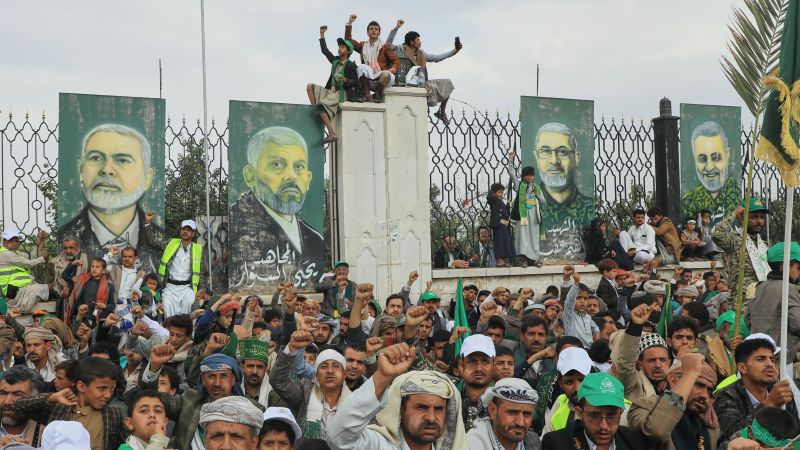
Houthi Barrage Wounds Dozens Across Saudi Arabia’s Southwest as Regional Tensions Spike
Goldlaner.com – A fresh wave of missile and drone strikes launched from Yemen’s Houthi-controlled territories has rattled the southwestern provinces of Saudi Arabia, injuring at least 73 civilians — including women and children — and igniting fires at multiple energy installations. The strikes, which reached several towns and cities along the kingdom’s southern border, represent the most significant cross-border escalation since the Middle East conflict widened in July with missile attacks on Saudi oil infrastructure and commercial shipping.
Scale of the Strikes and Casualties
Major General Turki Al-Maliki, the public voice of the Saudi-led Coalition Forces, confirmed the casualty toll and described the barrage as both “dangerous” and “senseless.” According to his briefing, Houthi projectiles were aimed at what he characterized as “civilian and economic sites” spread across four locations: Abha, Khamis Mushait, Jazan, and Najran — all situated in the kingdom’s southwestern region, close to the Yemeni border.
The Saudi Energy Ministry confirmed that fires broke out at several facilities in the southern region following the impacts, temporarily suspending certain operations. No fatalities were reported in the initial accounting, though officials indicated that assessments were still underway.
Riyadh’s Response and Coalition Posture
The Joint Forces Command of the Coalition — the Saudi-led military grouping that has been engaged in operations against the Houthis throughout Yemen’s years-long civil war — pledged to “resolutely confront (the Houthis) hostile approach,” Al-Maliki stated. The Saudi Foreign Ministry, posting on X, affirmed that “the Kingdom affirms its legitimate right to take all necessary measures to defend its sovereignty.”
The language signals a shift from the cautious, measured responses Riyadh offered during earlier skirmishes. With substantial Saudi military assets already massed near the border with Houthi-held territory, the coalition’s rhetoric now carries the weight of prepared force behind it.
Regional Allies Condemn the Escalation
Neighboring states moved quickly to register their displeasure. Egypt labeled the strikes “a dangerous escalation.” Jordan called the barrage “a blatant violation of Saudi sovereignty.” Qatar’s Foreign Ministry stated that the attacks demonstrated “unacceptable disregard for civilian lives and the security of the countries of the region.” Kuwait joined the chorus of condemnation, underscoring a broad Gulf consensus that the Houthis have crossed a threshold that invites collective concern.
From Ceasefire to Confrontation: How the Conflict Reopened
The current exchange did not emerge in a vacuum. A fragile four-year ceasefire between the Houthi movement and Saudi Arabia — itself the product of a seven-year war that concluded with a truce in 2022 — collapsed in July when Houthi missiles struck Saudi oil facilities and shipping in the Red Sea. The Houthis simultaneously declared a blockade on Saudi commercial vessels transiting the Red Sea, a critical artery for the kingdom’s crude exports at a moment when Iran has been attempting to choke off the Strait of Hormuz. Refineries along the Red Sea coast operated by Saudi oil giant Aramco have also come under fire.
On the ground in Yemen, fighting between Houthi forces and Saudi-backed units has flared in recent weeks. Ballistic missiles and drones have been employed against the port of Mocha, which remains under government control. The Houthis have long demanded an end to what they describe as a Saudi travel and economic blockade isolating the large swathes of northern Yemen they administer — a measure that has deepened the humanitarian crisis gripping much of the country.
“The Saudi measures were sufficient to compel us to act more decisively than we have been doing. We do not need any other agendas,” Nasr al-Din Amer, a senior Houthi official and member of the group’s politburo, told CNN in July.
Strategic Calculus: Bab al-Mandab and the Wider Chessboard
On Telegram on Tuesday, Amer indicated that the military response underway was far larger than public reporting suggested: the “ongoing, in-depth response far exceeds what is being circulated on social media and is much broader.”
Analysts see the latest strikes as evidence that the Houthi leadership is prepared to widen the conflict’s geographic footprint. Ali Vaez of the International Crisis Group noted that the Houthis appear to be pushing for additional territory closer to Bab al-Mandab, the narrow strait at the southern tip of the Red Sea that links it to the Indian Ocean. Control of that chokepoint would give Tehran leverage over two critical maritime corridors simultaneously — the Strait of Hormuz and Bab al-Mandab — multiplying its ability to pressure global energy flows.
“The conflict that seems to be rekindled in Yemen might take a life of its own and continue even beyond the end of hostilities between Iran and the US,” Vaez warned.
That prospect looms over regional planners: a Yemeni front that persists independently of the broader Iran–United States confrontation would keep pressure on Red Sea shipping, complicate Gulf energy logistics, and anchor a second axis of instability alongside whatever unfolds in the Persian Gulf. For Saudi Arabia, which has invested heavily in positioning its economy beyond oil dependence, sustained disruption to its southern border and its maritime outlets represents a strategic vulnerability that the latest barrage has laid bare.
The situation remains fluid. Coalition forces continue operations along the border, Houthi leadership signals further action, and the humanitarian toll in Yemen deepens with each passing week. Whether the current escalation settles into a new pattern of periodic exchanges or spirals into sustained warfare will depend on decisions made in Riyadh, Sanaa, Tehran, and Washington in the days ahead.
Related Reading
Frequently Asked Questions
What is Scores wounded as Iran backed Houthis?
Scores wounded as Iran backed Houthis is the main topic of this guide. The article explains the context, practical details, and next steps readers should understand.
Why does Scores wounded as Iran backed Houthis matter?
Scores wounded as Iran backed Houthis matters because readers are looking for a useful answer, not just a short summary. Good content should match search intent and help them decide what to do next.