These men had a hellish escape from Nepal’s flooded hydro tunnels. They were the lucky ones

These Men Had a Hellish Escape from Nepal’s Flooded Tunnels
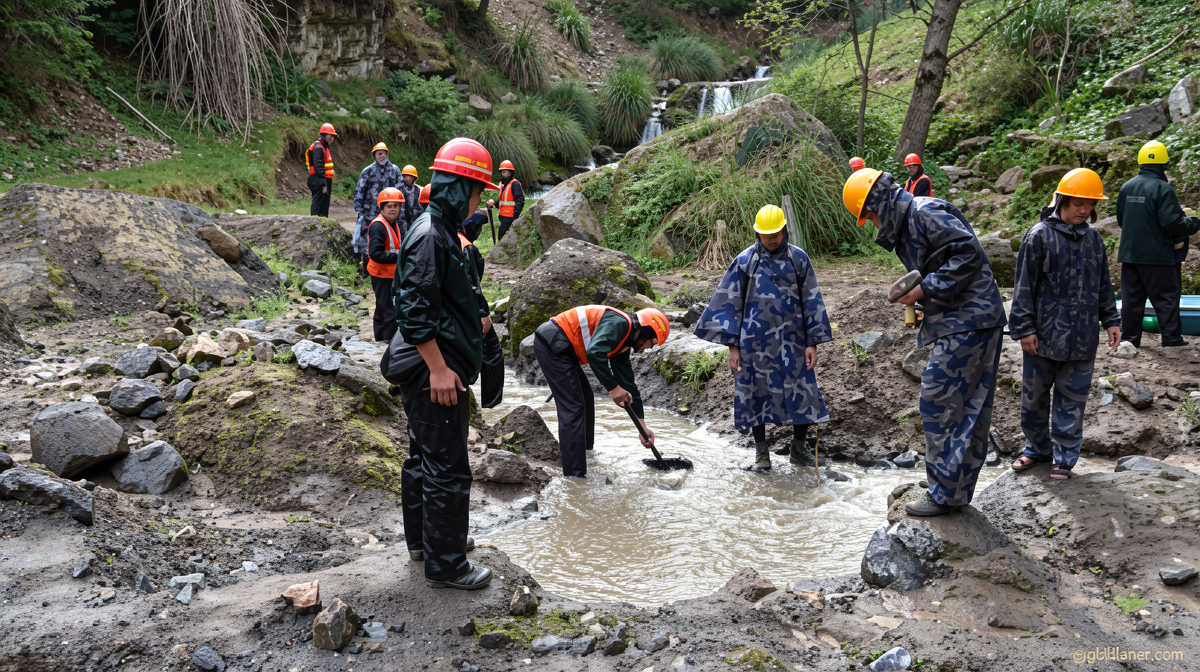
Goldlaner.com – These men had a hellish escape when the Trishuli River burst its banks and ripped through mountain tunnels carved into Nepal’s western slopes. The workers inside had seconds to choose between life and death. Water, shattered concrete, and debris surged through the darkness with a force that nearly swept Ram Chandra off his feet. He locked his fingers around a metal rung bolted into the tunnel ceiling and held on. Hundreds of meters from the nearest exit, the flood was already rising past his ankles, then his knees.
“The water was rising and it was difficult to move my legs. If I had let go from that rung I would have fallen.”
Chandra and five colleagues grabbed a sheet of tin, laid it beneath their feet for traction, and passed it hand to hand as they crawled forward one rung at a time. The crawl lasted six hours. By the time they reached the tunnel mouth, a seventh worker was waiting there, stripped of clothing by the current. Outside, daylight revealed the full scale of the catastrophe: the river below running black with ice, silt, and wreckage, and the mountains above having unleashed a deluge that traveled 62 miles (100 km) downstream, burying entire communities and killing hundreds in what has become the worst natural disaster to strike Nepal in years.
The Scale of the Loss
More than 900 workers from hydropower projects drilled deep into the world’s highest mountain range remain unaccounted for. Nepal has spent decades channeling the kinetic energy of its glacial rivers into electricity, boring tunnels through rock faces that few engineers outside the region have ever seen from the inside. The Trishuli basin, fed by snowmelt and monsoon rains, is among the most productive hydro corridors in South Asia, and the plants built along it represent both national economic ambition and enormous occupational risk for the laborers who dig and maintain them.
As of the latest tallies, roughly 279 hydro workers have been pulled from the wreckage or have clawed their way out through mud and silt-choked passages. At the Trishuli 3A hydropower plant, rescue crews worked through the night into Sunday, boring pilot holes into the collapsed tunnel structure to pump in compressed air and lower food supplies — a desperate bid to reach anyone still breathing in the dark.
Survivors from Jumla
Madan Singh Budha had just stepped off the night shift at Upper Trishuli tunnel number 2 when the flood hit. He looked outside, saw the water wall, and ran uphill.
“The hill was rocky, with grass growing in between. We used that grass to hold on to as we climbed.”
He was airlifted out of the disaster zone by helicopter on Sunday. Those who could not climb fast enough, he said, were swept away. What followed was a frantic, disorienting search for colleagues, friends, and family members scattered across multiple project sites.
Budha, Chandra, and roughly fifteen other rescued workers CNN interviewed all hail from Jumla, a remote district in far-western Nepal where maize terraces cling to near-vertical slopes and village life runs on tight kinship bonds. The region feels a world away from the industrialized tunnel complexes where its sons now labor. Yet every single man in that rescued group had lost a relative or close friend in the flood. Many, like Chandra, had also lost their clothing to the torrent and stood in borrowed trousers, shirts, and sandals lent by villagers who rushed to help them reach safety.
A Survivor’s Arithmetic
Bhakti Ram Bohara, another survivor, described himself as part of a small minority who made it out. He estimated that around 1,000 men were working across his project and adjacent sites when the water came. Only approximately 100 had emerged alive. Among the missing was his brother-in-law — a man who had spent weeks at a time away from his family on the same crew, sending earnings back to their shared village.
“His wife is my sister, and she is pregnant.”
He broke down in tears as he said it. For those who made it out, these men had a hellish ordeal measured not in minutes but in hours of crawling through black water, and the arithmetic of survival lands squarely on a pregnant woman in a Jumla village who will not know whether her husband is coming home.
The Guide Who Would Not Sleep
Amar Bista was not on shift at the tunnels. He is a tour guide by trade, but when word of the catastrophe reached him, he rushed into action because dozens of his own family members and friends worked at the affected sites. The task of determining who was missing, who was safe, and then physically extracting the survivors proved nearly impossible in the chaos that followed. He had not slept for four days by the time he stood with the group he had helped save.
FAQ: What You Need to Know About the Nepal Hydro Tunnel Flood
How many workers are still missing? More than 900 hydropower workers remain unaccounted for as of the latest official tallies. Roughly 279 have been recovered or have escaped on their own.
What caused the tunnel flooding? The Trishuli River, swollen by monsoon rains and accelerated glacial snowmelt, broke its banks and surged through tunnel structures built into the western mountain slopes. The flood traveled approximately 62 miles (