
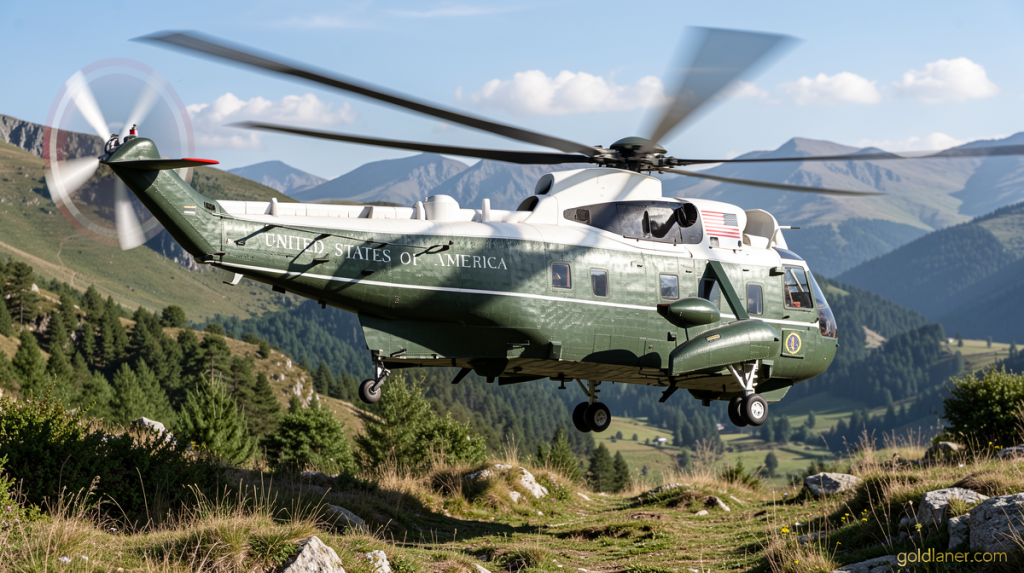
Trump’s Marine One Again Faces Radio Issues Before Takeoff
Goldlaner.com – Trump’s Marine One again ran into a communication problem with air traffic control on Thursday, forcing controllers at Ronald Reagan Washington National Airport to depend on other helicopters already aloft to relay messages to the presidential helicopter as it prepared to leave the White House. Air traffic control audio reviewed by CNN captured roughly four minutes of failed attempts to reach the tower before a response finally came through. The episode closely mirrors an earlier incident on August 4, when the helicopter departed the Ellipse only after two unsuccessful radio calls went unanswered three minutes before scheduled liftoff, according to the National Transportation Safety Board’s preliminary report.
What Happened During the Latest Communication Failure
During the Thursday departure, the tower never received the required pre-takeoff call from the presidential helicopter. Controllers attempted to establish contact for about four minutes before another aircraft in the area relayed the message. The air traffic controller then replied, “Oh, I couldn’t hear any of that.” Approximately a minute later, the same controller asked a nearby aircraft to listen and report back if it could pick up the helicopter’s transmission.
“Do me a favor, I can’t hear Marine One. If you hear Marine One, can you let me know?”
After the relay finally succeeded, positive contact was confirmed before the helicopter lifted off. The Federal Aviation Administration told CNN that “the three-minute notification was communicated by alternate means, acknowledged by a controller and positive contact was established with Marine One before takeoff.” The White House directed CNN to the FAA for comment.
The August 4 Near-Miss and FAA Response
The earlier incident carried far greater operational consequences. Because the tower never received the required call on August 4, departing commercial flights were not held as standard procedure dictates for a presidential helicopter movement. The result: the presidential helicopter came within 0.82 nautical miles laterally and 700 feet vertically of an Envoy Air passenger jet that had just rotated off the runway.
The FAA said it “took immediate action” following that event, including relocating a radio antenna to improve line-of-sight between DCA controllers and the helicopter’s pilots, and reviewing the communication procedures involved. The NTSB attributed the August 4 failure to inadequate line-of-sight between FAA radio equipment and the Ellipse, where the helicopter was temporarily staging while construction work continued at the White House. Investigators noted that the first transmission attempt was never received and the second arrived broken and unreadable. Aviation radios, by design, depend on a relatively unobstructed path between transmitting and receiving antennas.
In a statement issued Thursday, White House spokesperson Kush Desai defended the operation: “Marine One flights are piloted by the finest aviators in the world, and the White House maintains the utmost confidence in these patriots and other security officials who are responsible for ensuring the President’s safety.” Desai added that although the President was at no point in harm’s way during the August 4 momentary loss of separation, the White House “continues to work with relevant military, FAA, and other security personnel to ensure the President’s continued safety.”
Frequently Asked Questions
Why did Trump’s Marine One again struggle to reach the tower? Aviation radios require a clear line-of-sight path. Temporary staging at the Ellipse, combined with construction activity near the White House, can degrade that path. The FAA has since relocated an antenna to mitigate the problem.
Was the President in danger during either incident? The White House stated the President was at no point in harm’s way. On August 4, the helicopter came within 0.82 nautical miles laterally and 700 feet vertically of a commercial jet, but no collision occurred.
What action has the FAA taken since August 4? The agency relocated a radio antenna to improve communications between DCA controllers and the helicopter’s pilots and is reviewing the associated procedures. It confirmed that positive contact was re-established before the Thursday takeoff.
Who investigated the incidents? The National Transportation Safety Board issued a preliminary report on the August 4 event, identifying inadequate line-of-sight as the root cause. The FAA provided its own account of the Thursday communication sequence to CNN.