
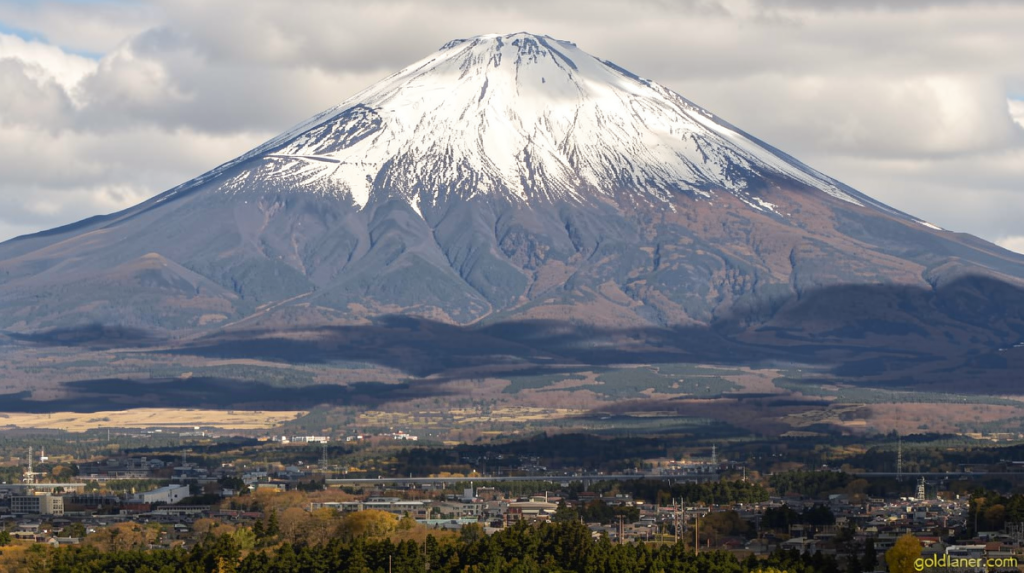
Japan’s Most Famous Mountain Becomes a Cautionary Tale After Father Leaves Young Son Unattended at Halfway Point
Goldlaner.com – Mount Fuji draws millions of visitors each year, many of them families hoping to share the experience of climbing Japan’s tallest and most iconic peak. Yet the volcano’s 12,388-foot (3,776-meter) summit demands serious physical preparation, and the upper slopes present genuine hazards: thinning air, rapidly shifting weather, and narrow trails crowded with hikers of varying fitness levels. In recent years, authorities have tightened regulations to manage those risks, capping daily climber numbers and mandating a short safety briefing before ascent. Even so, incidents continue to remind visitors that the mountain does not negotiate with fatigue or underestimation.
A Boy Left Behind at the Sixth Station
On a Thursday this week, a worker at a mountain hut roughly 8,200 feet (2,500 meters) above sea level noticed a small child sitting alone on a bench. The location was the sixth station along the Fujinomiya trail, a point that places a hiker slightly past the halfway mark of the climb. No adult was within sight. The worker, recognizing the situation as unusual and potentially dangerous, contacted police.
Officers who arrived at the scene learned the full picture: the boy, aged seven, had been hiking with his father and an older brother. At some point before reaching the sixth station, the child grew exhausted and reluctant to keep walking. Rather than turn around or find another solution, the father instructed his son to remain seated on the bench while he and the older brother pressed on toward the summit. The boy was told simply to wait.
“Tired” was the word used to describe the child’s condition at the moment he was left behind.
Five Hours of Uncertainty
The father and older brother completed their ascent and began the descent. Five hours after the boy had been set down at the bench, they returned to find police already present. Officers had been keeping watch over the child, who was unharmed but understandably frightened. The boy was handed back to his father at that point.
The officers did not let the matter end with a simple reunion. They informed the man that his conduct could expose him to criminal liability under Japanese law, a warning that carries real legal weight. The father expressed remorse for having left his young son unattended at altitude for such an extended period.
Why the Situation Carries Extra Weight
Leaving any child alone in a populated urban setting is unsettling; doing so at 2,500 meters on a volcanic peak multiplies the danger. At that elevation, oxygen levels are noticeably lower than at sea level, and a child who is already fatigued can deteriorate quickly if conditions worsen. Weather on Fuji’s upper slopes is notoriously volatile: temperatures can plummet within minutes, visibility can vanish in a wall of cloud, and wind gusts on exposed ridgelines can knock an unsteady walker off balance. A seven-year-old sitting alone on a bench, with no adult to monitor his condition or respond to sudden changes, faces risks that a city sidewalk simply does not present.
The mountain’s history reinforces the concern. Climbers have repeatedly required rescue after developing altitude sickness, a condition that can progress from headache and nausea to cerebral or pulmonary edema if untreated. Children are not immune, and their smaller bodies can show symptoms earlier or escalate faster than adults expect. The unpredictability of weather means that a clear morning can become a freezing, low-visibility afternoon within hours, trapping an unprepared hiker on exposed terrain.
Regulatory Response and Broader Implications
Japanese authorities have responded to recurring safety concerns on Fuji with a series of measures in recent years. Daily climber caps limit how many people can attempt the summit on any given day, reducing congestion on narrow paths and easing pressure on rescue services. A brief mandatory safety class, taken before beginning the ascent, covers basic altitude awareness, trail etiquette, and what to do if conditions turn. These steps reflect a recognition that the mountain’s popularity has outpaced many visitors’ preparation.
The incident involving the seven-year-old boy underscores a gap that regulations cannot fully close: parental judgment in real time. No rulebook can dictate what a father should do when his young son says he cannot go another step at 2,500 meters. The options available at that moment—turning around together, carrying the child, waiting for a rescue team, or simply continuing without him—each carry consequences. Choosing to leave the child behind, with no communication plan, no estimated return time communicated to a third party, and no adult remaining at the bench, left the boy in a situation where a single weather shift or a passing stranger’s failure to notice him could have turned a frightening afternoon into a tragedy.
For families planning to hike Fuji or other Japanese mountains, the episode offers a practical reminder: assess a child’s endurance honestly before setting out, carry enough water and food for a full turnaround, and never assume that a brief pause at a trail station is equivalent to safe supervision. At altitude, “five hours” is not a short interval. It is a full day’s worth of changing conditions, and a child left alone in that window has no advocate, no warmth check, and no voice that can be heard over the wind.
The boy was returned to his father unharmed. That outcome, while welcome, depended on the worker’s vigilance and the police’s prompt response—factors no parent should be required to rely upon when making decisions about a small child’s safety at altitude.
Related Reading
Frequently Asked Questions
What is Man leaves tired 7 year old son?
Man leaves tired 7 year old son is the main topic of this guide. The article explains the context, practical details, and next steps readers should understand.
Why does Man leaves tired 7 year old son matter?
Man leaves tired 7 year old son matters because readers are looking for a useful answer, not just a short summary. Good content should match search intent and help them decide what to do next.