
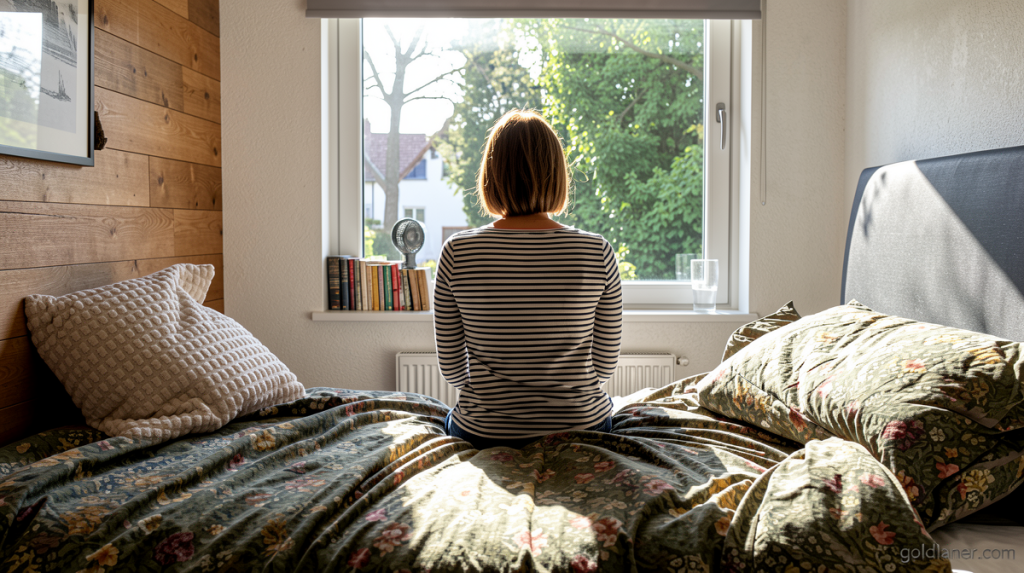
Loneliness Influencers Have No Friends, But Say They’re Happy
Goldlaner.com – The World Health Organization now classifies loneliness as a global health priority, and roughly one in four adults says they feel lonely. Against that backdrop, a new breed of content creator has gone viral by filming their entirely solitary routines for millions of viewers — and insisting they are perfectly contented. Loneliness influencers have no friends, no partner, and no visible social circle, yet their feeds radiate a calm that has captivated audiences on TikTok and Instagram over the past several months. Whether that calm is genuinely restorative or quietly corrosive has become one of the internet’s most heated wellness debates.
One Woman’s Quiet Life, Filmed for Millions
Sarah-Jane Hoadley, a professional cleaner in her 40s based in Windsor, England, lives alone in a small studio flat. She has no close friends. What she does have is a camera pointed at her unremarkable days: boiling water for instant coffee, cycling to clients’ houses for cleaning shifts, and returning home to curl up beside her cat in front of the television. Since posting her first video in January, her account @dramafreediaries has drawn approximately 100 million views and half a million followers across platforms.
Hoadley is blunt about what she wants from the arrangement. She does not want viewers to copy her. She calls the idea that her videos are “aspirational” a persistent misunderstanding.
“When I leave work on Friday to when I go back on Monday, I don’t get WhatsApps. I don’t get any phone calls, but I’m not pining for something.”
The Pushback: Romanticizing What Hurts
Not every viewer finds the content soothing. Phil Lane, a psychotherapist in Pennington, New Jersey, warns that these creators package solitude into something cinematic and idealized, smoothing over the real ache that accompanies a shrinking social world. He worries the framing normalizes total independence for younger audiences — especially Gen Z, frequently labeled the “loneliest generation” — potentially deepening the very isolation the WHO has flagged as a public-health emergency.
“These so-called loneliness influencers give a very romantic image of what it’s like to be alone.”
What Clinicians Actually Recommend
Dr. Lauren Cook, a clinical psychologist in San Marino, California, and founder of Heartship Psychological Services, pushes back on both the celebration and the condemnation. She observes that women may be more willing than men to share content about navigating life alone, partly because they face less stigma around mental-health conversations. For Cook, the question is never whether solitude is objectively good or bad. It is whether the individual feels aligned with their own values.
“What matters most is that the person feels like they’re living in alignment with their personal values — and not necessarily for us to say if that lifestyle is right or wrong.”
Cook adds that the viewer’s internal state determines the impact. Watching such content while seeking rest and restoration can be genuinely nourishing. Watching it as a strategy to dodge vulnerability — to sidestep dating, new friendships, or emotional risk — may signal that anxiety is steering the narrative.
“If it’s coming from a place of seeking peace and solace and restoration, that can be a great thing. But if it’s coming from a place of avoidance or not wanting to be vulnerable, putting ourselves out there with dating or new relationships … then that’s something I think where we have to get curious about if anxiety is maybe dictating the narrative at that point.”
How the Trend Took Off
The viral wave did not materialize from a vacuum. Lana Isa, a social-media creator, launched a “solo vlog” series last summer documenting how her Friday and Saturday nights unfolded alone in her apartment. That series triggered a cascade of imitators across TikTok and Instagram, each centering their feed on the aesthetics and rhythms of unaccompanied living. What began as one woman’s documentation of ordinary evenings quickly metastasized into a broader online conversation about mental health, autonomy, and what connection actually means.
The Mortality Data Behind the Debate
The stakes extend beyond philosophy. A 2023 study found that individuals reporting social isolation faced a 32 percent higher likelihood of premature death compared with those maintaining more active social lives. Those who specifically reported feeling lonely carried a 14 percent elevated early-mortality risk. Loneliness, in other words, is not simply an emotional inconvenience; it is a measurable health variable, which is precisely why the wellness community is watching how these creators frame solitude.
Frequently Asked Questions
Is it unhealthy to enjoy spending time alone?
Not inherently. Clinicians emphasize that solitude chosen from a place of rest and self-knowledge can be restorative. Concern arises when isolation functions as avoidance of vulnerability, relationship-building, or emotional risk. The determining factor is whether the individual feels aligned with their own values rather than fleeing discomfort.
Could watching “loneliness influencer” content make me lonelier?
Possibly, if the content reinforces the belief that total independence is the only acceptable mode of living. Dr. Lauren Cook advises viewers to check their motivation: if the videos feel like permission to avoid connection, that is a signal to examine whether anxiety is driving the narrative. If they feel like validation for a boundary you already need, the impact is likely neutral or positive.
Who started the trend?
Lana Isa is widely credited with igniting the wave through her “solo vlog” series last summer, which documented her Friday and Saturday nights spent alone. Sarah-Jane Hoadley’s @dramafreediaries account subsequently amplified the genre to roughly 100 million views and 500,000 followers.
What does the research say about loneliness and health?
A 2023 study linked social isolation to a 32 percent higher risk of premature death and reported loneliness to a 14 percent elevated early-mortality risk. The WHO has elevated loneliness to a global health priority, and nearly one in four adults now reports feeling lonely.