
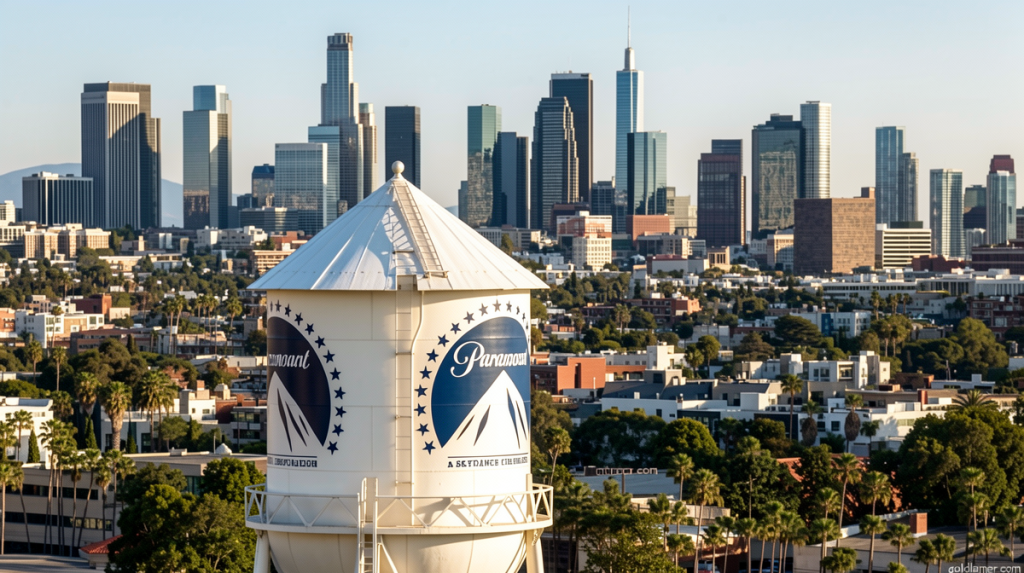
Paramount and State Prosecutors Move Toward Negotiating Table as WBD Merger Fight Intensifies
Goldlaner.com – Two weeks before what could become one of the most consequential antitrust trials in Hollywood history, the principals on both sides of the Paramount–Warner Bros. Discovery dispute are preparing to sit down across from each other. Representatives from the media conglomerate seeking to absorb WBD and the coalition of state attorneys general determined to stop the transaction will convene next week in what both camps describe as a good-faith effort to find common ground. Whether that effort produces anything beyond a handshake remains an open question, given how wide the gap still appears between the two positions.
The Structural Remedy Demands
California Attorney General Rob Bonta made his bottom line clear on Friday evening: any deal that emerges from these discussions must carry what he calls “robust structural remedies” capable of reshaping the combined entity. In antitrust parlance, structural remedies mean divestitures, spin-offs, and other surgical alterations to the corporate architecture of the merged company. Industry analysts have cautioned that the scale of restructuring Bonta envisions could prove so onerous that Paramount simply walks away from the table, rendering the entire exercise moot. Yet the talks must begin somewhere, and both sides have signaled willingness to at least open the conversation.
“As I’ve said before, generally for all of my cases, I prefer to resolve disputes in the boardroom, not the courtroom,” Bonta said in a statement. “As I’ve also said, if the opposing party in litigation wants to meet in good faith to make a sincere effort to resolve the case, we’ll meet. And as I have further said, any potential discussions about the Paramount-Warner Brothers merger will be unproductive absent robust structural remedies on the table that address our concerns.”
The Bond Fight and the Ticking Clock
Time is a factor Paramount cannot ignore. Beginning October 1, a contractual “ticking fee” will incrementally raise the purchase price of WBD with each passing day, making the long runway to a March antitrust trial an expensive proposition for the acquiring company. That financial pressure has sharpened Paramount’s urgency to reach a negotiated resolution before the clock erodes its margin. Earlier this week, the company petitioned Judge Araceli Martinez-Olguín, who oversees the case, to require the state AGs to post a $1.9 billion bond as a condition of continuing their litigation. The judge indicated she will hold a hearing on that request on September 24.
The merger at issue would fold Paramount’s film studio and television operations into WBD, the parent company of CNN, HBO, Discovery, the Warner Bros. studio, and a sprawling portfolio of other media assets. A coalition of twelve Democratic state attorneys general filed suit last month to enjoin the transaction, arguing it violates federal antitrust law and would inflict measurable harm on Hollywood’s competitive landscape. The Writers Guild of America has filed a parallel action, adding labor-organization weight to the opposition.
Court-Mandated Mediation, Not Voluntary Diplomacy
Not everyone reads the upcoming meeting as a sign of genuine rapprochement. Former television executive and industry commentator Evan Shapiro noted in a blog post that Judge Martinez-Olguín has already ordered both parties to engage in mediation as part of the pre-trial process. In his view, observers should not overstate the significance of a scheduled session that neither side chose freely.
“The judge in this case has mandated that the parties meet to make good faith attempts to settle,” Shapiro wrote. “This meeting is not elective by either side. It’s court mandated.”
Shapiro further argued that Bonta’s team retains substantial leverage despite Paramount’s public push for a negotiated outcome, a dynamic that complicates any expectation of a quick compromise.
Political Undercurrents and the California Question
The dispute has acquired a distinctly political texture. Paramount has maintained that the WBD acquisition is pro-competitive and has characterized its opponents’ motives as driven by political anxieties, including the prospect of CNN changing ownership. Bonta has pushed back on those characterizations. Numerous California politicians, including outgoing Governor Gavin Newsom, have urged a pre-trial resolution to the standoff. Some have pointed to Paramount’s public remarks about potentially relocating operations out of the state as evidence of leverage-seeking. Bonta dismissed that rhetoric as a “blackmail” attempt while simultaneously affirming his readiness for good-faith dialogue.
Newsom suggested on Friday that back-channel conversations may already be underway, remarking, “I know there are many meetings that are going on, and there’s a lot of conversation.” He offered no further detail, and a spokesperson for Bonta’s office declined to comment. A Paramount spokesperson likewise declined to address the settlement-talk reports.
What a Structural Remedy Would Actually Mean
For readers unfamiliar with antitrust enforcement, structural remedies represent the most aggressive category of fix available to a court or negotiator. Rather than imposing behavioral conditions—rules about pricing, licensing, or content access—structural remedies physically alter the merged entity. A divestiture might require carving out an entire studio, a streaming platform, or a library of intellectual property and selling it to a third party. A spin-off could separate cable networks from production studios. The scale of such interventions, if Bonta’s demands are met, would fundamentally alter the competitive map of American media in ways that go well beyond the original transaction.
Whether the Monday session produces a framework, a stalemate, or simply a procedural footnote in the case record, the stakes are clear: a March trial would test decades of antitrust doctrine against the largest media consolidation in years, while a negotiated settlement would rewrite the industry’s structure by consent rather than by judicial decree. Both paths carry consequences that extend far beyond the boardrooms of two corporations.
“As it stands today, the proposed Warner Bros./Paramount merger will mean higher costs, less competition, lower wages, job cuts, and fewer movies and TV shows. This merger violates long-standing federal antitrust law, and we are committed to enforcing the law,” Bonta said in his late-night statement Friday.
Related Reading
Frequently Asked Questions
What is Paramount and state AGs will head?
Paramount and state AGs will head is the main topic of this guide. The article explains the context, practical details, and next steps readers should understand.
Why does Paramount and state AGs will head matter?
Paramount and state AGs will head matters because readers are looking for a useful answer, not just a short summary. Good content should match search intent and help them decide what to do next.