
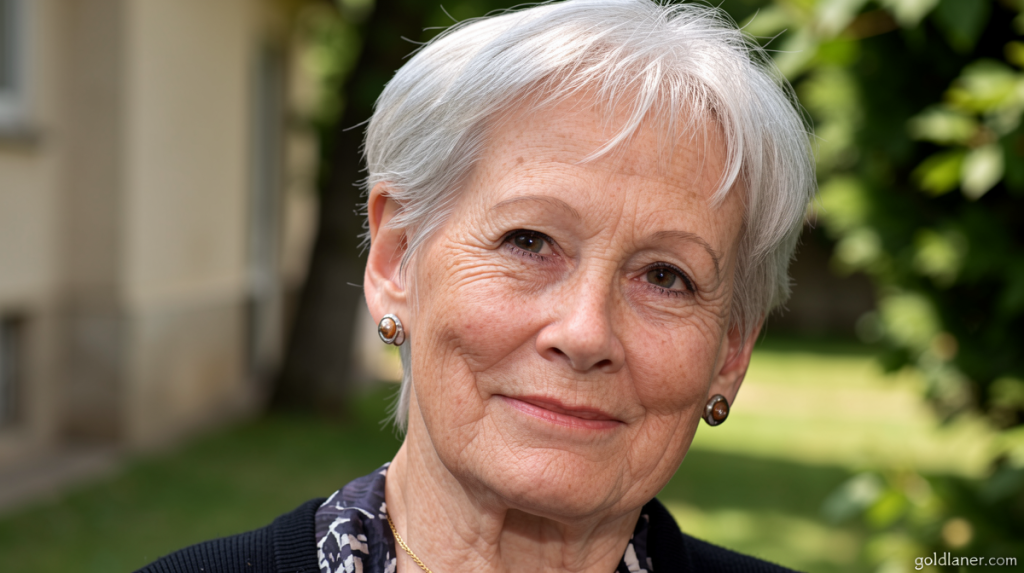
Kansas Loses a Singular Voice: Nancy Kassebaum Baker, 94, Has Died
Goldlaner.com – The political landscape of the American heartland will look different without the quiet, steady presence of Nancy Kassebaum Baker, who passed away on Friday at age 94 from natural causes. Her son, Bill Kassebaum, confirmed the death and offered a portrait of his mother that captured both her devotion to home state and her willingness to defy party orthodoxy.
“She loved Kansas. She loved people from Kansas and representing Kansas for 18 years in the US Senate,” Bill Kassebaum said. “She was an independent-minded Republican who was willing to stand up for what she thought was right, even if that meant going against the party.”
Baker’s departure closes a chapter that began in 1978, when she became the first woman ever elected to the United States Senate on her own merits rather than stepping into a vacant seat held by a husband. That distinction mattered enormously in an era when women in Congress were still a rarity, and her election sent shockwaves through Washington that no amount of modesty could dampen.
A Daughter of the Oil Country, Raised in Public Life
Born Nancy Landon on July 29, 1932, in Independence, Kansas, she entered the world while her father, oilman Alf Landon, was campaigning for his first of two terms as governor. Alf Landon would go on to become the Republican nominee for president in 1936, losing overwhelmingly to incumbent Franklin Roosevelt. Yet the elder Landon never abandoned public life; he became a respected elder statesman within the GOP, and a lecture series at Kansas State University still bears his name, drawing presidents and foreign dignitaries to campus.
The younger Landon absorbed that civic orientation early. She earned a political science degree from the University of Kansas and followed it with a master’s in diplomatic history from the University of Michigan in the mid-1950s. Before ever setting foot in a legislature, she worked as a radio-station executive, spent a year in the 1970s on the staff of Kansas Senator James Pearson, and served on the school board in Maize, a Wichita suburb. These roles gave her a working knowledge of governance that few candidates could match.
The Campaign That Defied the Odds
By the time she decided to seek the Senate seat in 1978, Baker — then Nancy Landon Kassebaum, having married Phil Kassebaum and raised four children, including Bill — had already divorced him in 1979. She reasoned that voters tired of conventional politics might respond to a candidate whose background differed sharply from the typical male politician.
“A woman with a background different from a man might be appealing,” she explained at the time.
Pundits pegged the cost of a Senate race in Kansas at roughly $1 million, a staggering sum for the state’s political economy. In the first quarter of 1978, she spent under $12,000 and described herself as sitting “at the bottom of the totem pole.” The primary field was crowded with nine candidates, including three sitting state senators and a prominent Wichita businessman. She captured the Republican nomination with fewer than 31 percent of the vote — a narrow slice of a fractured field.
In November, running under the name Nancy Landon Kassebaum, she defeated former two-term Democratic congressman Bill Roy with nearly 54 percent of the popular vote. The result stunned observers who had written her off months earlier.
Three Terms, One Uncompromising Conscience
Her moderate, progressive Republicanism — a lineage she shared with her father — quickly put her at odds with the party’s conservative wing. Within months of taking office, she declined to endorse a proposed constitutional amendment mandating a balanced budget.
“We should be wary of the seemingly simple solution,” she cautioned.
She later backed an assault-weapons ban championed by Democratic President Bill Clinton, a vote she acknowledged drew the angriest mail of her career. Yet she never alienated Kansas conservatives the way other GOP moderates did. Her appeal lay in an absence of pretension; she could sit comfortably with senators of every ideological stripe and chair the Labor and Human Resources committee — the only woman among eight female senators at the time to hold such a position.
She won reelection in 1984 with 76 percent of the vote and again in 1990 with 74 percent. A landmark 1996 health-insurance statute carried her name alongside that of liberal Massachusetts Senator Ted Kennedy, a bipartisan pairing that underscored her cross-aisle credibility.
After the Senate
Republican leaders had prevailed upon her to seek a third term, but in 1996 she chose to step aside. She spoke of returning to a ranch and a 90-year-old farmhouse in Kansas’ Flint Hills to babysit her seven grandchildren and two great-grandchildren.
“I’d rather cuddle up and do needlepoint all day,” she quipped upon announcing her retirement.
In 1996 she married former Senator Howard Baker, a Tennessee Republican who had served as White House chief of staff under Ronald Reagan. He died in 2014. Baker remained a fixture of Kansas civic life well after leaving Washington, taking on public-service roles that kept her connected to the state she had represented for 18 years.
Her father, who lived to 100 and died in 1987, cast a long shadow over her earliest Senate years. But Nancy Kassebaum Baker built a legacy entirely her own: one of independent judgment, bipartisan collaboration, and an unshakable loyalty to the people of Kansas rather than to any party label. That legacy endures.
Related Reading
Frequently Asked Questions
What is Former Kansas Sen Nancy Kassebaum Baker?
Former Kansas Sen Nancy Kassebaum Baker is the main topic of this guide. The article explains the context, practical details, and next steps readers should understand.
Why does Former Kansas Sen Nancy Kassebaum Baker matter?
Former Kansas Sen Nancy Kassebaum Baker matters because readers are looking for a useful answer, not just a short summary. Good content should match search intent and help them decide what to do next.