
Aftermath of Tropical Storm Lala: Hawaii Faces Widespread Destruction as the System Begins to Depart
Goldlaner.com – The eye of Tropical Storm Lala started drifting away from Kauai on Sunday, marking the beginning of the end for one of the most destructive weather events to strike the Hawaiian archipelago in recent memory. Yet departure does not mean relief. Roughly 184,000 customers across the islands remained without electricity as the storm’s outer bands continued to sweep through, and nearly three-quarters of the Big Island sat in darkness. Hurricane-force gusts had been recorded across Hawaii, Honolulu, and Maui counties, with the islands’ steep volcanic topography channeling and intensifying winds at higher elevations in ways that flat-terrain forecasts rarely capture.
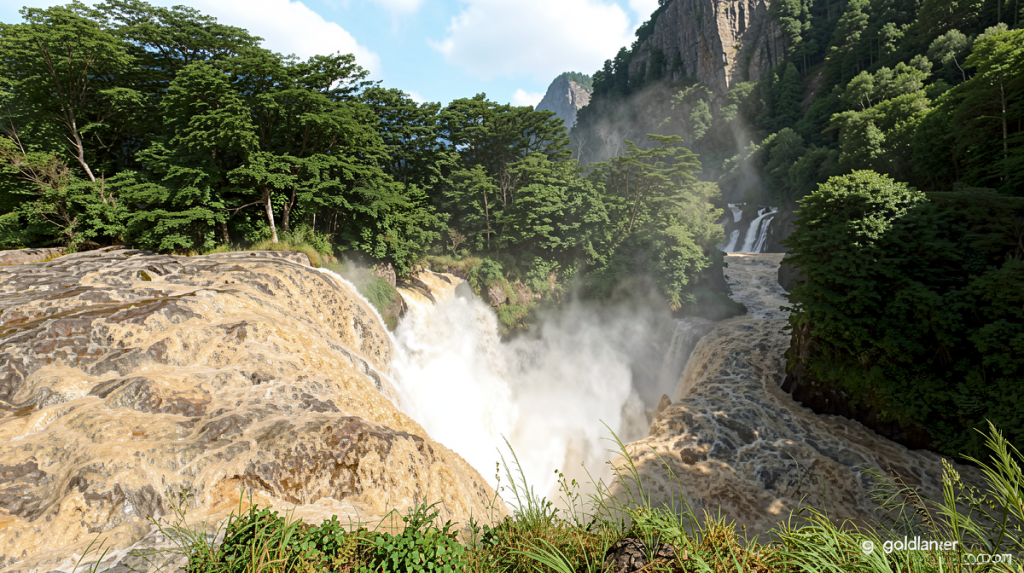
Governor Josh Green addressed the public during a Sunday news conference, confirming that at least 100 homes had been damaged or destroyed outright. He described scenes from Naalehu on the Big Island where what he called a “river of water” tore through the community, washing away “quite a lot” of infrastructure. A collapsed roadway had effectively created a new waterfall, while small bridges were damaged, isolating a stretch of terrain that includes a small hospital now cut off from both roads and power.
Human Toll and Rescue Efforts
Green attributed a vehicle accident to the storm on Saturday evening, though by Sunday he noted it remained unclear whether that incident was directly tied to Lala. A separate fatality was discovered amid the storm’s passage; the governor said the cause of death and any connection to the weather event were still undetermined.
In a video update posted Saturday night, Darryl Oliviera, acting civil defense administrator for Hawaii County, confirmed that occupants of a vehicle trapped in floodwaters were being extracted, though he offered no further specifics. Green highlighted one dramatic rescue in which crews pulled an elderly woman from a tree after her home had been swept away entirely.
Isolation on the Big Island
The storm’s heaviest impacts fell on the Big Island, which received more than 30 inches of rain. The resulting deluge triggered what Green predicted would be “a ton of landslides” across the island’s volcanic slopes. One particularly severe event occurred when floodwaters from the Pa’au’au Stream breached a rock retaining wall and surged onto a highway, buckling the pavement and severing the route.
Deborah Funai Brown, a lifelong resident of Pāhala, witnessed the collapse firsthand. She described the event as “catastrophic,” noting that up to 2,500 residents were left stranded on the far side of the broken roadway.
“We’ve always been stuck in the middle of nowhere so you kind of feel forgotten about when you’re out here, like you’re on an island by yourself.”
That sentiment captures a recurring vulnerability in rural Hawaii: communities perched on narrow ridgelines with limited road access face disproportionate risk when a single infrastructure point fails. The Pāhala collapse is not an isolated incident but a predictable consequence of the island’s geology meeting extreme rainfall.
Storm Track and Current Status
Lala had intensified to a Category 1 tropical storm by Saturday before making its closest approach to the Big Island around 5 p.m. local time. According to the National Hurricane Center, the eyewall grazed the southern portion of the island from roughly 30 miles offshore. By Sunday, the system’s core was peeling away from Kauai, though that island remained under direct influence, experiencing tropical storm-level gusts and sustained rainfall from the inner bands.
Tropical storm warnings remained in effect for Kauai, Oahu, Molokai, Lanai, and Maui. Heavy rain continued across the archipelago but was growing more intermittent as outer rainbands cycled through. The storm’s effects were projected to fully clear the Hawaiian Islands by 8 a.m. local time Monday.
Transportation and Infrastructure Disruption
More than 190 flights into and out of Hawaii were postponed, and 52 were canceled, though airports across the state stayed operational. Green indicated that emergency responders would remain engaged with urgent matters for approximately 36 hours as the system passed, with formal damage assessments slated to begin Monday.
Major General Stephen F. Logan, adjutant general for the state of Hawaii, described record numbers of road closures and prolonged outages. He identified the primary obstacle to power restoration as clearing downed trees that had fallen during the storm’s peak winds. State officials expressed confidence in their capacity to manage the cleanup, while active-duty military units stood by ready to assist if the scale of debris exceeded civilian resources.
What Comes Next: Rain, Waves, and Landslide Risk
As Lala tracks westward, its most persistent danger shifts from wind to water. The National Hurricane Center issued warnings for life-threatening flooding and mudslides, particularly in steep terrain. Up to six additional inches of rain were forecast for parts of Kauai, where tropical storm warnings remained active. Maui, Lanai, Molokai, Oahu, and Kahoolawe also carried tropical storm warnings.
Marine conditions compounded the threat: waves of 8 to 12 feet were expected, especially along east-facing shores where a high surf advisory was in effect. For island communities already coping with collapsed roads, severed power lines, and isolated hospitals, the prospect of continued heavy rain and surging surf meant that the worst of the storm’s consequences had yet to fully unfold.
Hawaii’s geography—volcanic peaks rising abruptly from the ocean, narrow valleys funneling runoff, and communities connected by single highways—makes the archipelago uniquely exposed to tropical systems. Even a storm that never makes a direct landfall can deliver catastrophic rainfall to windward slopes, as Lala demonstrated across the Big Island. The coming days will test not only repair crews but the resilience of residents in areas where the storm has severed the last remaining lifelines of road and electricity.
Related Reading
Frequently Asked Questions
What is Thousands without power and at least 100?
Thousands without power and at least 100 is the main topic of this guide. The article explains the context, practical details, and next steps readers should understand.
Why does Thousands without power and at least 100 matter?
Thousands without power and at least 100 matters because readers are looking for a useful answer, not just a short summary. Good content should match search intent and help them decide what to do next.