
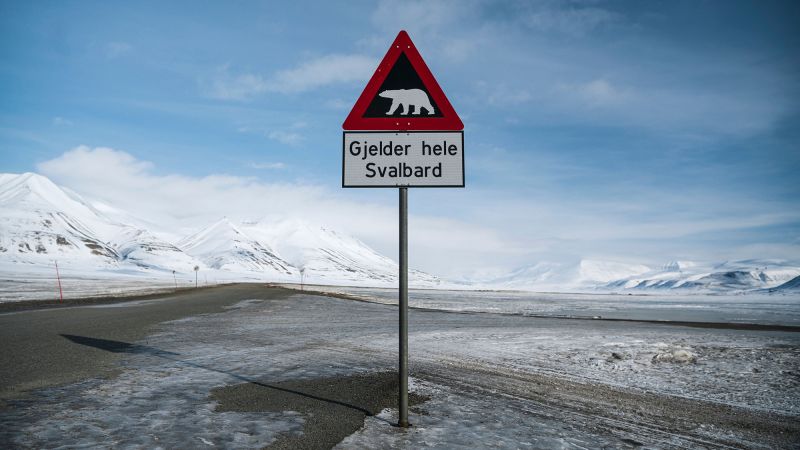
Arctic Vessel Passenger Penalized for Waking Sleeping Polar Bear with Foghorn
Goldlaner.com – A maritime passenger faces a substantial financial penalty after using a ship’s foghorn to alert others to a sleeping polar bear, inadvertently disturbing the Arctic predator during a critical rest period. The incident took place aboard a vessel navigating through one of Svalbard’s scenic fjords in northern Norway’s Arctic archipelago. The governor of Svalbard, Lars Fause, announced the fine on Thursday, confirming that the individual’s actions constituted an intentional disturbance of the protected animal. The penalty amounts to 50,000 kroner, equivalent to approximately $5,300 in American currency.
The Incident Unfolds in the Arctic Fjord
According to Governor Fause’s official statement, the vessel was sailing through a fjord when passengers noticed a polar bear resting on land. Rather than simply observing the magnificent creature, someone aboard decided to sound the ship’s foghorn—a loud, low-pitched warning device typically employed for maritime safety purposes. The booming sound echoed across the fjord, startling the slumbering bear and causing it to relocate to a different area. The governor’s employees were subsequently alerted by members of the public and confirmed the disturbance. The individual responsible has now agreed to pay the imposed penalty.
Strict Arctic Wildlife Regulations
Svalbard maintains rigorous environmental protection laws designed to safeguard its iconic wildlife. Under these regulations, polar bears have enjoyed protected status since 1973, making it illegal to hunt the species in the region. The laws explicitly prohibit activities that “unnecessarily disturb, lure or pursue polar bears.” Distance requirements vary by season to accommodate the animals’ different behavioral patterns. Between July and February, visitors must maintain a minimum distance of 300 meters, or roughly 984 feet, from any polar bear. During the spring months of March through June—when polar bears engage in their typical mating season—the protected zone expands to 500 meters, or 1,640 feet.
Population and Migration Patterns
The Svalbard and Barents Sea region, a marginal sea of the Arctic Ocean shared between Norwegian and Russian territorial waters, supports an estimated 3,000 polar bears. While the population fluctuates throughout the year as many individuals migrate to the remote Franz Josef Land archipelago in Russia’s northernmost territory, approximately 300 polar bears remain on Svalbard year-round. Recent observations indicate that polar bears in Norway’s Arctic waters are becoming fatter and healthier despite ongoing sea ice melting. This trend reflects complex ecological changes affecting the region’s apex predators.
Summer Survival Challenges
The summer months present particular challenges for polar bears in Svalbard. As sea ice diminishes, the bears lose access to their primary hunting grounds and their main food source: fat-rich seals. During this ice-free season, polar bears that are in good body condition—described as being on the “chubby side”—often adopt a conservation strategy of extended rest periods with minimal movement. Geoff York, vice president of research and policy at Polar Bears International, provided expert context on why this disturbance matters.
“Bears resting in the summer ice-free season with fewer sources of high fat calories accessible, often choose to just wait out the lean times with very long naps and very little movement if they are in good body condition: which for a bear means on the chubby side.”
York emphasized that disrupting bears during this critical period carries significant consequences.
“Disturbing bears during this time of year may be more significant for their survival or potential reproductive success if it’s a pregnant or nursing female by causing them to burn calories unnecessarily.”
His organization works dedicatedly to protect polar bears and the sea ice ecosystem upon which they depend.
Precedent and Enforcement
This is not the first time Svalbard authorities have issued fines for wildlife disturbances. In 2024, a tourist received a penalty of 12,500 kroner, approximately $1,300, after attempting to approach a walrus. In that case, members of the public alerted officials, and the man was intercepted by the governor’s employees before he could get too close to the marine mammal. York expressed encouragement that Svalbard’s authorities acted swiftly in this foghorn incident, demonstrating a commitment to deterring similar behaviors from other visitors. The combination of public vigilance, prompt official response, and meaningful financial penalties creates a framework that helps protect Arctic wildlife from well-meaning but disruptive human interactions.
Related Reading
Frequently Asked Questions
What is Person fined 5 000 for using?
Person fined 5 000 for using is the main topic of this guide. The article explains the context, practical details, and next steps readers should understand.
Why does Person fined 5 000 for using matter?
Person fined 5 000 for using matters because readers are looking for a useful answer, not just a short summary. Good content should match search intent and help them decide what to do next.