
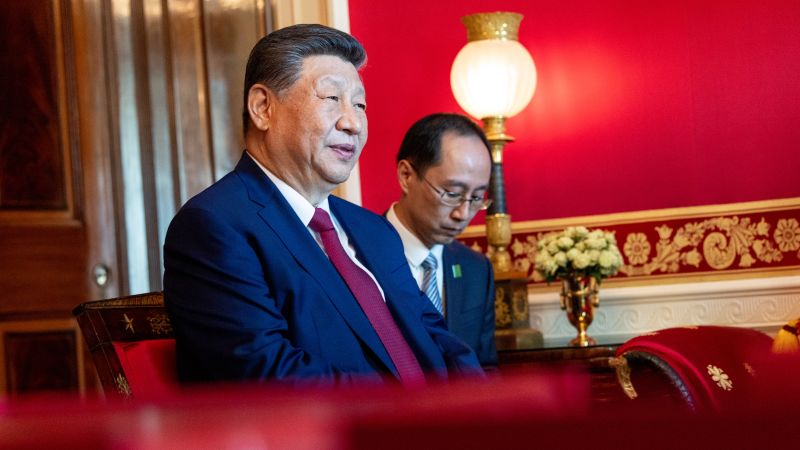
A Carefully Managed Summit Gives Beijing Room to Breathe
Goldlaner.com – The Trump Xi meeting was heavy on ceremony but offered limited public evidence of a breakthrough on the issues that continue to divide Washington and Beijing. President Donald Trump and Chinese leader Xi Jinping used Xi’s first trip to Washington in more than a decade to project stability, renew a trade truce and discuss possible cooperation on artificial intelligence safeguards.
For Xi, an agreement to prevent relations from worsening may be enough for now. China arrived with more leverage than it had in earlier rounds of engagement, while both governments appeared eager to avoid another confrontation that could disrupt markets, supply chains and diplomatic alliances.
The visit followed a May meeting in Beijing that also featured substantial pageantry but few major policy outcomes. In Washington, the red-carpet welcome, White House state dinner and speeches about continued engagement again became central elements of the summit.
Cooperation as a Strategic Message
At the dinner, Xi portrayed China’s development as an opportunity for the United States rather than a threat. His message emphasized goodwill between the two societies and framed bilateral cooperation as a shared interest.
The friendship between the two peoples is a worthy cause that holds great promise. Let us join hands and move forward side by side.
Xi also linked Trump’s “Make America Great Again” slogan with his own goal of the “Great rejuvenation of the Chinese nation.” That long-term Chinese agenda seeks to build a country with leading military, industrial and technological capabilities.
Washington has increasingly treated China’s progress in those sectors as a strategic challenge. US restrictions on Chinese imports, investment and access to American technology reflect concerns that commercial ties can strengthen a major competitor.
Beijing sees many of those measures as attempts to constrain its growth. Still, China has maintained record export levels, advanced work in artificial intelligence and robotics, and retained influence over rare earth metals and other materials important to US industry. Those strengths gave Xi additional room in the negotiations.
Stability Without a Major Breakthrough
The Trump Xi meeting was heavy on efforts to calm tensions, a result that carries value for governments and businesses even without a sweeping deal. Previous disputes between the two powers have reshaped supply chains, complicated investment plans and forced other countries to navigate competing political and economic demands.
The renewed trade truce may offer more predictability, but it does not resolve the fundamental disputes over technology controls, market access, investment, security, industrial policy and Taiwan.
Cui Hongjian, an international relations scholar at Beijing Foreign Studies University, said the absence of major business executives from Xi’s Washington delegation suggested that commercial ties had not entered a significant new phase. In his assessment, both sides remain focused on stabilizing the political environment before expecting substantial progress in trade or business.
Xi called for the United States to be more open to Chinese companies. Trump emphasized the long history of commerce and people-to-people ties between the countries, while recognizing their differing political systems.
President Xi and I both understand that we represent different systems, but the ties between our people endure. We’ve never gotten along better.
The friendly language stood against domestic pressure on Trump, including the prolonged war with Iran and rising inflation ahead of November’s midterm elections. The summit also took place amid controversy over the exclusion of CNN, MS Now and Politico from the White House press pool. A court later reversed the ban.
Taiwan Remains the Most Sensitive Issue
Beneath the ceremony, Taiwan remains among the most consequential sources of friction. Beijing considers the self-governing island part of its territory and sees bringing it under Communist Party rule as central to Xi’s national rejuvenation agenda.
During private discussions, Xi pressed Trump to oppose Taiwan’s independence, according to Xinhua. The United States has historically maintained deliberate ambiguity on Taiwan’s sovereignty while continuing to support the island’s ability to defend itself.
The Trump Xi meeting was heavy on symbolic reassurance, but Taiwan illustrates why symbolism alone cannot settle the wider rivalry. The two leaders may have reduced the immediate risk of escalation, yet the underlying disagreements remain deeply entrenched.
Frequently Asked Questions
What did Trump and Xi agree to?
The leaders renewed a trade truce and discussed potential cooperation on safeguards for artificial intelligence. No broad public agreement was announced on the larger economic and security disputes between the United States and China.
Why does the trade truce matter?
A pause in escalating trade tensions can provide businesses, investors and governments with greater short-term predictability. It does not, however, resolve disputes over technology, market access, investment or industrial policy.
Why is Taiwan central to US-China relations?
China claims Taiwan as part of its territory, while the United States maintains a longstanding policy of strategic ambiguity and supports Taiwan’s defense capabilities. The issue remains one of the most sensitive and potentially dangerous areas of disagreement between Beijing and Washington.