
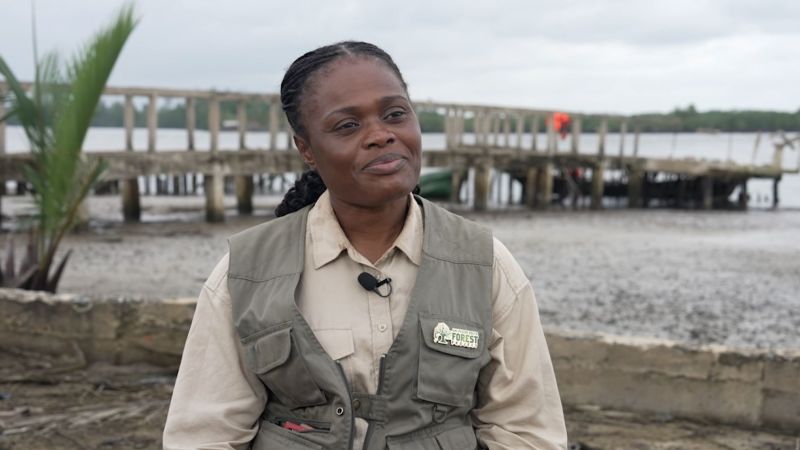
Community-Led Conservation Brings Nigeria’s Rare Monkey Back from Extinction
Goldlaner.com – Deep within the tangled mangrove forests of Nigeria’s Niger Delta, a remarkable recovery is underway. The Niger Delta red colobus, a striking primate with a distinctive black, orange, and white coat, was nearly lost to history. Discovered by science in 1993, this elusive monkey faced catastrophic decline within just twenty years. Hunting pressure, combined with habitat destruction from oil extraction and deforestation, pushed the species to the brink of extinction. By 2010, conservationists recognized it as one of the world’s most threatened primates.
Rachel Ikemeh, a Nigerian conservationist, recognized the urgency when she first encountered the situation in 2013. The surviving population had retreated into isolated pockets scattered across approximately 77 square miles of the vast Niger Delta region. This ancestral landscape spans 27,000 square miles and contains Africa’s second-largest swamp forest, the world’s third-most expansive mangrove ecosystem, and crucial coral reef habitats. The red colobus once roamed these areas freely, but decades of environmental degradation had fragmented their world.
A New Approach to Conservation
Initially, Ikemeh held conventional views about local communities. “In my line of work, I was given the impression that communities were always to blame,” she explained. “They’re the culprit, the problem to the natural environment. The ones hunting (animals) to extinction and the ones driving deforestation.”
However, recognizing that traditional top-down conservation had limited success, she chose a different path. Ikemeh launched the South-West/Niger Delta Forest Project, a community-led initiative that brought local people into the heart of conservation efforts. She traveled to the Apoi Creek Forest to engage directly with residents, teaching them about wildlife needs, data collection methods, and sustainable practices.
“The only way these monkeys can have a long-term future is for us to scale to other surrounding areas,” Ikemeh explained.
By 2021, her efforts had established a protected conservation area spanning 2,500 acres, actively policed and maintained by the Apoi community. The results were transformative. “The Niger Delta red colobus was ‘right at the edge of becoming extinct,’ Ikemeh recalled. ‘But today, as I speak to you, we have the records of four thriving groups, nursing and nurturing their babies. They’re repopulating where conservation areas were created, where habitat restoration is ongoing, and where the forest is now being restored.'”
From Monkey Conservation to Marine Protection
Population estimates suggest the red colobus numbers fell to approximately 200 individuals at their lowest point. Since the program’s establishment, those numbers have doubled. This success exceeded Ikemeh’s expectations for what would become a decade-long community-based initiative.
The project’s scope expanded dramatically over the years. SWNDFP now protects more than 20,000 acres of forest habitat and safeguards at least 16 threatened species. The conservationist’s vision extended beyond terrestrial ecosystems when she established Nigeria’s first locally managed marine area in Foropa Middleton Kingdom, a coastal community along the Atlantic Ocean.
The coastal region has experienced dramatic environmental changes. Sharks, dolphins, sea turtles, and fish populations that once thrived have significantly declined. Multiple threats compound the problem: aging oil infrastructure causes spills, militant sabotage disrupts operations, and illegal artisanal refining pollutes waters. Black sand mining, which extracts heavy mineral deposits from coastal areas, adds additional pressure to the ecosystem.
Ikemeh recognized that pollution forced local fishing communities like the Foropa Kingdom to turn to logging and poaching, creating a cycle that further degraded the red colobus habitat. “When you want something to be sustainable, you want it to be stewarded by the community,” she emphasized, applying the same community-centered philosophy that saved the monkeys to marine conservation.
Broader Implications for Environmental Justice
The Niger Delta’s story reflects challenges facing many resource-rich regions globally. Communities living near oil extraction sites often bear disproportionate environmental burdens while receiving limited economic benefits. Ikemeh’s approach demonstrates how conservation can address both ecological and social concerns simultaneously.
Her work has earned recognition as a Rolex Awards Laureate, highlighting the importance of locally-led solutions in global conservation efforts. The model she developed offers valuable lessons for other regions where traditional conservation approaches have failed to engage local populations effectively.
As climate change intensifies pressures on ecosystems worldwide, community-based conservation models like SWNDFP provide adaptable frameworks for protecting biodiversity. The success of Nigeria’s red colobus recovery suggests that when local communities become active stewards rather than passive subjects, both wildlife and human communities can thrive together.
Related Reading
Frequently Asked Questions
What is How this conservationist fought to bring?
How this conservationist fought to bring is the main topic of this guide. The article explains the context, practical details, and next steps readers should understand.
Why does How this conservationist fought to bring matter?
How this conservationist fought to bring matters because readers are looking for a useful answer, not just a short summary. Good content should match search intent and help them decide what to do next.