
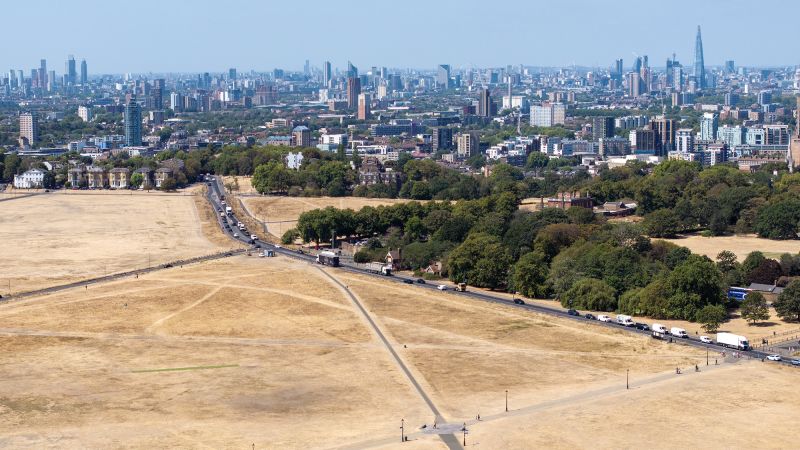
Europe’s Record Summer Heat Linked to More Than 50,000 Deaths in Cities
Goldlaner.com – Europe’s punishing summer heat is estimated to have caused more than 50,000 deaths in cities across the continent, underscoring the growing public-health danger posed by rising temperatures. The 2026 season is likely to rank as Europe’s deadliest summer for heat-related mortality, with fossil fuel pollution and human-driven climate change playing a major role in the loss of life.
Two peer-reviewed papers published in Nature Health put the estimated toll at 50,391 heat-related deaths in 854 cities spanning 30 European countries. Those urban areas represent roughly 40% of the population in the nations examined. Researchers concluded that more than 32,600 of the deaths — nearly two-thirds — can be attributed directly to climate change.
“I think we can be quite confident in stating that the summer of 2026 is likely to have been the worst on record for heat-related mortality across much of Europe,” said Clair Barnes, an author on the reports and an extreme weather and climate change researcher at Imperial College London.
A summer of exceptional temperatures
Europe experienced extraordinary heat from late May through the end of August. Western Europe recorded its hottest summer since records began, with average temperatures about 2.9 degrees Celsius, or 5.2 degrees Fahrenheit, above the 1991-2020 norm. On certain days, conditions were even more extreme: some countries saw temperatures exceed usual levels by more than 12 degrees Celsius, or 21.6 degrees Fahrenheit.
Europe is warming faster than any other continent, and heat is already its most deadly type of extreme weather. Extended periods of high temperature can overwhelm the body’s ability to cool itself, aggravate existing illnesses and strain health services. The risk is especially severe in dense cities, where buildings, asphalt and limited nighttime cooling can keep temperatures dangerously high long after sunset.
The researchers compared the temperatures experienced this summer with the temperatures that would likely have occurred in a world without climate change. They then applied established peer-reviewed evidence linking daily heat exposure with mortality to estimate deaths between the beginning of June and the end of August.
This type of analysis is designed to provide an early picture of the human consequences of extreme heat. The scientists said its estimates have generally aligned with mortality totals later released by national health authorities. The scale of the 2026 toll is particularly striking: it is the highest in 26 years and substantially exceeds the figures associated with Europe’s major heat waves of 2022 and 2003.
Southern and western regions hit hardest
Southern and western Europe suffered the greatest impact, reflecting the intensity and persistence of the summer’s heat. Yet cooler parts of the continent were not spared. The United Kingdom and other northern areas, where homes and public infrastructure are often less prepared for sustained extreme heat, also recorded thousands of estimated heat-related deaths.
People aged 85 and older faced the highest death rates. Older adults can be more vulnerable because of underlying medical conditions, reduced mobility, medication effects and difficulties maintaining hydration or cooling indoor spaces. Still, the danger was not confined to the oldest residents. More than 800 people aged 20 to 44 were estimated to have died from heat-related causes, while thousands of those who died were under 65.
That broader age impact highlights why heat warnings should not be treated solely as an issue for elderly people. Outdoor workers, people with chronic health conditions, those living in poorly cooled homes and residents in crowded urban neighborhoods can all face elevated exposure. Heat can also worsen cardiovascular, respiratory and kidney problems, while disrupted sleep and prolonged hot nights can compound stress on the body.
“These numbers are a stark reminder that our hotter, more extreme summers are having an increasingly severe impact on public health,” Barnes said. “Behind these statistics are real people whose lives were lost and real families who grieve for them.”
Climate change is claiming a larger share of heat deaths
The studies indicate that the contribution of climate change to heat mortality has intensified sharply. Earlier in this century, fossil fuel pollution was linked to roughly 40% of heat-related deaths. That share has now risen to around two-thirds, reflecting the way global warming has shifted the baseline for summer temperatures and made severe heat more frequent and more intense.
The findings arrive shortly before world leaders are due to meet in Turkey for annual United Nations climate talks. They also follow a United Nations warning that the opportunity to limit global warming to 1.5 degrees Celsius above pre-industrial levels has disappeared. For public-health systems and local governments, the figures reinforce the need to treat extreme heat as an immediate risk rather than a distant climate scenario.
“We’re well off-track to limit the worst consequences of climate change, and governments need to realize that without faster action and coordination, things will only get worse,” Barnes said.
Raquel Nunes, an associate professor in health and environment at the University of Warwick who was not involved in the research, said the work adds to growing evidence of the lethal consequences of extreme heat. Heat is often described as a “silent killer” because its effects may not be as visually obvious as floods, storms or wildfires, even when mortality is severe.
Nunes also pointed to the high estimated toll among younger people as a particularly worrying element of the results. The summer’s losses show that health protection during heat waves must reach beyond emergency alerts. Public information, access to cool spaces, attention to vulnerable neighbors and planning for hotter homes, workplaces and cities can all matter when temperatures remain elevated for days or weeks.
“Until we kick the fossil fuel habit, we will continue to see increasingly hot and dangerous summers,” Barnes said.
The 2026 summer offers a stark measure of what is already happening across Europe. As heat waves become more dangerous, the question is no longer whether high temperatures affect public health, but whether societies can reduce the pollution driving the trend and protect people before the next extreme summer arrives.
Related Reading
Frequently Asked Questions
What is Worst on record?
Worst on record is the main topic of this guide. The article explains the context, practical details, and next steps readers should understand.
Why does Worst on record matter?
Worst on record matters because readers are looking for a useful answer, not just a short summary. Good content should match search intent and help them decide what to do next.