
What we know about the controversial Big Bend border project
Goldlaner.com – What we know about the controversial border-infrastructure pause in Texas’s Big Bend National Park is still unfolding, but one thing is clear: the temporary suspension of construction work has not calmed the anxiety of ranchers, outfitters, and conservation groups across West Texas. Dozens of those stakeholders flooded the Texas Parks and Wildlife Commission’s annual public hearing in Austin on Wednesday, delivering impassioned — occasionally tearful — pleas for the state panel to protect the wider Big Bend landscape from further federal grading, especially at neighboring Big Bend Ranch State Park.
The two-week minimum halt was announced on Tuesday by Rodney Scott, chief of U.S. Customs and Border Protection, following days of bipartisan criticism over the project’s scale and ecological footprint. Scott met with sheriffs and judges from border counties and confirmed the suspension, while reiterating that his agency had no plans to build a traditional wall inside the national park, according to two sheriffs present. He also signaled openness to scrapping brand-new patrol-road proposals in favor of upgrading routes already on the ground.
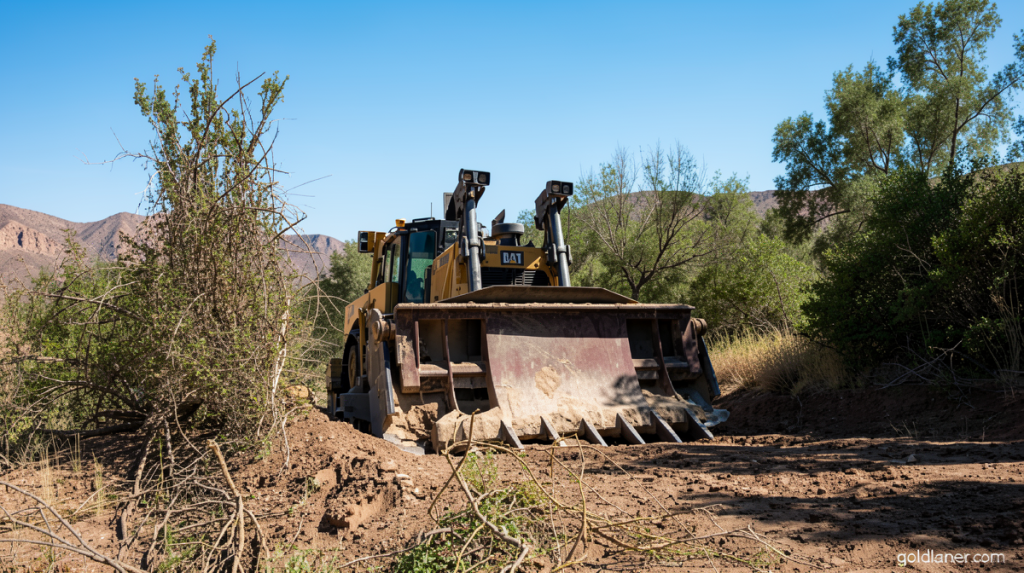
By Wednesday afternoon, bulldozers that had been grading and excavating park sections for roughly two weeks appeared to be pulled from the work zones — a visible confirmation that the pause was taking effect in the field.
What the federal blueprint actually specifies
What we know about the controversial Big Bend component of the administration’s border-security agenda is that it does not call for a continuous concrete or steel barrier. The current plan envisions vehicle barriers, new patrol roads, and upgrades to existing routes within the park. That work is one slice of a far larger federal initiative aimed at completing border-wall segments and complementary security infrastructure before President Donald Trump leaves office. Bipartisan legislative pressure appears to have been the catalyst for Scott’s decision to hit the brakes.
Big Bend National Park, established in 1944 and spanning roughly 801,000 acres along the Rio Grande, ranks among the oldest and most ecologically irreplaceable parks in the country. Its steep limestone canyons, vast desert grasslands, and the river itself sustain species found nowhere else in the United States — including the sporadically sighted jaguar, the black bear, and dozens of bird species. Surrounding state and private lands extend that habitat corridor into ranching country where elk, bighorn sheep, and migratory waterfowl depend on uninterrupted movement patterns.
Testimony from the hearing floor
Grahame Jones, executive director of the Texas Conservation Alliance and a former state game warden with 27 years of service, framed the stakes in terms of community identity rather than narrow environmental policy.
“Big Bend is more than one park,” Jones said. “It is local communities, the Rio Grande, public lands, sacred places, ranches, working lands, wildlife habitat, history, culture and for many people here today, a state of mind.”
Jones argued that security objectives need not come at the expense of permanent ecological alteration.
“We can secure the border without needless construction and permanent damage to this incredible place,” Jones added.
Lydia Saldaña, a former Texas Parks and Wildlife Department employee, cast the issue in moral terms.
“Big Bend is sacred territory for Texas,” Saldaña said. “We’re asking you to stand up for Big Bend.”
She acknowledged the limits of a state commission’s authority over federal land while pressing the panel to use whatever leverage it holds.
“No one expects this commission to single handedly stop the federal government, but you can slow the roll.”
Wildlife and recreation at stake
Jake Walker, policy chair of the Texas chapter of Backcountry Hunters and Anglers, noted that much of the affected terrain constitutes a substantial share of the state’s publicly accessible hunting acreage. He warned that even modest physical changes — barriers, excavated corridors, increased lighting — could disrupt the already-sparse movement of game species through the landscape.
“Wildlife density out there is really low, so any changes to the landscape, we’re afraid whether it’s walls or barriers or excavations or even light, that’s going to impact movement patterns of those game animals,” Walker said.
FAQ: What we know about the controversial Big Bend pause
How long will the construction pause last? CBP chief Rodney Scott stated a minimum of two weeks. No end date beyond that window has been publicly confirmed.
Will a traditional border wall be built inside Big Bend National Park? Scott told local sheriffs and judges that his agency has no intention of erecting a traditional wall within the park. The current plan calls for vehicle barriers, patrol-road construction, and route upgrades instead.
What can the Texas Parks and Wildlife Commission actually do? The commission has no direct authority over federal land. Advocates are urging it to use its advisory influence, public-comment channels, and coordination with state agencies to slow or shape any future federal action in the broader Big Bend landscape.
Which species are most at risk from construction activity? Stakeholders cited the jaguar, black bear, bighorn sheep, elk, and migratory waterfowl as species whose movement corridors could be fragmented by barriers, excavations, and increased lighting in an area where wildlife density is already very low.