
Antarctic Logistics Flight Diverts After Russian Missile Launch Warning Over Southern Pacific
Goldlaner.com – A military transport aircraft en route to the Antarctic continent made an unplanned return to its departure airport in New Zealand after aviation authorities flagged a potential collision risk from a planned Russian missile launch. The incident, which unfolded over roughly two and a half hours on Tuesday, underscored how routine polar supply operations can be disrupted by events occurring thousands of kilometres away in upper atmosphere.
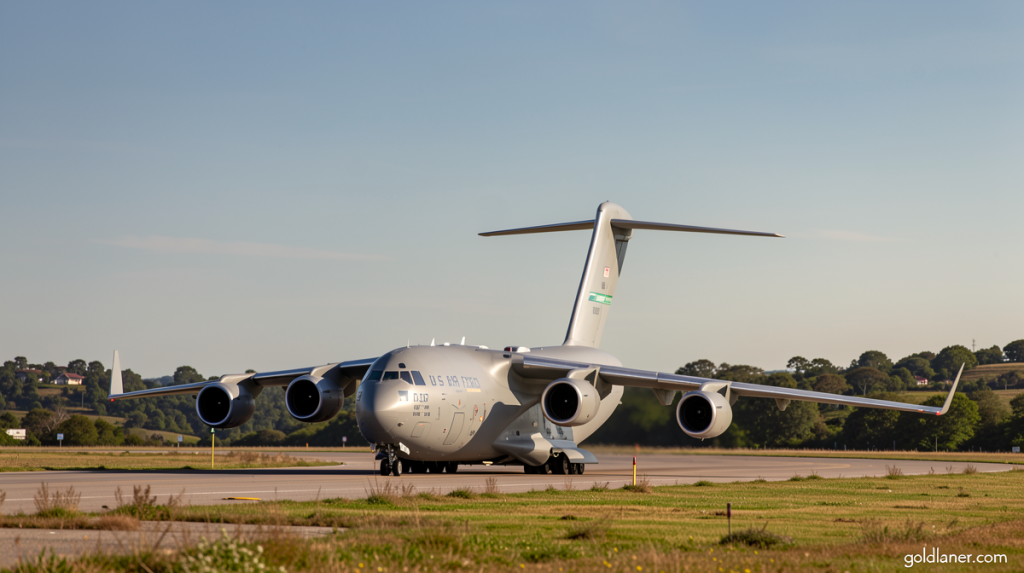
The aircraft in question was a C-17 Globemaster III operating under the call sign ICE28. Flight-tracking data from Flightradar24 recorded its departure from Christchurch Airport at approximately 9:00 a.m. local time, heading south toward the continent. By just before 11:30 a.m., the plane had completed a full turn-around and was back on the ground at Christchurch, having spent roughly 150 minutes airborne before aborting the mission.
The Warning That Triggered the Turnaround
New Zealand’s Civil Aviation Authority (CAA) confirmed it had issued a NOTAM — a Notice to Airmen, the standard instrument used worldwide to alert pilots to temporary hazards in their flight path. The trigger came from Russia’s State Air Traffic Management Corporation, which notified the New Zealand agency of a planned missile launch and the associated risk to international airspace falling within New Zealand’s Oceanic Flight Information Region.
That FIR spans approximately 30 million square kilometres of Pacific and Tasman Sea airspace, making it one of the largest single airspaces administered anywhere on Earth. Much of it sits over international waters, where no single nation exercises sovereignty and where the CAA’s authority is limited to issuing advisories rather than enforcing restrictions.
“We put in place a danger area and issued a NOTAM to alert aircraft operators to the potential hazard. This does not prevent aircraft from flying through the area, operators make their decisions based on the information available,” the CAA stated in a follow-up release on Wednesday.
The agency added that its jurisdiction over the vast oceanic FIR means it has “limited control over activities” in the region, a constraint that leaves the final go-or-no-go decision squarely with each flight crew.
WINFLY: The Narrow Window When Antarctica Gets Restocked
The aborted flight was scheduled during the annual Winter Fly-in, commonly abbreviated WINFLY, a tightly compressed operational window in which regular air service resumes between Christchurch and two Antarctic installations: the United States’ McMurdo Station and New Zealand’s Scott Base. During the austral winter, sustained flights to the continent are largely suspended because of extreme cold, shortened daylight hours, and deteriorating weather. When conditions permit, airlines and military transport units concentrate dozens of missions into a short period to move personnel, scientific equipment, fuel, and construction materials south ahead of the summer research season.
Because the window is so narrow, every diverted or cancelled flight compresses the remaining schedule. A single turnaround can force crews to re-sequence cargo loads, delay scientific deployments, and push critical supply deliveries into later dates when weather margins are already thin. For researchers at McMurdo and Scott Base, whose fieldwork calendars depend on predictable logistics, even a two-hour delay in the supply chain can ripple through weeks of planned operations.
Space Activity and Air Traffic: A Growing Intersection
Missile launches, satellite deployments, and upper-atmosphere testing have become increasingly routine events in the southern hemisphere, particularly from launch sites in Australia, South America, and Russia’s Pacific coast. Debris fields, spent rocket stages, and the plumes of solid-fuel motors can intersect flight levels used by long-range transport aircraft crossing the Pacific. Aviation authorities in multiple countries now coordinate with space agencies to issue timely NOTAMs when a launch is scheduled within or near their FIR boundaries.
The CAA’s Tuesday statement described the notified activity as “potentially hazardous,” language that signals a credible risk assessment rather than a precautionary formality. The Wednesday follow-up clarified that the specific activity was a planned missile launch, giving pilots and dispatchers a concrete picture of the threat geometry.
Outreach and Unanswered Questions
As of publication, the US Air Force, the US Antarctic Program, and Russia’s State Air Traffic Management Corporation had not issued public statements addressing the specific flight or the launch parameters. The CAA’s role in the episode was advisory: it relayed the Russian notification, drew a danger area on its charts, and issued the NOTAM. The decision to turn the aircraft around rested with the flight crew and mission planners aboard or on the ground in Christchurch.
For the crews and scientists awaiting the next available slot in the WINFLY schedule, the episode is a reminder that the southern Pacific corridor — already one of the most remote and weather-limited flight paths on the globe — now shares its airspace with an expanding population of spaceflight activities, each capable of compressing an already fragile polar logistics timeline.
Related Reading
Frequently Asked Questions
What is US Air Force flight to Antarctica?
US Air Force flight to Antarctica is the main topic of this guide. The article explains the context, practical details, and next steps readers should understand.
Why does US Air Force flight to Antarctica matter?
US Air Force flight to Antarctica matters because readers are looking for a useful answer, not just a short summary. Good content should match search intent and help them decide what to do next.