
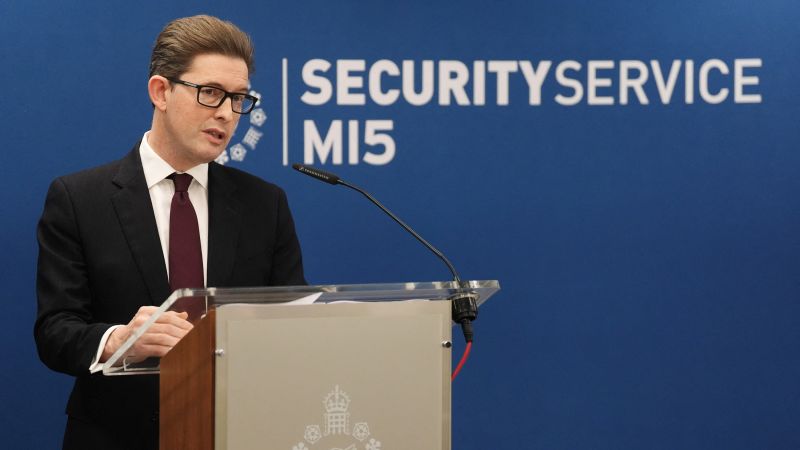
UK in New Era of National Security, MI5 Chief Warns
Goldlaner.com – The UK in new era of national security faces a more contested environment than in the decades following the Cold War, according to MI5 Director General Ken McCallum. In his annual threat assessment, McCallum said Britain must strengthen its resilience and vigilance as hostile states, terrorists and emerging technology create overlapping risks.
McCallum said MI5’s counterterrorism and state-threat operations are now “pretty much of equal scale,” marking a major change from recent years. He identified Russia, Iran and China as key sources of hostile activity, with threats including arson, sabotage, cyberattacks, coercion and violence.
Artificial Intelligence Could Amplify Existing Threats
Artificial intelligence is already increasing some risks, particularly in cybersecurity, McCallum said. MI5 has created a new AI Threat Assessment Center to examine how the technology may be used by hostile actors and how the UK can respond.
He also warned that AI could eventually make it easier to develop destructive biological weapons, although he said that risk has not yet materialized. A central concern is that people with comparatively limited technical expertise could gain more dangerous capabilities if effective safeguards are not put in place.
Russia, Iran and China Drive State Threats
McCallum said the UK in new era of national security is devoting more resources to countering state threats than it did during the Cold War. MI5’s state-threat caseload has quadrupled over the past decade, he said, and the current climate should not be seen as a temporary disruption.
Russia remains “aggressor number one,” McCallum said, citing an expanding campaign of hybrid warfare across Europe. He pointed to incidents including a cyberattack on Polish energy infrastructure, an alleged attempt to destroy a cargo plane in Germany with an explosive-laden drone, and a recent UK case involving allegations of plans to sabotage a drone factory in Swindon.
Russia’s intelligence capacity has been weakened since more than 1,000 of its foreign staff were expelled from host countries after Moscow launched its full-scale invasion of Ukraine in 2022, McCallum said. He argued that Moscow has increasingly turned to criminals to carry out its aims, while Iran has also sought to broaden its hybrid campaign.
Iran-Linked Plots and Concerns Over Military Sites
More than 50 people have been arrested in connection with Iran-linked plots, most of them aimed at British Jewish communities, McCallum said. He also referred to Iranian ambitions to target harder sites, including military locations, in remarks linked to the incident at RAF Fairford.
Prime Minister Andy Burnham said Iran’s Islamic Revolutionary Guard Corps was “almost certainly” responsible for directing a suspected plot against the UK airbase used by US forces. Senior Iranian officials denied the accusations. Several men, including a British-Iranian dual national, were arrested and later released on bail.
The United States subsequently moved long-range bombers stationed in the UK back to bases in America after an unspecified new threat emerged. McCallum said the RAF Fairford case was not unique and that similar concerns had arisen elsewhere in the world.
Espionage and Terrorism Remain Major Concerns
McCallum also accused China of conducting espionage in the UK. He referred to an MI5 alert issued to academics and to convictions earlier in the year that he described as the first national-security convictions connected to Beijing.
Despite the expanding state-threat workload, terrorism remains a top concern for MI5, McCallum said. He warned that an attack remains highly likely, underscoring why the UK in new era of national security must prepare for threats that can emerge from multiple directions at once.
FAQ: What Does This Mean for People in the UK?
What should the public do?
People should remain alert to official security guidance and report suspicious activity through the appropriate police or government channels. The warning does not mean an attack is imminent, but reflects MI5’s assessment of a heightened and persistent threat environment.
Why is AI a security concern?
AI can help hostile actors improve cyberattacks, spread harmful material and potentially increase access to dangerous capabilities. MI5’s concern is that the technology could make some threats easier to carry out or harder to detect.
Are state threats replacing terrorism?
No. McCallum said terrorism remains a leading concern for MI5, while state-directed threats have grown to a similar operational scale. Britain’s security services are therefore addressing both at the same time.