
Nine Days After Catastrophic Floods, Voices Emerge From Nepal’s Buried Power Tunnels
Goldlaner.com – For nearly a week, the silence beneath the Trishuli River valley had been absolute. Then, on the ninth day since a wall of debris-laden water swallowed the Himalayan foothills of central Nepal, two workers were hauled to the surface from inside the tunnels of the Trishuli 3A hydropower station. Moments later, rescuers confirmed they had heard additional voices echoing from deeper within the same passage — a development that sent a wave of cautious relief through a district still reeling from one of the deadliest natural disasters in the country’s history.
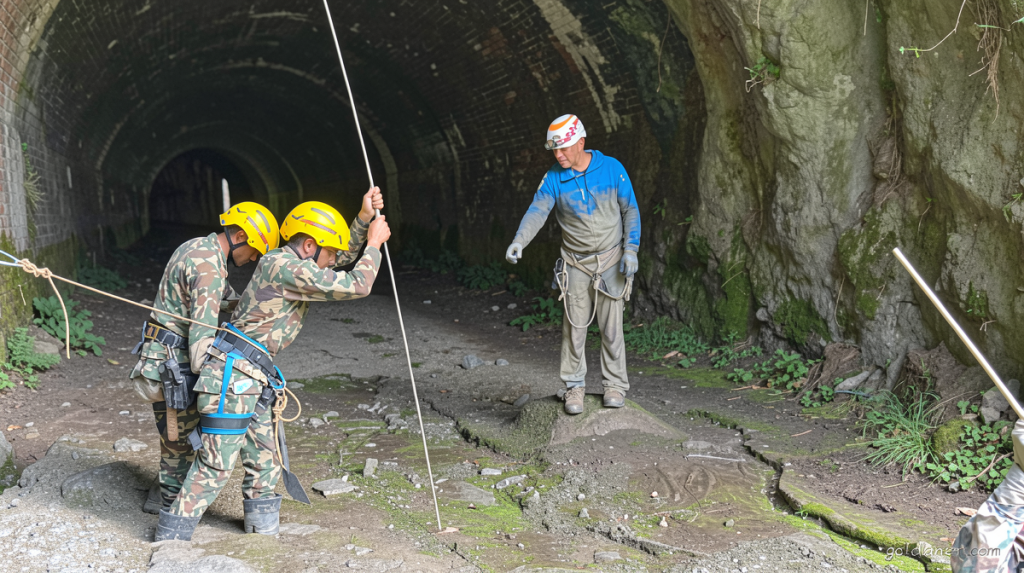
The two men were extracted in rapid succession through a narrow borehole drilled into the tunnel wall. Footage captured at the scene showed roughly a dozen rescue personnel gripping ropes and pulling a worker free from a small opening in the earth, their applause breaking the tense quiet as he reached the surface. A medical team was dispatched immediately to assess his condition.
“Rescuers heard voices,” Bipin Regmi, police chief of the flood-devastated Nuwakot district, confirmed. A medical team was already en route to the site.
A Tunnel System Beneath a River of Cement
The Trishuli 3A facility sits along one of Nepal’s most ambitious hydroelectric corridors, a stretch of the Trishuli River where multiple generation projects have been under construction for years. The specific tunnel through which rescuers are now working runs more than four kilometers — over two and a half miles — from the surface access point down to the underground powerhouse where dozens of laborers were on shift when the flood struck. Forty-two workers at that single site remain unaccounted for, and the number who may still be alive beyond the point where voices were detected is unknown.
The flood itself was unlike anything the region had experienced in recorded memory. A torrent of water thickened with pulverized rock, silt, and construction debris — described by survivors and engineers as resembling liquid cement — surged down the river valley, obliterating villages, washing out roads, and inundating the very tunnels where workers had been drilling and bolting. More than 1,200 people across Nepal have died in the aftermath, and authorities estimate that over 900 workers are missing across several Himalayan energy projects simultaneously.
Foreign Labor and Nepal’s Energy Gamble
Among those trapped at various sites are nationals of China, South Korea, and India, countries whose firms have invested heavily in Nepal’s hydropower sector over the past decade. The Trishuli corridor alone hosts multiple plants at different stages of completion, each employing hundreds of local and foreign technicians. The disaster has thrown into sharp relief both the scale of Nepal’s bet on mountain hydroelectricity and the extreme vulnerability of workers operating in deep-bore tunnels during monsoon season.
Nepal’s terrain makes conventional rescue nearly impossible in many locations. Roads have been severed, helicopters struggle with dust and wind, and the tunnels themselves are partially collapsed or buried under meters of sediment. Every hour of delay compresses the window in which trapped workers might survive.
The Clock Inside the Dark
Parikshit Mehra, an Indian army colonel leading a specialized rescue team at the Trishuli 3A site, offered a blunt assessment of what nine days underground means for a human body and mind.
“The first 48 hours are the most crucial. People who are stuck tend to panic much more than when they are outside in the open. Getting stuck in a tunnel you can’t see anything. Generally if you stay in the dark you get disoriented in about 24-25 hours. Beyond that, after 48 hours, you start hallucinating. And then I think from there on it’s always a fight.”
Yet Mehra stopped short of declaring the effort futile.
“There have been miracles.”
Those words carried particular weight on the ninth day, when the voices finally broke through the silence. Whether the workers who produced them can be reached before conditions deteriorate further remains the central question facing every rescuer, engineer, and family waiting along the riverbanks of Nuwakot and the surrounding districts.
What Comes Next
Authorities have not yet confirmed how many additional individuals may be reachable from the point where voices were detected. Boring operations continue around the clock, with teams rotating through shifts to keep pressure on the tunnel wall. Foreign embassies in Kathmandu have begun coordinating with Nepali officials to track the nationalities of missing workers and prepare consular support. Local hospitals in the region have been placed on heightened alert, and relief agencies are scaling up food, water, and shelter distribution for displaced communities whose homes and livelihoods were erased in a single afternoon of floodwater.
The Trishuli River, which feeds one of Nepal’s most important agricultural and energy basins, will eventually run clear again. But for the families of those still below, the next hours matter more than any season.
Related Reading
Frequently Asked Questions
What is Two men rescued from flood stricken?
Two men rescued from flood stricken is the main topic of this guide. The article explains the context, practical details, and next steps readers should understand.
Why does Two men rescued from flood stricken matter?
Two men rescued from flood stricken matters because readers are looking for a useful answer, not just a short summary. Good content should match search intent and help them decide what to do next.