
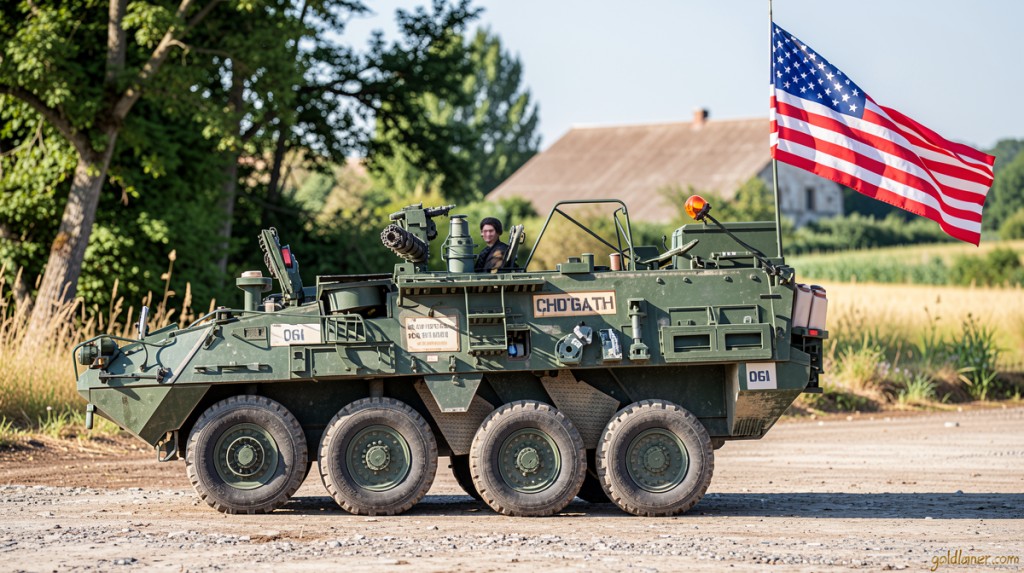
Halving the Drills: How Trump’s Kim Jong Un Overtures Collide with Seoul’s Push for Command
Goldlaner.com – Washington has abruptly slashed the scale of its joint military exercises with South Korea by roughly fifty percent, a move that undercuts the very objective President Donald Trump has publicly championed: getting Seoul to shoulder greater responsibility for its own defense. The Ulchi Freedom Shield drills, which normally mobilize tens of thousands of troops from both sides of the alliance, were trimmed at the White House’s insistence after Trump declared last weekend that the maneuvers irritated his friend Kim Jong Un and drained American coffers.
The president took to Truth Social on Sunday to explain his reasoning, framing the scaled-back exercises as a diplomatic overture toward the reclusive North Korean leader, whom Trump has expressed a keen desire to meet again.
“These exercises send a signal that is totally inappropriate and hostile,” Trump wrote.
The characterization sits uneasily with the stated purpose of the drills. Both capitals have reiterated, on multiple occasions, that the exercises are exercises in deterrence and defense — not rehearsals for seizing territory north of the demilitarized zone that has partitioned the Korean peninsula since the 1953 armistice ended active fighting. The language Trump deployed mirrors, almost word for word, the rhetoric North Korea’s state-run media have long used to denounce the same drills, raising questions about whose framing the White House is inadvertently adopting.
The Operational-Control Question at the Heart of the Alliance
Buried inside the military training embedded in Ulchi Freedom Shield is a strategic objective neither country has yet achieved: transferring wartime operational control of the combined South Korean–American force on the peninsula to Seoul. Analysts stress that this handover has been a shared goal since the Korean War erupted in 1950, when South Korea ceded command of its forces to Washington because the vastly better-equipped and more experienced American military was better positioned to confront the communist threat along the dividing line.
Command of South Korean troops passed first to United Nations Command and then, in 1978, to the Combined Forces Command (CFC), a body that has always been headed by an American general. In 1994, the CFC handed peacetime operational control back to Seoul. Wartime control, however, remained in Washington’s hands. Repeated proposals to complete the transfer have been deferred over the decades, preserving a status quo that many in both capitals now regard as obsolete.
Over the past several years, South Korea has built itself into a world-class military power. It does not match the scale of the US or Chinese forces, but it is unquestionably capable of defending itself against North Korea. Citing that capability, President Lee Jae Myung used the launch of this year’s exercises on Tuesday to inject fresh momentum into a campaign pledge he made in 2025: returning wartime operational control to Seoul by 2030.
“From the aspect of weapons systems and military strength, our capabilities to defend ourselves is already among the top few in the world. It’s not an exaggeration to say that we are more than capable,” Lee said.
Seoul’s Response: Agreement in Principle, Unease in Practice
On Wednesday, Lee publicly endorsed Trump’s stated view that South Korea should bear primary responsibility for its own security on the peninsula. He pledged to accelerate defense spending toward 3.5 percent of GDP, a figure that would place South Korea among the highest-spending militaries relative to economic output. He also offered a diplomatic reading of the exercise reduction.
“The decision by Trump to shorten the drills feels like a major decision filled with deep consideration for creating peace on the Korean Peninsula, beyond hostility and confrontation,” Lee said.
Yet behind the diplomatic language, alliance planners see a more tangled picture. Yu Ji-hoon, a research fellow at the Korea Institute for Defense Analyses, wrote in The Diplomat that the Ulchi Freedom Shield drills had been designed in part to assess whether Seoul’s systems were ready to assume wartime command. A last-minute contraction of scope, he argued, would do more than degrade readiness.
“A major last-minute change could therefore affect more than readiness; it could complicate an alliance project that Washington itself has long encouraged,” Yu wrote. “Curtailing (the exercises), especially without prior discussion, makes burden-sharing harder to implement, even as Washington demands more of it.”
A Strategy Document That Now Looks Contradicted
The tension is sharpened by the fact that the United States’ own National Defense Strategy, released in January, laid out in explicit terms an intent to deepen alliance burden-sharing and accelerate the conditions for transferring operational control. Lee Jeong-kyu, a visiting research fellow at South Korea’s Sejong Institute, noted earlier this year that the document constituted a clear signal of intent.
“A clear signal of intent to strengthen alliance burden-sharing that is expected to provide grounds for accelerating the conditions for (operational control) transfer,” Lee wrote.
By deferring to Kim Jong Un’s sensibilities over the operational needs of a treaty ally, Trump has effectively placed a nuclear-armed adversary above a partner that wants to do precisely what Washington has asked of it for decades. The result is an alliance caught between two incompatible imperatives: a president who wishes to placate Pyongyang and a South Korean government that has spent years preparing to take the wheel. The halving of the drills does not merely reduce a training schedule; it stalls the very mechanism through which Seoul was meant to prove it can carry the burden Trump says it should carry.
Related Reading
Frequently Asked Questions
What is Trump wants South Korea to defend?
Trump wants South Korea to defend is the main topic of this guide. The article explains the context, practical details, and next steps readers should understand.
Why does Trump wants South Korea to defend matter?
Trump wants South Korea to defend matters because readers are looking for a useful answer, not just a short summary. Good content should match search intent and help them decide what to do next.