
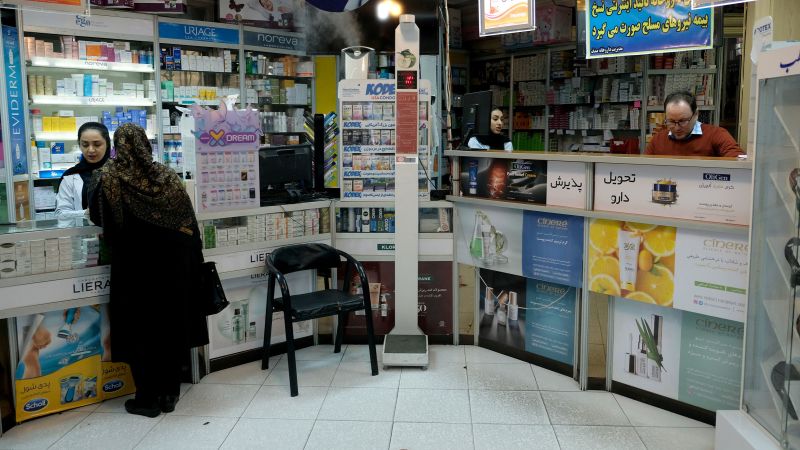
Medicine Shortages Deepen the Strain on Iran’s Most Vulnerable Patients
Goldlaner.com – For many Iranians living with cancer, kidney disease, heart conditions and mental health disorders, finding medicine has become an exhausting and increasingly unaffordable task. Economic pressure, rapid inflation and disruptions to the country’s pharmaceutical supply chain are forcing some patients to reduce treatment, delay medical appointments or accept less effective substitutes.
Sima, a 35-year-old woman in Tehran, spent hours visiting pharmacies in search of medication needed to protect her kidney function. She found it only at the seventh pharmacy, located in an affluent area of the capital. By then, however, the price had risen again. Unable to afford the prescribed amount, she decided to take less than the recommended dose.
“They’ve stopped using cancer medication for people who they say are terminal or far along,” said Sima, who did not give her real name so she could speak freely. “They only use it for those who are in the very early stages.”
Her experience reflects a wider crisis confronting patients and pharmacists across Iran. Drugs that were previously obtainable are either missing entirely, offered only in domestically made generic forms, or sold at prices far beyond what many households can pay.
Patients Face Hard Choices
A Tehran mother grieving the death of her only daughter has had to switch from her usual antidepressant to a locally made alternative she considers less effective. Seasonal flu vaccinations have also been canceled this year after the government was unable to obtain supplies from Europe.
For cancer patients, the stakes can be especially severe. Some have sold household possessions, including televisions and refrigerators, to cover the cost of essential medication. A 55-year-old cancer patient in Tehran said the lack of reliable access has left her dependent on friends and relatives returning from other countries.
“I’ve asked if people who come visit or come back from abroad can bring my medicine back, especially the things we can’t find here or get access, too,” the patient said. “Between the illness and uncertainty of the war I have a hard time knowing what to do.”
The emotional burden extends beyond the financial strain. Chronic illness already requires patients to make recurring decisions about treatment, appointments and medication schedules. When supplies become unpredictable, those decisions turn into urgent calculations about which dose can be skipped, which prescription can be postponed and whether a substitute will work.
“Everyone says we’re brave,” the cancer patient said in a telephone call. “But I don’t know if being brave means anything when you’re dying.”
Hundreds of Medicines Affected
Pharmacies contacted in Iran described shortages and price jumps across several categories of treatment. Some heart medicines are now available mainly as local generics rather than the brands patients were prescribed. Cholesterol medication can still be found in some cases, but at sharply higher prices. Certain migraine drugs have disappeared from pharmacy shelves altogether.
The problem reaches much further than those examples. Antidepressants, insulin and medicines used during pregnancy have all been affected. For patients unable to find a medicine, the alternatives are often limited: pay an exceptionally high price, seek help from someone traveling abroad, or move to a generic product that may not meet the same medical needs.
Shahram Kalantari, head of the Iranian Pharmacists Association, said last month that shortages had reached nearly 800 medications. Pharmacies have struggled to obtain replacements as costs continue to rise.
Domestic Production Does Not Eliminate Dependence
Iran produces more than 97% of its medicines by volume, Mehdi Pirsalehi, head of the country’s Food and Drug Organization, said in February. That figure, while substantial, does not mean the health system can operate independently of foreign trade.
Imported specialty treatments are among the most difficult products to obtain because they must be purchased with foreign currency. Iranian manufacturers can also rely on materials, equipment and technology brought in from abroad. Peivand Bastani, a senior lecturer at Flinders University and co-author of research into sanctions and pharmaceutical purchasing in Iran, emphasized that local output does not equal full self-sufficiency.
“This high level of domestic production does not necessarily mean complete self-sufficiency,” Bastani said. “Local manufacturing can still depend on imported materials, equipment and technology, while some specialized and high-cost medicines must be imported.”
US President Donald Trump’s maximum-pressure campaign has intensified scrutiny of Iranian banks and restricted oil exports, Iran’s principal source of foreign currency. That has made it harder to secure funds needed for imported specialty medicines and for inputs used by domestic producers.
Insurance Delays Worsen the Supply Crisis
The breakdown is not limited to imports. Iranian officials say pharmacies are unable to restore inventories because insurance companies have stopped paying them on time. Many Iranians are covered by insurance and normally expect an insured prescription to reduce their direct costs. Instead, patients may leave without medication or be asked to pay the full amount themselves.
More than 18,000 private pharmacies are waiting for payments from insurance companies, officials from the Iranian Pharmacists Association said last month. Outstanding insurance debt to pharmacies had reached almost 800 trillion rials, or $300 million.
Inflation, delayed insurance reimbursements and limited foreign-currency access have combined to fracture a system that patients depend on every day. The result is most visible at the pharmacy counter, where an unavailable box of medicine can mean a broken treatment plan for someone who has no time to wait.
For Iran’s sick, the crisis is measured not only in economic indicators or supply-chain figures, but in the daily search for medication that may no longer be there when they need it.
Related Reading
Frequently Asked Questions
What is Trump s sanctions inflation and a collapsing?
Trump s sanctions inflation and a collapsing is the main topic of this guide. The article explains the context, practical details, and next steps readers should understand.
Why does Trump s sanctions inflation and a collapsing matter?
Trump s sanctions inflation and a collapsing matters because readers are looking for a useful answer, not just a short summary. Good content should match search intent and help them decide what to do next.