
Iran Signals Readiness for a Longer Conflict as Fears Grow of Renewed US Strikes
Goldlaner.com – Iranian military leaders are publicly preparing the country for the possibility of a new phase of conflict with the United States, pairing warnings to Washington with claims that Tehran has expanded its arsenal and selected targets beyond the Middle East.
The messaging comes nearly nine months after the United States and Israel began their war against Iran in February. What began as an open confrontation has settled into an uneasy deadlock: Tehran points to the survival of its governing system, while Washington emphasizes the damage inflicted on Iranian military and state infrastructure. Neither side has shown a clear path toward ending the crisis.
Iranian commanders have spent recent weeks stressing their capacity to respond if combat resumes. They have suggested that future attacks could reach beyond familiar regional targets and have raised the possibility of disrupting undersea internet connections, hitting artificial-intelligence data centers and targeting oil and gas facilities in the region.
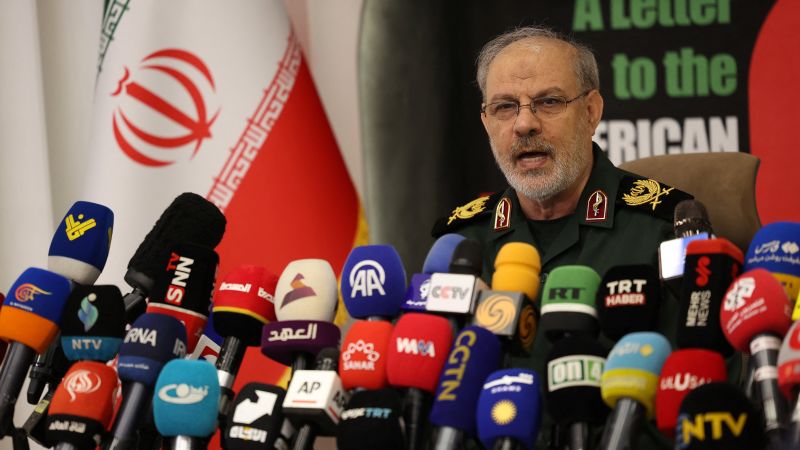
“The world will be amazed,”
Hossein Mohebbi, a spokesperson for Iran’s Revolutionary Guards, said late last month. He added:
“We have new targets that have not yet been attacked.”
The statements appear intended to make any decision to restart major US military action more costly and uncertain. They also reflect a harder Iranian posture, one that signals Tehran may seek to act before absorbing another strike rather than relying solely on retaliation afterward.
Military Claims and Escalation Risks
Iran has described its current approach as preparation for a sustained struggle. Mohebbi said the conflict had not ended and portrayed the Revolutionary Guards as ready for a prolonged war.
“The war is not over. The Islamic Revolutionary Guard Corps has prepared itself for a long-term war.”
Last week, Revolutionary Guards-linked social media accounts said military exercises were conducted throughout the country, including the launch of 30 ballistic missiles at once. Such displays are meant to demonstrate operational readiness, but they also increase anxiety about the speed with which threats could become military action.
Iranian officials have responded sharply to discussion of more powerful US weapons. American military planners have prepared updated strike options that could include the GBU-43/B Massive Ordnance Air Blast Bomb, commonly known as the MOAB. It is the largest non-nuclear bomb in the US arsenal, and its use against Iranian energy facilities or nuclear sites would represent a significant escalation.
Alireza Sheikh, an Iranian army commander, dismissed the weapon’s psychological effect in remarks on Saturday.
“These are propaganda tools intended to intimidate the Iranian people. The Iranian people are the father of all bombs.”
The prospect of strikes against energy and nuclear infrastructure carries consequences well beyond military objectives. Damage to such facilities could deepen economic disruption inside Iran, unsettle regional energy markets and raise the risk of wider confrontation involving forces and installations across the Middle East and Europe.
Washington Weighs Its Options
White House advisers have held recent meetings on possible next steps toward Iran. President Donald Trump has said publicly that he would not launch new action before the midterm elections, scheduled for November 3. But uncertainty remains over whether that position will hold through election day.
For Washington, the strategic challenge is balancing pressure on Tehran with the danger that a fresh campaign could produce a larger conflict rather than force a settlement. The administration has continued using economic and military pressure in an effort to compel Iranian capitulation, yet Iran has resisted those demands.
The risks may not be limited to the Gulf or the wider Middle East. Farzin Nadimi, a senior fellow at The Washington Institute who focuses on US policy in the region, has warned that if Tehran chose to use new long-range missiles against Europe, potential targets could include US forces at air bases in England and the logistics hub at Ramstein, Germany. Ramstein is the largest US military installation in Germany.
That possibility underscores why claims of new Iranian capabilities are being watched closely. Even if they are partly designed for deterrence, they broaden the range of locations that could be drawn into a renewed clash.
Civilians Live With the Expectation of Another War
For many people in Iran, official declarations of strength have done little to ease the immediate fear of airstrikes. Residents of Tehran describe living with preparations for another emergency, unsure whether the lull in fighting is temporary or the beginning of a longer pause.
“Every single day and every night, we’re waiting for the bombing to start again. I’ve charged all my power banks, stocked up on water, and got everything ready, because the attacks could start again at any moment, any day.”
A 70-year-old Tehran resident described a daily routine shaped by the expectation that attacks could resume without warning. A mother of two said she faces that uncertainty each morning as her children leave for school, passing visible Revolutionary Guards personnel and active military sites.
“I would like to know exactly what else the US is planning to bomb? They couldn’t even take (the Iranian leadership) out. You couldn’t negotiate either. So, what’s the point of starting another war?”
Another resident said many people in Tehran now assume fighting will begin again.
“It’s all anyone can talk about…you just have it in the back of your head, is tonight the night? Is it tomorrow? I think it makes it worse that there are all this conversation about it, you can’t even take a break.”
Those residents spoke anonymously because of concerns about discussing the prospect of further war freely. Their accounts show the divide between strategic messaging from military leaders and the practical burdens facing civilians: storing water, keeping power banks charged and trying to maintain ordinary family life under the shadow of possible bombing.
With both governments still claiming leverage and neither side showing a willingness to yield, the immediate future remains uncertain. Iran’s threats are designed to warn that another attack would bring a broader response. For the people living closest to the conflict, however, the central question is far simpler: whether the next night will remain quiet.
Related Reading
Frequently Asked Questions
What is The world will be amazed Iran?
The world will be amazed Iran is the main topic of this guide. The article explains the context, practical details, and next steps readers should understand.
Why does The world will be amazed Iran matter?
The world will be amazed Iran matters because readers are looking for a useful answer, not just a short summary. Good content should match search intent and help them decide what to do next.