
The oceans are in deep trouble. The Trump administration is ditching a vital deep-sea monitoring system
The Oceans Face a Crisis as the Trump Administration Disbands a Key Monitoring System
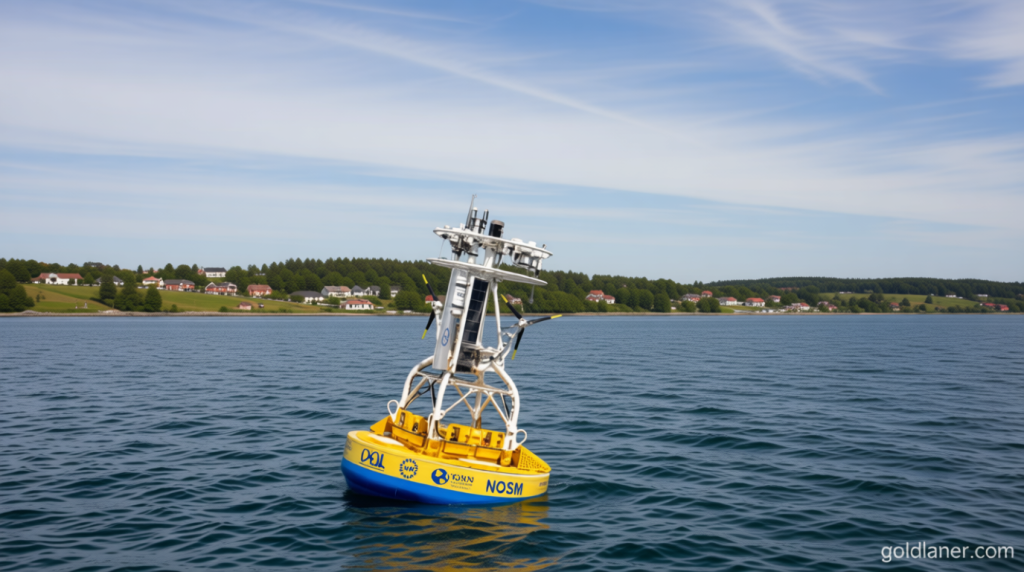
The oceans are in deep trouble – The Trump administration has moved to dismantle a $368 million deep-ocean monitoring initiative that plays a crucial role in tracking changes in the world’s seas. This decision has raised alarms among scientists, who argue that the United States is stepping back from critical ocean observation at a moment when the planet is experiencing extreme sea temperatures, an impending super El Niño event, and growing concerns about the stability of major ocean currents. The Ocean Observatories Initiative (OOI), a network of advanced instruments deployed in the Pacific and Atlantic Oceans, is now under threat, with its infrastructure set to be gradually removed over the next 15 months.
A Vital Network for Ocean Science
Launched in 2016, the OOI consists of nearly 900 devices positioned in strategic locations to monitor the deep ocean’s conditions. These instruments, designed to endure immense pressure and corrosive saltwater, provide real-time data on temperature fluctuations, chemical shifts, and the movement of powerful currents that influence global weather and climate systems. The project was originally intended to operate for three decades, offering a long-term view of oceanic changes that could inform climate models, disaster preparedness, and environmental policies.
However, the National Science Foundation (NSF), which oversees the OOI’s funding, has declared it will “descoped” the network. This means that the system’s scope will be reduced, with “in-water infrastructure” such as moored equipment and underwater gliders being phased out from key locations. These sites include arrays off the coasts of Alaska, Washington, Oregon, and North Carolina, as well as the North Atlantic near southeast Greenland. The NSF’s media affairs head, Mike England, explained the move as part of a broader effort to streamline scientific priorities and adopt a more agile approach to research funding.
Climate Rollbacks and Deep-Sea Mining
The decision to cut the OOI aligns with the Trump administration’s broader strategy to roll back climate regulations and reduce funding for environmental research. At the same time, the government is promoting deep-sea mining to extract valuable minerals, a move that has sparked debate about the balance between economic gains and ecological risks. Scientists are particularly worried that removing the OOI’s monitoring capacity could weaken the U.S. ability to track climate trends and respond to environmental threats.
Rick Spinrad, an oceanographer who led the National Oceanic and Atmospheric Administration during the Biden administration, called the move “penny wise, tons foolish.” He emphasized the OOI’s value in supporting economic and social benefits, such as fisheries management, improved weather forecasting, and coastal flood protection. “Where’s the analysis of return on investment that shows eliminating OOI is in the taxpayers’ best interest?” Spinrad questioned. His comments highlight the concern that the administration is prioritizing short-term savings over long-term scientific insights.
The AMOC and Global Climate Impacts
A central focus of the OOI is its role in studying the Atlantic Meridional Overturning Circulation (AMOC), a critical system of ocean currents that regulates heat distribution across the globe. The AMOC’s collapse could trigger dramatic climate shifts, including faster sea level rise along the U.S. East Coast, severe winters in Europe, and prolonged droughts in parts of Africa. Scientists have used OOI data to track the AMOC’s health, but the dismantling of the network risks leaving these vital observations incomplete.
Stefan Rahmstorf, a professor of physics and oceanography at Potsdam University in Germany, warned that the oceanography community is increasingly concerned about major changes in ocean currents. “The stakes are high,” he said, noting that the AMOC is a key player in stabilizing global climate systems. “Without ongoing monitoring, we’re essentially choosing to sail into an uncertain future without a clear map.” The potential consequences of the AMOC’s disruption underscore the urgency of maintaining robust ocean observation programs.
Monitoring the Depths: A Loss of Critical Insight
The OOI’s dismantling also threatens the ability to study ocean acidification, a growing problem that affects marine ecosystems. At the Ocean Station Papa in the Gulf of Alaska, autonomous buoys and gliders collect data on acidity levels, which are crucial for understanding the impact on fisheries. Helen Findlay, a biological oceanographer at the Plymouth Marine Laboratory in the UK, stressed that long-term monitoring is essential for detecting emerging risks. “The ocean is on a dangerous tipping course,” she said. “We need these tools to see the patterns before it’s too late.”
Findlay’s research has shown that large regions of the ocean have already crossed into a “zone of risk” for ecosystem collapse. This shift is linked to rising temperatures and increasing acidity, which threaten marine life and the livelihoods of coastal communities. The OOI’s removal from these areas could mean a significant gap in the data needed to predict and mitigate these changes. “Without sustained observations, we’re blind to the transformations happening in the deep,” she added.
Experts Warn of a Scientific Setback
The OOI’s dismantling is not just a loss for ocean science—it’s a setback for the global effort to understand climate change. The system’s instruments were already paid for and installed, representing a substantial investment in taxpayer-funded research. Scientists argue that cutting the program now undermines the U.S. position as a leader in climate studies and deprives the world of critical insights into the planet’s most dynamic environment.
The decision also raises questions about the administration’s commitment to climate science. While it has taken steps to reduce funding for environmental programs, the OOI’s removal highlights a growing trend of prioritizing immediate economic goals over long-term scientific benefits. As the oceans continue to undergo rapid changes, the lack of a comprehensive monitoring system could lead to delayed responses to crises such as extreme weather events, sea level rise, and biodiversity loss.
A Global Ocean in Peril
Scientists stress that the oceans are not just a backdrop to climate change—they are a central part of the equation. The OOI’s data has been instrumental in mapping the AMOC’s behavior and identifying early warning signs of its collapse. Without this information, the ability to predict future climate scenarios is weakened. The super El Niño, which is expected to intensify in the coming years, could further destabilize ocean systems, making the need for continuous monitoring more urgent than ever.
“The global oceans are enduring a period of massive transformation,” said Helen Findlay. “Some of these changes are already beyond our ability to fully explain, but they’re shaping the future of our climate.” The loss of the OOI’s infrastructure means fewer eyes on the ocean’s depths, reducing the capacity to detect and respond to threats as they unfold. As the administration moves forward with its plans, the scientific community is left to wonder how much of the ocean’s story will be lost before the next major crisis strikes.
