
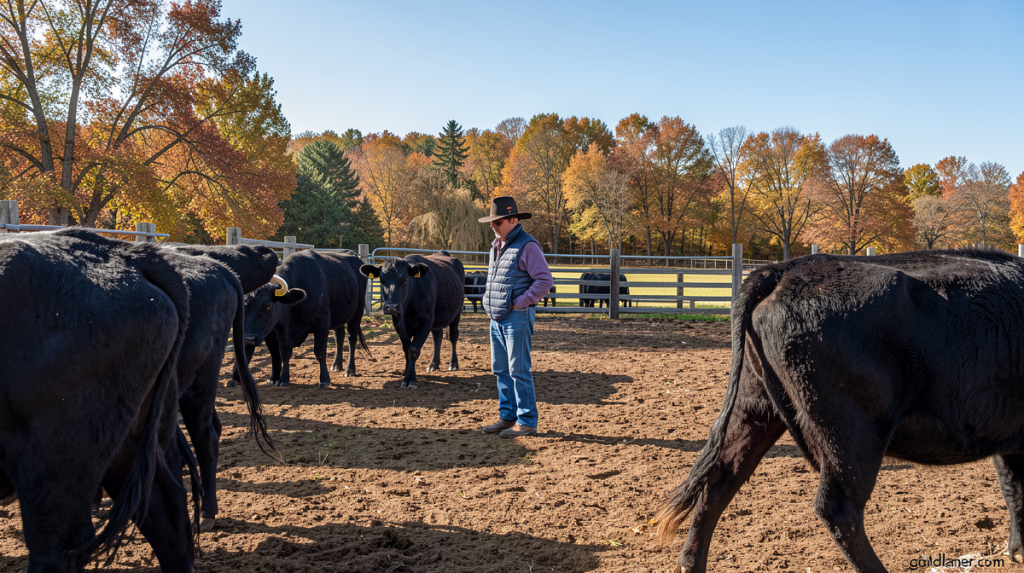
A Fly, a Border, and a Beef Market Under Siege
Goldlaner.com – The New World screwworm — a parasitic fly whose larvae burrow into living flesh and consume tissue from the inside out — has become the unlikely fulcrum of a far larger economic and political confrontation along the United States–Mexico border. What began as a quarantine measure to keep a flesh-eating pest from hopping across the Rio Grande has morphed into a bitter dispute over who gets to sell beef, who bears the cost of protection, and whether American ranchers can survive another year of razor-thin margins.
On Monday, the federal government scheduled the reopening of a cattle corridor at Douglas, Arizona, allowing livestock from Sonora, Mexico, to cross into the US market. The closure that preceded this reopening has been in effect, in various forms, since November 2024, with the most recent shutdown imposed in July 2025. For over a year, Mexican ranchers have watched their export revenue evaporate while American producers have watched domestic beef prices climb to historic highs — a dynamic that has sharpened an old protectionist argument inside the cattle industry into something far more volatile.
The Human Cost on Both Sides
In the high desert of southern Colorado’s San Luis Valley, 74-year-old cattle rancher Johnny Mestas has spent decades battling drought, volatile commodity markets, and what he calls the friction of neighboring operations. He has survived two heart attacks along the way and speaks of farming with a weary, almost philosophical detachment.
“Not everybody is meant to be a farmer. You’ve got to be half-crazy. There’s three elements you fight: the market, the weather and your neighbors.”
Yet even Mestas, who has weathered decades of hardship, admits unease at the prospect of Mexican cattle re-entering the US supply chain. His concern is not purely about the screwworm itself; it is about the economics. When domestic cattle prices sit at record levels, the prospect of cheaper foreign beef flooding the market threatens to undercut the very margins that have, for the first time in years, allowed ranchers like him to turn a profit.
“These past few years, I actually made money!” Mestas said, with an audible hint of amazement. “Years and years, it was basically always break-even.”
On the Mexican side, the stakes are equally personal. Alvaro Bustillos, who leads the rancher’s union in the state of Chihuahua, watched his operation nearly collapse during the closure. He laid off workers he had spent years recruiting and training, and the social fabric of his community frayed alongside his balance sheet.
“I had to fire people. It took me years to build my team. It took me years to build relationships. This is not only about the cattle trade. This is about families bonded together.”
Bustillos is cautiously optimistic that a successful reopening in Sonora could eventually extend to his own region, restoring cross-border flows that have sustained Chihuahuan ranching families for generations.
A Broader Crisis, Framed by One Fly
Bill Bullard, CEO of R-CALF — a national association representing independent cattle and sheep producers — frames the screwworm question as one symptom of a deeper structural problem. A former South Dakota rancher, Bullard argues that American livestock producers have been systematically displaced by cheaper imports over roughly a generation.
“In just over a generation’s time, we wiped out half (of) our cattle producers in this country. It’s because we have been growing our dependence on foreign sources, displacing our domestic production in the United States. It is a threat to national security.”
His language is deliberate: by casting import dependence as a national-security issue, Bullard positions the cattle question alongside debates over semiconductor supply chains and pharmaceutical sourcing, inviting policymakers to treat ranching resilience as infrastructure rather than mere agriculture.
Sonora’s First Case and the USDA’s Decision
The choice of Sonora as the reopening site was not arbitrary. The state had maintained high biosecurity standards and, until days before the scheduled reopening, had reported zero screwworm cases. Then, in a development that rattled American producers, Sonora confirmed its first infestation. A single case, officials noted, does not automatically trigger a full shutdown, and the US Department of Agriculture announced on Thursday that it would proceed with the Douglas reopening as planned.
The screwworm itself is no abstract threat. It has been detected in Texas, and Mexican authorities have invested heavily in eradication programs, including facilities in Chiapas where captured flies are sterilized and released to suppress wild populations. The parasite poses a genuine risk to cattle health on both sides of the border, and its presence complicates any trade arrangement.
Beef Prices, Politics, and the 2026 Midterms
American consumers have endured more than two years of sharply elevated beef prices, a factor that has entered the political lexicon ahead of the 2026 midterm elections. Jenna Stanton, director of policy at the US Cattlemen’s Association, told reporters that many ranchers interpret the administration’s push to reopen the border — and its earlier decision to quadruple low-tariff imports of Argentine beef — as a deliberate strategy to cool retail prices and blunt voter anger at the grocery store.
On Friday, the president announced a plan to import 300,000 metric tons of beef, describing the move as a way to “reduce prices for Americans while giving space for our Great American Beef.” The announcement landed like a second blow to producers who had just begun to see positive cash flow after years of break-even operations.
The tension is structural: consumers want cheaper meat, ranchers want higher prices, and the screwworm provides a convenient biological justification for whichever policy outcome each side prefers. What happens at Douglas, Arizona, in the coming weeks will set a precedent not only for Sonora but for every Mexican state that once depended on cross-border cattle sales. And for men like Mestas, staring out over a parched valley in Colorado, the question is no longer whether the fly will arrive. It is whether the economics of the next season will allow him to keep farming at all.
Related Reading
Frequently Asked Questions
What is Screwworm is squeezing ranchers on both?
Screwworm is squeezing ranchers on both is the main topic of this guide. The article explains the context, practical details, and next steps readers should understand.
Why does Screwworm is squeezing ranchers on both matter?
Screwworm is squeezing ranchers on both matters because readers are looking for a useful answer, not just a short summary. Good content should match search intent and help them decide what to do next.