
Russia Strikes Another Major Bridge in Kyiv
Goldlaner.com – Russia strikes another major bridge in Kyiv, damaging the Northern Bridge and increasing pressure on the capital’s already strained transport network. The attack on Saturday affected a key crossing of the Dnipro River, following repeated strikes on Kyiv’s Southern Bridge.
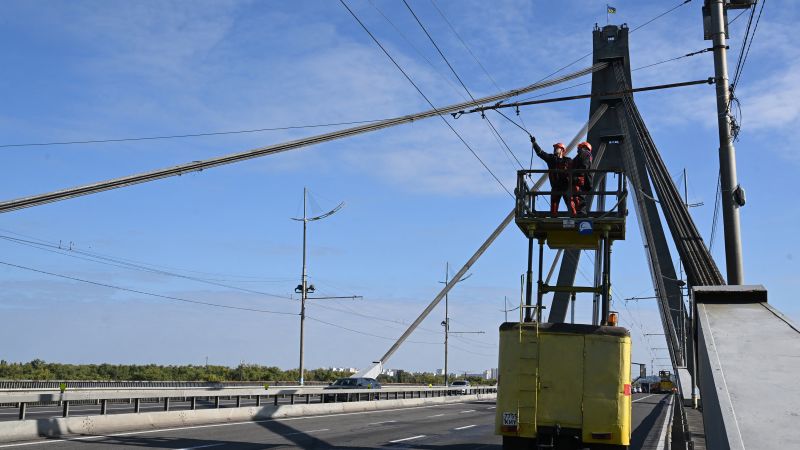
Mayor Vitaliy Klitschko said two people were injured. Part of the Northern Bridge roadway was damaged, while the electrical system powering a trolleybus line was also affected. Traffic was restricted and some movement across the river was halted.
Southern Bridge Remains Closed
The Northern Bridge attack came after the Southern Bridge was struck five times in less than 24 hours. The Southern Bridge carries road traffic and Kyiv’s subway network, and it has remained closed since the strikes, worsening travel disruption across the city.
Kyiv depends heavily on its bridges because the Dnipro River divides the capital. Most business districts, offices and government institutions are on the right bank, while much of the city’s housing is on the left bank, where at least 30% of residents live.
With the Southern Bridge closed and the Northern Bridge under restrictions, officials said the attacks were effectively separating Kyiv into two parts. Residents face longer journeys, more crowded routes and potential interruptions to public transport and emergency access.
Russia’s Ministry of Defense said Russia strikes another major bridge in Kyiv as part of an operation aimed at a route used to transport Ukrainian personnel and military supplies. It also said a logistics center in the Kyiv region was targeted.
Infrastructure Damage Spreads Beyond Bridges
In the wider Kyiv region, military administration head Tymur Tkachenko said a warehouse and production facility were struck, injuring four people. The reported damage highlighted the wider impact of attacks on transport routes, storage sites and essential infrastructure.
Kyiv’s defense council held an emergency meeting on Friday as attacks intensified. Russia accelerated its campaign against the capital in late August, taking advantage of Ukraine’s shortage of interceptors and limited options for defending against jet-powered drones.
Ukraine’s Air Force said Russia launched 157 attack and decoy drones overnight and in the early hours of Saturday. Air defenses brought down or neutralized 131 of them, underscoring the scale of the assault and the continued demands on Ukraine’s air-defense systems.
The capital is in a very dire situation. And it is no longer possible to pretend that we can live as we did in peacetime.
Klitschko said the attacks were affecting infrastructure, logistics, housing, social facilities and the energy sector. He said city authorities were working to keep Kyiv operating despite repeated strikes and called on Ukrainians to maintain the unity shown after Russia’s full-scale invasion began in February 2022.
Why Kyiv’s Bridge Network Matters
Russia strikes another major bridge in Kyiv at a time when river crossings have become a central civilian concern. Restrictions or closures can redirect large volumes of traffic to other bridges, delay commutes and complicate the movement of buses, trolleybuses and metro services.
Damage to the Northern Bridge also demonstrated how a strike can affect more than road access. The impact on its trolleybus power system added another layer of disruption for residents who depend on public transport to travel between the city’s two banks.
FAQ for Kyiv Residents
What should commuters expect after the bridge attacks? Travelers may face restricted access, longer routes and delays as traffic is redirected to remaining crossings. Residents should check current city transport announcements before leaving home.
Why are bridge strikes especially disruptive in Kyiv? The Dnipro River divides the city, and bridges connect residential areas on the left bank with many workplaces, government institutions and business districts on the right bank.
What services can be affected by bridge damage? Road traffic, trolleybus routes, metro operations, emergency access and electricity-related transport systems can all be affected when a major crossing is damaged or closed.