
Africa’s Pragmatic Engagement Gives Russia a Stage, Not a Free Pass
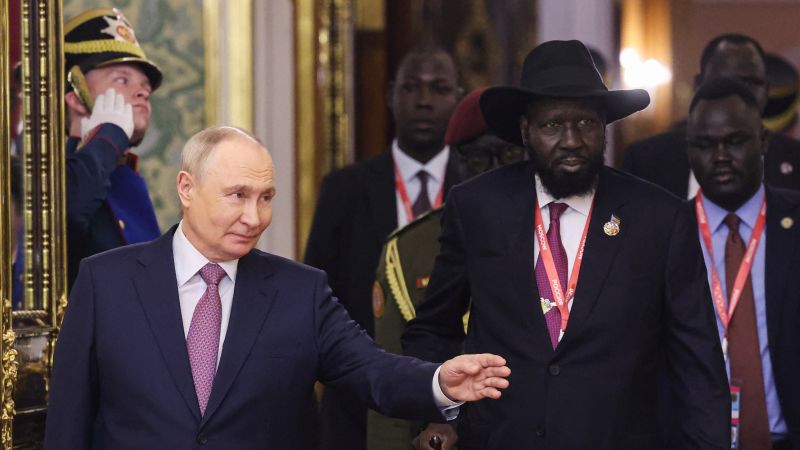
Goldlaner.com – As the war in Ukraine continues to strain Russia’s international standing, Moscow is working to show that it still has partners beyond the West. This week’s Russia-Africa Summit in Moscow offered President Vladimir Putin an opportunity to make that case, gathering delegations from 48 of Africa’s 54 countries.
For Putin, the meeting was a display of diplomatic reach at a time when Western sanctions and political pressure have intensified. For African governments, it was another chance to widen their options in a crowded field of outside powers competing for influence, investment, security ties and access to strategic resources.
Twenty-two African heads of state attended the two-day summit, up from 17 at the 2023 gathering. The first Russia-Africa meeting in 2019 drew representatives from 43 countries. The increased participation gives the Kremlin a valuable image of engagement with the Global South, even where concrete commercial or political agreements remain limited.
Putin’s Message to African Leaders
Putin used the summit to contrast Russia’s approach with that of Western countries, accusing them of treating Africa through a colonial lens and using debt as an obstacle to development. He presented Russia as a partner prepared to pursue trade, technology and investment without imposing the same conditions.
“Our business does not engage in the predatory, neo-colonial exploitation of natural and human resources,” Putin said.
He added that Russian companies help create jobs and generate tax income in the countries where they operate. The message is designed to resonate in states where frustration with former colonial powers, international lenders and Western security partnerships has grown.
Yet African leaders are not simply lining up behind Moscow. Their approach is better understood as diversified non-alignment: maintaining working relationships with Russia, Western nations, China, Gulf states and other partners without tying national policy to a single geopolitical camp.
That flexibility has practical value. Some governments are seeking military assistance against insurgencies and armed groups. Others are focused on food supplies, energy projects, infrastructure, technology or diplomatic support in international forums. Competition between outside powers can also give African governments greater leverage when negotiating assistance or investment.
Security Has Become Russia’s Main Opening
Russia’s strongest recent gains have come in parts of the Sahel, particularly Mali, Burkina Faso and Niger. Military-led governments in those countries moved closer to Moscow after distancing themselves from Western partners, looking for security cooperation as they faced persistent violence and political instability.
The Kremlin’s role expanded through the Africa Corps, a paramilitary structure that took over much of the work once handled by Wagner after the group’s 2023 mutiny against the Russian state. The transition was significant: unlike Wagner, Africa Corps operates more openly under the authority of Russia’s Defense Ministry and military intelligence services.
Many of its personnel previously served with Wagner, but the newer organization has placed greater emphasis on training local forces, advising governments and guarding politically or economically important locations. This makes Russia’s security engagement more directly connected to the state, even as the methods and personnel overlap with the earlier mercenary network.
The Sahel remains central to that strategy. Africa Corps has been linked to activity in Burkina Faso, the Central African Republic, Equatorial Guinea, Libya, Mali and Niger. Russian instructors have also been associated with the Republic of Congo, Madagascar and Togo, although claims concerning Togo have been contested.
Moscow is also pursuing access to the Red Sea through plans for a naval facility in Sudan. Such a foothold would be strategically important, placing Russia closer to one of the world’s major shipping corridors and broadening its military presence beyond the Mediterranean and the Sahel.
Mixed Results on the Ground
Russian security support has not produced uniform results. In Mali, Russian forces helped government troops regain control of Kidal, a north-eastern city with major symbolic and strategic importance. But wider insecurity has continued, while Africa Corps has suffered substantial losses.
In Burkina Faso, Russian personnel have focused heavily on protecting the government during periods of political uncertainty. Their involvement in Niger has so far been more limited. In the Central African Republic, Russian forces have helped the government maintain power, but armed violence and insecurity have not disappeared. The political arrangement has strengthened the authorities, while many civilians still do not experience greater day-to-day safety.
Wagner has remained active in the Central African Republic because the government there has resisted a full handover to Africa Corps. That resistance underlines an important point: Russia may seek to streamline its presence, but local governments retain significant influence over how those relationships develop.
Diplomatic Visibility Exceeds Economic Weight
The summit’s symbolism may be more consequential for Moscow than its immediate economic results. Images of Putin meeting African leaders can be circulated through Russian influence networks, reinforcing the argument that Russia remains internationally engaged despite its isolation from many Western capitals.
Russia’s political and military profile on the continent is still much larger than its commercial relationship with Africa. Trade was estimated at $27 billion, a modest figure compared with Africa’s trade links with several other major external partners. That gap limits how far Moscow can turn diplomatic goodwill into broad economic influence.
For African governments, engagement with Russia does not necessarily signal a break with Europe or the United States. It is often a negotiating strategy and a reflection of national priorities. By keeping multiple doors open, leaders can pursue security assistance where it is available, seek investment from competing partners and avoid being pulled too firmly into distant power struggles.
Putin’s challenge is therefore larger than hosting a well-attended summit. Russia must demonstrate that it can offer durable economic opportunities and security benefits, not only political rhetoric and military partnerships. African governments, meanwhile, appear determined to retain room to maneuver—and to play outside powers against one another when doing so serves their interests.
Related Reading
Frequently Asked Questions
What is Putin wants Africa on his side?
Putin wants Africa on his side is the main topic of this guide. The article explains the context, practical details, and next steps readers should understand.
Why does Putin wants Africa on his side matter?
Putin wants Africa on his side matters because readers are looking for a useful answer, not just a short summary. Good content should match search intent and help them decide what to do next.