
Nicaragua’s Ortega says ‘never again’ for elections after two decades in power
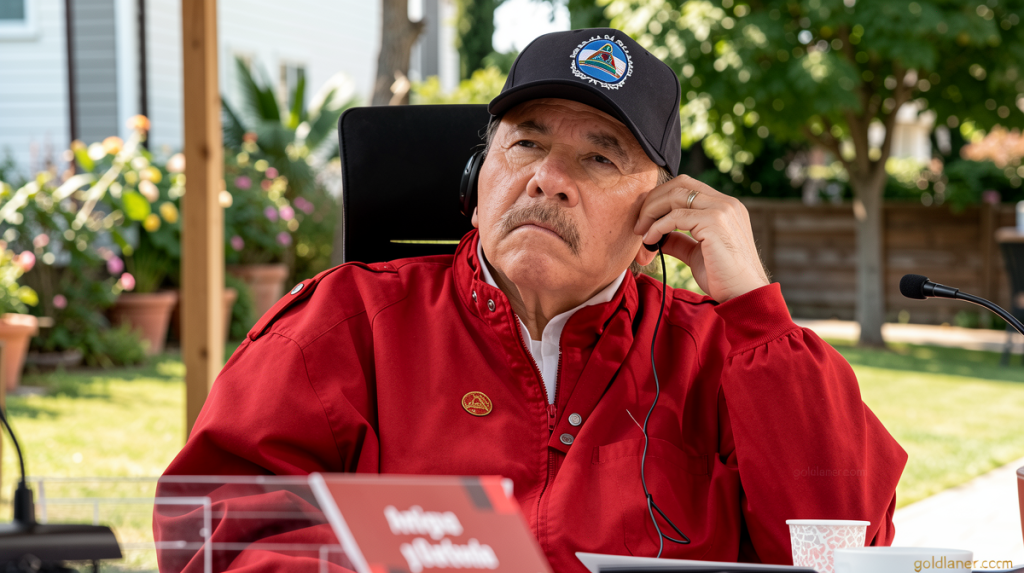
Nicaragua’s Ortega Ends Elections After Two Decades
A New Era Without Democratic Competition
Goldlaner.com – Nicaragua s Ortega says never again to elections. President Daniel Ortega announced that Nicaragua will permanently stop holding elections, effectively removing any chance of electoral challenge when his term ends next year. This move strengthens the political control Ortega shares with his wife, Rosario Murillo, who became co-president after constitutional changes last year.
Ortega has ruled continuously since 2007, following an earlier presidency in the 1980s. He stated this decision would close all paths for opposition groups to gain power. Though he gave few details on how this would work, the announcement marks a major change in Nicaragua’s political system.
“There won’t be any more elections here for them to try to seize the government and seize power,” Ortega declared during his address on Sunday evening.
The speech honored the 1979 Sandinista revolution, when Ortega helped overthrow the US-backed Somoza dictatorship. At age eighty, making his first public appearance in two months, Ortega emphasized that the period of foreign-backed parties returning to power had definitively ended.
“The days when parties backed by the Yankees (United States) and the Somocistas would return to power are over – never again,” he added with conviction.
International Reaction and Political Changes
The Trump administration has labeled Ortega’s government a dictatorship and sanctioned over 2,350 Nicaraguan officials and their relatives. The US State Department did not immediately comment on the latest announcement.
Nicaragua’s most recent election in 2021 drew widespread criticism. Ortega detained many opponents and business leaders while criminalizing dissent. Observers noted significant irregularities and the systematic exclusion of opposition candidates from the electoral process.
Last year, Ortega strengthened his power through constitutional reforms. These amendments named his wife Rosario Murillo as “co-president” and extended the presidential term to six years. Together, Ortega and his wife now control virtually every aspect of government operations, including the armed forces and the judiciary.
Human Rights and Domestic Concerns
The UN Human Rights Council has formally accused Ortega and Murillo’s administration of transforming Nicaragua “into an authoritarian state” through systematic violations of human rights. These concerns gained particular urgency following the 2018 anti-government protests, which Ortega responded to with a severe crackdown resulting in more than 300 deaths.
“Ortega and Murillo are evidently afraid at the idea that the slightest political opening could create the conditions for dissent to manifest and threaten their grip on power,” said Tiziano Breda, a senior analyst at Armed Conflict Location & Event Data, a nonprofit organization tracking political violence.
Breda noted that rather than staging a rigged election, the leadership has chosen to eliminate electoral competition entirely. He described the country as having transformed into “a full-fledged, family-run dictatorship.”
Understanding the Motivation Behind the Decision
Felix Maradiaga, a presidential hopeful for the opposition who was imprisoned in Nicaragua from 2021 to 2023 before being expelled to the United States, interpreted Ortega’s comments differently than many observers. Maradiaga viewed the announcement less as an assertion of strength and more as “a confession of fear.”
“Ortega publicly acknowledged what has always been his true intention: to prevent his tyrannical project from being subjected to any form of democratic competition,” Maradiaga told Reuters.
According to Salvador Marenco, coordinator of the Costa Rica-based Nicaragua Nunca Más Human Rights Collective, Ortega had already effectively eliminated competition during his previous reelections in 2011, 2016, and 2021. The constitutional reforms of last year had essentially established a one-party system in a nation where opposition leaders no longer exist domestically, having been forced into exile.
Ortega, Marenco explained, is attempting “to avoid the risk of an electoral defeat, because he knows that the people reject him.”
Analysts and opposition politicians living in exile agree that the decision reflects genuine concern about losing power through democratic means rather than confidence in popular support.
