
Kenya Prepared for Ebola, but a Case Still Reached Nairobi
Goldlaner.com – Kenya prepared for Ebola It still became a stark warning after an infected traveler entered the country despite extensive screening and months of public-health planning. The man had traveled through the Democratic Republic of Congo and Uganda before arriving in Nairobi, where he was later isolated and diagnosed with Bundibugyo virus, a strain of Ebola.
The patient had lived in the Democratic Republic of Congo for seven years and had reportedly been unwell for several weeks. He traveled from eastern DRC through Uganda, arriving in Kenya by air on October 3. He died days after being admitted to Nairobi Hospital.
Kenyan authorities began tracing and monitoring people who may have had contact with him, including fellow travelers, relatives, medical staff and others involved in his movement after arrival.
A Route Through Three Countries
Health officials said the man left Beni in North Kivu, eastern DRC, by road for Kampala on October 2. The next day, he flew from Entebbe International Airport near Uganda’s capital to Nairobi. The journey took him through three countries in about 48 hours.
Uganda’s health ministry said he was screened before departure and had a normal temperature. Kenya’s health ministry said he underwent standard public-health screening at Jomo Kenyatta International Airport. He was not identified as a suspected Ebola patient at either airport.
It remains unclear what checks he received while crossing from the DRC into Uganda and when Ebola symptoms began. The World Health Organization said his initial illness may have been linked to another condition, while Ebola may have been contracted later as he sought care.
After landing in Nairobi, a relative and friend drove him directly to Nairobi Hospital. By then, he had fever, chills, severe fatigue, muscle pain and bleeding beneath the skin. Hospital staff isolated him, and testing later confirmed Ebola.
Why Preparedness Could Not Remove Every Risk
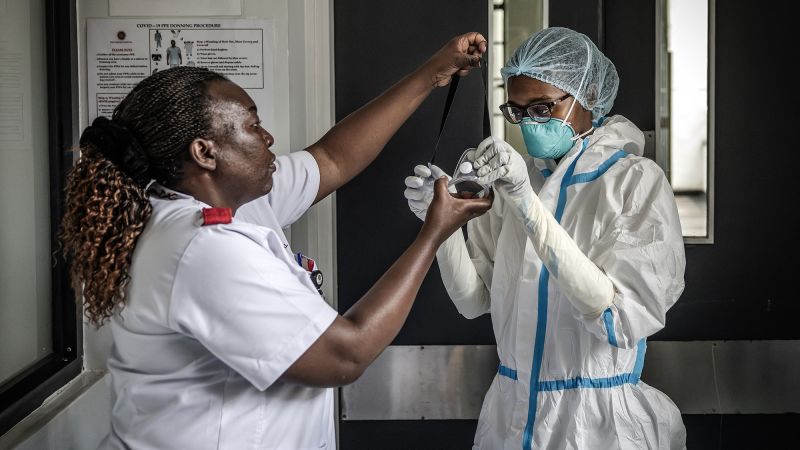
Kenya prepared for Ebola It still faced a difficult reality: border measures can reduce risk, but they cannot detect every infection. Kenya had screened hundreds of thousands of travelers and trained nearly 5,000 health workers as the outbreak in the DRC intensified.
Temperature screening and symptom checks can identify some people who are ill, but Ebola may not be obvious at every stage of infection. Fever, fatigue and muscle pain can also resemble symptoms of more common illnesses, making detection especially challenging when a traveler moves quickly between countries.
“Africa is an open field divided into countries by poorly manned porous borders.”
Oyewale Tomori, a former World Health Organization regional virologist for Africa, said the case should be seen as a warning that further cross-border infections may occur while transmission continues in the DRC.
“The Kenya case is a warning of more cases in the future.”
Pressure From the DRC Outbreak
The Ebola outbreak in the Democratic Republic of Congo is the largest ever recorded in the country. By Wednesday, the World Health Organization had counted 8,728 confirmed cases and 4,205 deaths across seven provinces. It considers the threat to countries sharing land borders with the DRC to be high.
Kenya is the fourth country to confirm Bundibugyo virus. Uganda previously reported 20 cases before declaring itself free of Ebola on July 28. France also recorded a travel-related case, although no further infections were identified there.
Uganda had temporarily restricted non-essential travel across its border with the DRC after most earlier cases were linked to imported infections. Following Kenya’s confirmation, Ugandan authorities said they were increasing surveillance and strengthening cross-border information sharing.
Cross-Border Surveillance Remains Essential
Kenya prepared for Ebola It still illustrates why airport checks alone cannot prevent every case. Travel for work, trade and family connections is common between eastern DRC and neighboring countries, while informal crossings can be difficult for authorities to monitor.
The International Organization for Migration has said screening at formal border posts and airports cannot identify every infected traveler, particularly before symptoms emerge. Strong local surveillance, rapid isolation, trained health workers and reliable communication between neighboring countries are therefore central to containing potential cases.
Frequently Asked Questions
What should people in Kenya do if they develop Ebola-like symptoms?
Anyone with fever, severe weakness, muscle pain, vomiting, diarrhea or unexplained bleeding should seek medical advice promptly, particularly after travel through an affected area or contact with a suspected case. They should avoid close contact with others while arranging care.
Can airport temperature checks stop Ebola from crossing borders?
They can help identify some travelers who are visibly ill, but they cannot detect every infection. A person may have no measurable fever during screening or may have symptoms that are difficult to distinguish from other illnesses.
Why does rapid reporting matter?
Early reporting allows health authorities to isolate suspected cases, test patients, trace contacts and reduce the chance of further transmission. Quick action is particularly important when people have traveled across several countries.