
Israel carries out strike targeting most senior Hamas military leader in Gaza
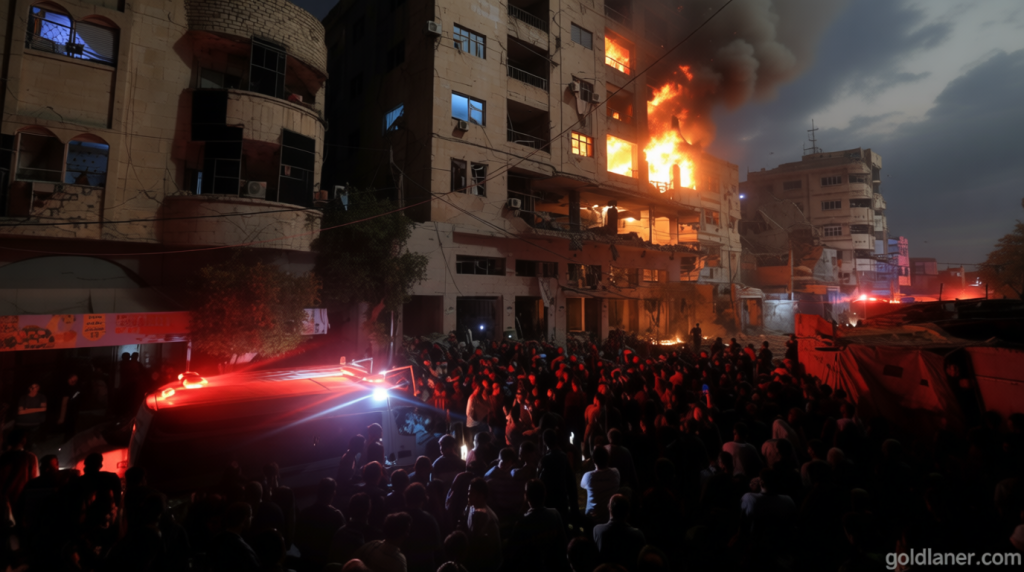
Israel Launches Strike Targeting Hamas’ Top Military Leader in Gaza
Israel carries out strike targeting most – Israel executed a targeted airstrike aimed at Hamas’ most senior military commander, Izz al-Din al-Haddad, as confirmed by Israeli officials. The operation, announced jointly by Prime Minister Benjamin Netanyahu and Defense Minister Israel Katz, marks a pivotal moment in the ongoing conflict. Al-Haddad, accused of orchestrating attacks on October 7, 2023, and of coordinating hostage detentions, was identified as a key figure in Hamas’ military strategy. The strike is part of Israel’s broader efforts to dismantle the organization’s leadership structure and reduce its threat to Israeli civilians.
Hamas’ Strategic Leadership Under Threat
Al-Haddad, known as the “Ghost of al-Qassam,” led the Izz al-Din al-Qassam Brigades, Hamas’ military wing, with a focus on covert operations. His elimination follows the deaths of other prominent Hamas figures, including Yahya Sinwar and Ahmed Jabari, highlighting Israel’s strategy of targeting leadership to weaken the group’s operational capacity. The attack occurred in the al-Rimal neighborhood near Gaza City, where emergency services reported one fatality and six injuries, underscoring the challenges of precision in densely populated areas.
The operation underscores Israel’s commitment to striking high-profile targets despite the ceasefire agreement. While the truce, brokered by the U.S., aims to reduce hostilities, Israel’s actions suggest ongoing vigilance. Officials emphasized that al-Haddad’s role in planning attacks justified the strike, even as the conflict remains fluid. The incident raises questions about the balance between military action and civilian protection under the ceasefire framework.
Continuity of Conflict Amid Ceasefire Agreements
Despite the ceasefire, Israel’s strike targeting Hamas leadership demonstrates the persistence of hostilities. The agreement, which includes provisions for Hamas to withdraw from areas under Israeli control, has not fully curbed the organization’s military activities. Israeli forces continue to justify their operations as necessary to counter threats, even as the region remains tense. Analysts note that the strike targeting al-Haddad could intensify pressure on Hamas to comply with the ceasefire terms.
A senior Israeli security official confirmed the strike’s success, citing initial evidence of al-Haddad’s elimination. However, Hamas has yet to publicly acknowledge the incident, leaving the outcome uncertain. CNN’s report on the strike targeting highlights the challenges of verifying high-profile eliminations in the conflict zone. The operation reflects Israel’s strategic focus on dismantling Hamas’ command structure to prevent future attacks.
Impact on Gaza’s Stability
The strike targeting al-Haddad adds to the growing toll of casualties in Gaza since the ceasefire began. Palestinian authorities reported over 850 deaths attributed to Israeli operations, signaling the humanitarian impact of the military campaign. While the goal is to neutralize Hamas’ leadership, the repeated strikes targeting key figures have strained the ceasefire’s credibility. This has prompted discussions about whether the agreement can sustain stability or if further violence is inevitable.
International observers, including the UN, have called for a clear plan to address Hamas’ military capabilities. Nickolay Mladenov, the former UN Special Coordinator, emphasized that Hamas must decommission weapons and step back from governance for lasting peace. The strike targeting al-Haddad aligns with these objectives, though its effectiveness depends on whether the organization can be pressured into compliance. The operation also highlights Israel’s determination to maintain pressure on Hamas even within the ceasefire framework.
Broader Implications for the Region
The assassination of al-Haddad reflects Israel’s strategic approach to targeting Hamas leadership as a means of disrupting the group’s command structure. With several key figures eliminated, the military aims to reduce Hamas’ capacity to plan and execute attacks. However, the strike targeting also underscores the ongoing volatility of the conflict, as both sides continue to assert their positions. Analysts suggest that Israel’s focus on striking leadership is part of a long-term effort to weaken Hamas’ influence in Gaza.
