
Arctic Waterways Become Vital Corridor for Sino-Russian Energy Trade
Goldlaner.com – As global maritime trade faces new disruptions from conflicts in the Middle East, an icy passage at the world’s northernmost reaches has emerged as a critical alternative for energy shipments. The Northern Sea Route, stretching 3,500 miles along Russia’s rugged Arctic coastline, is experiencing heightened activity as both Beijing and Moscow seek to strengthen their economic ties through this challenging waterway.
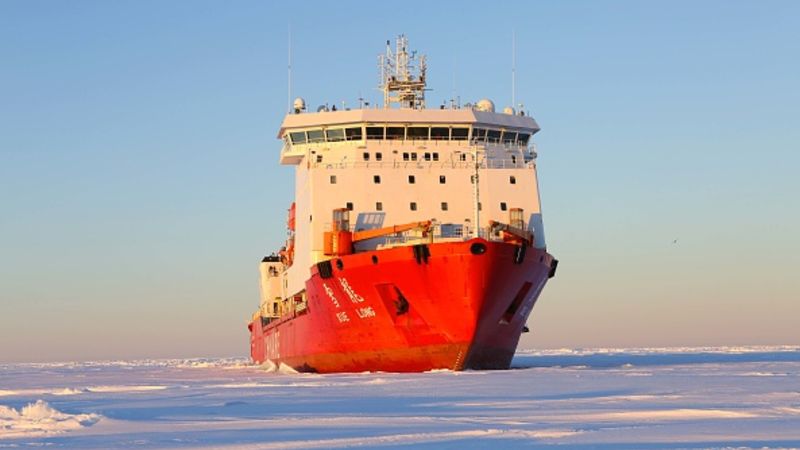
Heavy ice still clung to the surface when the massive Christophe de Margerie tanker began its seasonal voyage through these waters in late May. Before departing, the vessel made a stop at a port serving Arctic LNG-2, a liquefied natural gas facility located deep within the Russian Arctic that operates under United States sanctions. Guided primarily by an icebreaker through thousands of miles of frozen seas and the Bering Sea, the tanker completed its journey in approximately two weeks, arriving at the Kamchatka Peninsula in Russia’s Far East.
At this remote location, once a Soviet military settlement, satellite observations captured by CNN revealed the Christophe de Margerie positioning itself alongside a large floating storage platform. This arrangement is characteristic of ship-to-ship cargo operations. Data from Marine Traffic indicates the vessel discharged its sanctioned cargo before returning toward the Arctic region.
Sanctioned Fuel Finds New Pathways
The Northern Sea Route, controlled by Moscow and accessible without icebreakers only during a brief summer period, has become increasingly significant amid growing great-power competition in the Arctic region. Analysis of shipping information compiled by the Norway-based Centre for High North Logistics reveals that international traffic along this corridor since Russia’s comprehensive invasion of Ukraine has been largely dominated by commerce with a single nation: China.
This trade relationship strengthens Russia’s economy during wartime while simultaneously enhancing China’s energy security. Alongside these commercial exchanges, Chinese shipping operations in the region are expanding, raising Western concerns that Beijing’s growing presence could signal future military applications of the route.
Just one day after the Christophe de Margerie left the Kamchatka Peninsula, another US-sanctioned vessel, the Arctic Mulan, reached the entrance of the same bay. Tracking information shows the tanker remained in the area for several days before being guided alongside the identical floating storage unit. During this time, the vessel temporarily deactivated its tracking device for approximately twenty-four hours. Despite cloudy conditions limiting satellite visibility, the Arctic Mulan resumed transmission and began its journey toward China’s Beihai port, presumably carrying the Russian cargo.
A satellite photograph taken eleven days later appears to show the Arctic Mulan moored at the southern Chinese port. Charles Costerousse, a senior LNG analyst at trade intelligence firm Kpler, noted that the terminal has been designated specifically for receiving sanctioned Russian liquefied natural gas shipments since September of last year.
Strategic Vision Takes Shape
Shipping records indicate that the transfer operation involving these same vessels was repeated in July, highlighting how the Northern Sea Route has developed into an expedited channel for China to access American-sanctioned fuel supplies. With oil and gas tankers currently experiencing delays due to a US-led conflict in the Middle East, both nations are preparing for what could become a record-breaking season on this alternative shipping corridor.
For China, this period represents an opportunity to strengthen its position in a region where it has long sought greater influence as a self-proclaimed “near-Arctic state.” Melting ice conditions may eventually enable extended navigation seasons and additional routes over coming decades.
(China has) a huge frontier in front of them now,
stated Daisuke Harada, director general of the energy business unit at the government-backed Japan Organization for Metals and Energy Security, who possesses knowledge of both the Arctic LNG-2 development and Chinese activities in the region.
Russian President Vladimir Putin has maintained for years that this extensive Arctic passage could transform into a primary trade artery while stimulating investment in Russian ports and hydrocarbon fields. Recently, he has argued that trade interruptions caused by hostilities near the Red Sea and the Strait of Hormuz demonstrate that this seasonal route represents “the safest, the most reliable and efficient” option for maritime commerce.
Chinese leader Xi Jinping has similarly envisioned a “polar silk road” extending across the Arctic, creating an icy continuation of his signature Belt and Road infrastructure initiative. First proposed by Xi in 2018, this strategy aims to extend Chinese influence throughout the Arctic region, reaching from Russia toward Scandinavia and potentially further territories.
Despite ambitious projections, substantial Chinese investment in polar ports and supporting infrastructure has yet to fully materialize. Elevated expenses and challenging environmental conditions along the route have complicated Putin’s original vision, challenges that intensified after Russia’s military campaign against Ukraine prompted many international participants to withdraw from Arctic operations.
The current surge in activity along the Northern Sea Route suggests that both nations recognize the strategic value of this icy passage. As climate change continues to alter Arctic conditions and geopolitical tensions reshape global trade patterns, the route’s importance appears destined to grow in the years ahead.
Related Reading
Frequently Asked Questions
What is How an icy shipping route at?
How an icy shipping route at is the main topic of this guide. The article explains the context, practical details, and next steps readers should understand.
Why does How an icy shipping route at matter?
How an icy shipping route at matters because readers are looking for a useful answer, not just a short summary. Good content should match search intent and help them decide what to do next.