
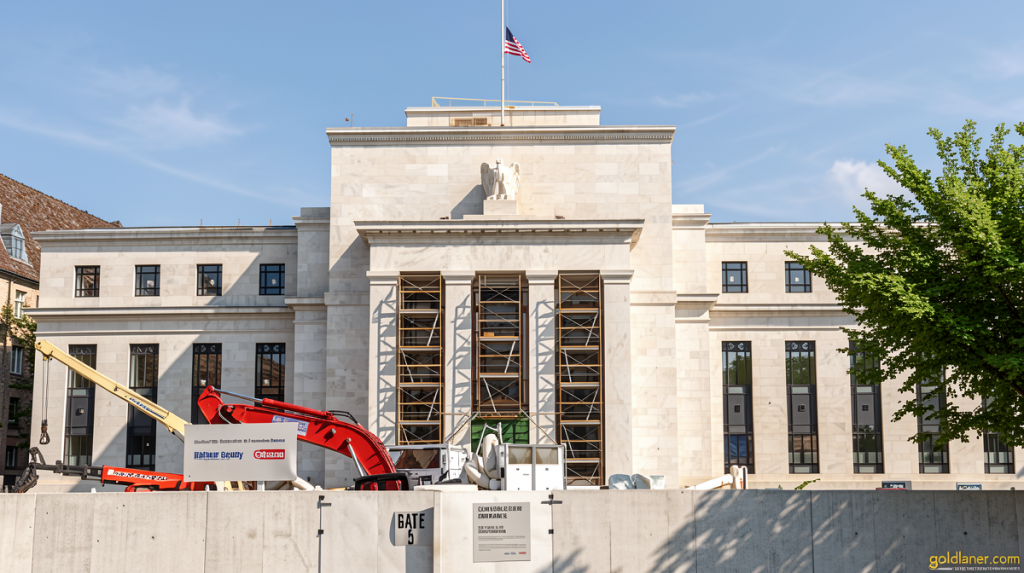
Global Bonds Sell Off as Middle East Conflict Escalates
Goldlaner.com – Global bonds sell off as Middle East tensions intensify, and the ripple effects reached every corner of the fixed-income world on Tuesday. Mortgage holders, auto borrowers, and corporate treasurers all felt the shock: yields across major sovereign markets jumped to levels unseen in decades, compressing the space for monetary easing and repricing the cost of borrowing overnight. The trigger was a compounding of geopolitical escalation, an energy-price spike, and renewed alarm over fiscal trajectories in several advanced economies.
Record Yields Across Every Major Sovereign Market
No single country bore the brunt of the move. Japan’s benchmark 10-year government bond yield broke through 3% for the first time since 1996, a threshold that would have struck many market participants as implausible just a few years earlier. On the other side of the Pacific, the United Kingdom’s 30-year gilt yield printed its highest reading since 1998, while Germany’s 10-year Bund touched its peak since 2011 and France’s counterpart reached its top since 2008. Collectively, these milestones reveal that investors are now demanding a materially larger premium to lock capital into long-dated sovereign paper.
In the United States, the 10-year Treasury note — the benchmark that anchors mortgage pricing, student-loan structures, and corporate borrowing costs — climbed to 4.79%, its highest print since January 2025. The 30-year Treasury, which reacts most acutely to geopolitical shocks and deficit anxieties, pushed to 5.27%. When yields move this sharply within a single session, the transmission into consumer credit costs accelerates almost immediately.
The Oil Channel and Warsh’s Jackson Hole Warning
The immediate catalyst was the escalation in the Middle East conflict, which sent energy prices higher. Brent crude, the global benchmark for seaborne oil trades, gained roughly 2% on Tuesday and traded above $92 per barrel. For central banks already wrestling with sticky inflation, a sustained oil uptick feeds directly into headline indices, complicates the policy calculus, and narrows the window for easing. Investors, anticipating that scenario, rotated out of longer-duration bonds into shorter-duration or cash positions, pushing yields higher in the process.
The anxiety was compounded by remarks from Federal Reserve Chairman Kevin Warsh at the annual Jackson Hole Economic Policy Symposium earlier in the week. Speaking on Friday, Warsh characterized the inflation outlook as
“concerning.”
That single adjective, delivered by the chair of the world’s most influential central bank, was sufficient to reset probability estimates around the Fed’s upcoming policy meeting scheduled for September 15–16. Traders began pricing in a meaningful chance of a rate hike rather than a pause or cut, and the repricing propagated through the entire yield curve within hours.
Fiscal Deficits: The Structural Undercurrent
Geopolitics and energy shocks are acute triggers, but the deeper structural worry beneath this week’s rout is fiscal. The United States national debt surpassed a record $40 trillion in August, sharpening investor scrutiny of America’s long-run borrowing trajectory. When the supply of government debt grows faster than the appetite to absorb it, holders demand a higher yield to compensate for perceived credit and inflation risk. This is not an American-only problem: Japan, the United Kingdom, and France are all managing expanding debt-to-GDP ratios, and investors in each market are insisting on higher rates to hold sovereign paper. The global bond market, in effect, is repricing the cost of government borrowing simultaneously across multiple currencies.
Equities and the Road Ahead
Stocks did not escape the contagion. Tuesday morning saw the S&P 500 slip 0.6% and the Nasdaq Composite fall 1% as the yield spike compressed equity valuations and raised the discount rate applied to future earnings. When risk-free rates jump, the present value of long-duration growth stocks falls, and sector rotation accelerates toward shorter-duration, higher-dividend names.
The sell-off arrives at an awkward moment for policymakers. Finance ministers and central bank governors from G20 nations are convening in Asheville, North Carolina, this week — a gathering now conducted against the backdrop of a global bond rout rather than a calm macro environment. How the G20 responds, and whether the Fed’s September meeting delivers a hike, will determine whether this episode remains a sharp but contained shock or evolves into a sustained repricing of sovereign risk.
Frequently Asked Questions
Why did global bond yields spike on Tuesday?
The move was driven by three converging factors: an escalation in the Middle East conflict that lifted oil prices, Fed Chair Kevin Warsh’s characterization of inflation as “concerning” at Jackson Hole, and renewed investor alarm over the U.S. national debt surpassing $40 trillion. Together, these pushed yields to multi-decade highs across the U.S., Japan, the UK, Germany, and France.
What does a bond sell-off mean for everyday borrowers?
Higher sovereign yields feed directly into mortgage rates, auto-loan pricing, and corporate borrowing costs. A sustained yield spike makes new loans more expensive and can increase payments on variable-rate debt. The transmission is fastest for floating-rate instruments and slowest for fixed-rate mortgages already locked in.
When is the next Federal Reserve policy meeting?
The Fed’s next scheduled policy meeting is September 15–16. Following Warsh’s Jackson Hole remarks, traders began pricing in a meaningful probability of a rate hike rather than a pause or cut, though no decision has been made.
How high did oil prices move?
Brent crude gained roughly 2% on Tuesday and traded above $92 per barrel. For central banks managing sticky inflation, a sustained uptick above that level would complicate the easing path and reinforce the bond-market repricing.