
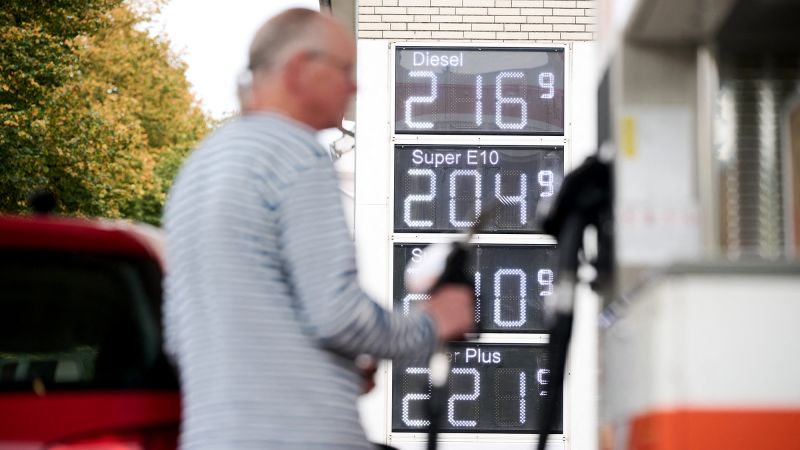
Europe bows to US pressure on diesel reserves
Goldlaner.com – Europe bows to US pressure to release diesel from emergency stockpiles as governments seek to ease sharply higher fuel costs ahead of November’s midterm elections. The coordinated action follows urgent discussions with Washington and concern that the United States could limit its own diesel exports.
President Donald Trump said European partners would make a large volume of stored diesel available and indicated that releases would begin immediately. The move came as European officials weighed the risk of tighter global supply against the need to preserve fuel reserves for a longer-lasting disruption.
“The process will begin immediately,” Trump wrote on Truth Social.
G7 countries prepare a coordinated release
France, which chaired a videoconference involving G7 leaders, announced the drawdown after the talks. The group said it would fulfill commitments to release 100 million barrels over four months, beginning immediately, with a substantial early diesel release by G7 members and partner countries during the first 20 days.
Europe bows to US pressure at a particularly sensitive moment for the fuel market. Diesel supports freight transport, farming equipment, rail services and commercial vehicles, and it is also used for heating in parts of Europe during colder weather. Higher diesel prices can therefore raise transport, food and household energy costs.
The United States is the world’s largest diesel exporter, giving Washington significant influence in a tight market. Trump has raised the possibility of restricting diesel exports to retain more supply at home and reduce domestic prices. For Europe, which imports more diesel than it exports, an export restriction could have created a serious supply risk.
Conflict and export limits tighten supplies
The pressure for a reserve release reflects disruptions during the eighth month of the US-Iran war. The conflict has interrupted the movement of crude oil and refined products from the Middle East, tightening global supply even in places where an outright physical shortage has not yet emerged.
European diesel prices have climbed to more than twice their level from before the US-Iran war began in late February. Russia also extended its diesel-export ban through the end of October after Ukrainian drone strikes affected refinery operations. China has indicated that restrictions on oil-product exports could become tighter, creating further uncertainty for buyers looking for alternative supplies.
US diesel prices have risen as well. Diesel exceeded $6 per gallon for the first time last month, while the national average stood at $6.40 per gallon Friday morning. Markets responded quickly to news of the coordinated release, with prices falling 5% on Friday.
“This is a time for a coordinated release of diesel stores as we go into harvest season, and we go into winter heating oil season. Now is the time to bring more diesel to the market,” Energy Secretary Chris Wright said Thursday.
Why emergency diesel stockpiles matter
Europe bows to US pressure while facing a difficult energy-security calculation. Releasing fuel can add supply to the market and help moderate prices in the near term, but emergency inventories are intended to protect countries during severe shortages. A prolonged disruption would make lower stockpiles more consequential.
European Union members are required to maintain oil inventories equal to 90 days of net imports. Those holdings can include crude oil, jet fuel, kerosene and diesel rather than a fixed diesel-only quantity. That flexibility is useful, although the amount of diesel that can be released promptly becomes especially important during a supply squeeze.
Richard Bronze, co-founder of Energy Aspects, said the United States’ position in the diesel trade means a US export ban would force other countries to compete for a smaller pool of supply. The reserve release may offer short-term relief, but it does not resolve the underlying supply disruptions.
Frequently asked questions
Why is diesel so important for Europe?
Diesel fuels trucks, agricultural machinery, trains and many commercial vehicles. It is also used for heating in some European areas, meaning higher prices can affect businesses, food costs and household energy bills.
What does the diesel reserve release involve?
The G7 and partner countries said they would release 100 million barrels over four months, starting immediately. The plan includes a significant early release of diesel during the first 20 days.
Will releasing reserves permanently lower diesel prices?
Releasing reserves can increase short-term supply and reduce immediate price pressure. Its longer-term effect depends on whether disruptions to crude oil and refined-product flows continue.