
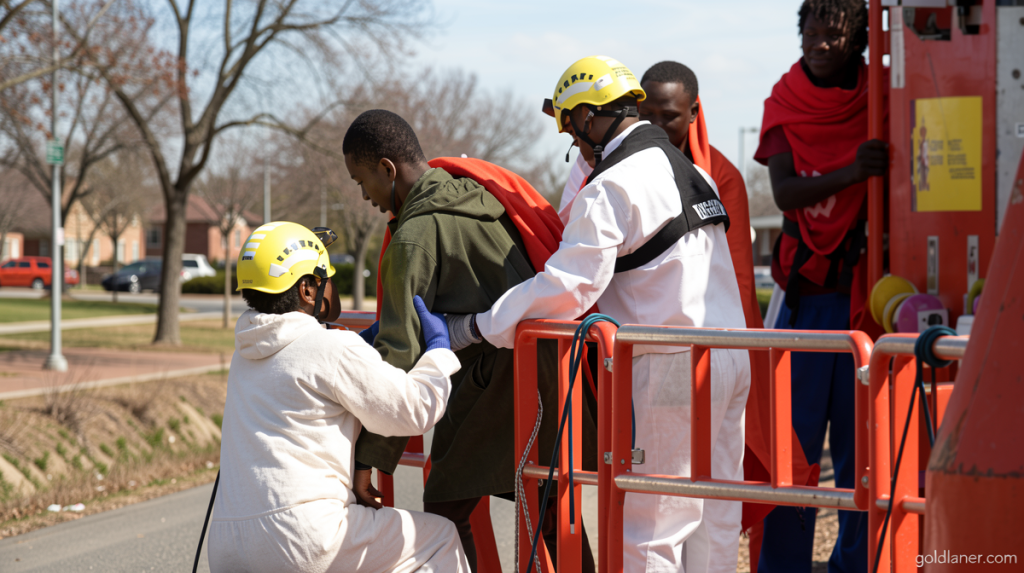
Over 80 Migrants Feared Dead After Vessel Drifts for Weeks Near Canary Islands
Goldlaner.com – A fragile, improvised boat that left the West African coast of Gambia roughly 27 days before Wednesday was discovered adrift in open Atlantic waters off the southern coast of Gran Canaria, with Spanish authorities and humanitarian groups confirming that the vast majority of those aboard have likely perished. Helena Maleno, director of the Spanish border-rights organization Caminando Fronteras, stated that 83 of the vessel’s estimated 127 passengers are believed dead, including four women and an infant. The survivors number 44, all men from sub-Saharan Africa, according to the maritime rescue authority that pulled them from the water.
The Rescue Operation
Spain’s Maritime Safety and Rescue Society, known by its acronym SASEMAR, located the drifting craft late Wednesday night approximately 65 nautical miles southwest of Arguineguín, a small coastal town on Gran Canaria’s southern shore. The agency described the vessel as a “makeshift boat” — a term that underscores how little structural integrity such crossings typically rely upon. Forty-four individuals were pulled from the water, three of whom were in critical condition and immediately airlifted to a nearby hospital for intensive care.
Five bodies could not be recovered from the scene. SASEMAR attributed the failure to adverse weather conditions that made retrieval operations unsafe. The agency also noted it could not verify the exact number of passengers who had boarded in Gambia, leaving the true death toll uncertain beyond the figure supplied by Caminando Fronteras.
Survivor Accounts
José Antonio Rodríguez Verona, a spokesperson for the Red Cross chapter operating in the Canaries, described the physical state of those brought ashore. The men — identified as originating from Mali or Senegal, with several still minors — arrived disoriented, severely dehydrated, and in visible distress. Many collapsed or vomited the moment they reached solid ground.
“They reported being stranded at sea for many, many days,” Rodríguez Verona said, adding that some survivors estimated the duration of their ordeal at nearly a month.
Provisions had long since been exhausted. Survivors described drinking seawater to stave off thirst, which in turn triggered illness. According to Rodríguez Verona, those who made it to shore recounted that the original complement exceeded 100 people and included women and a baby. The deceased, they said, were placed overboard one by one until the remaining passengers no longer possessed the physical strength to perform the task.
A Route Defined by Loss
The Atlantic corridor linking West Africa to the Canary Islands remains the single deadliest segment of the broader Africa-to-Europe migration pathway. Caminando Fronteras tallied 1,317 fatalities along all migration routes leading into Spain during the first five months of this year alone. Among those deaths were 142 women and 129 children. Nearly half of the total occurred on the oceanic leg terminating at the Canary archipelago — a stretch of water where vessels depart from Senegal, Gambia, Guinea-Bissau, and neighboring states, often without reliable navigation, adequate fuel, or sufficient food and water for the roughly 1,500-kilometer crossing.
The Canary Islands sit roughly 100 kilometers off the Mauritanian coast, making them the closest European territory to West Africa. That proximity has made the archipelago a primary destination for migrants seeking to reach mainland Europe, yet the open-ocean nature of the journey means that once a vessel loses power or takes on water, rescue windows narrow rapidly.
Political Fallout and Broader Pressure
Fernando Clavijo, president of the Canary Islands autonomous government, took to the social platform X to condemn what he called the ongoing normalization of Atlantic deaths.
“It is unbearable that lives continue to be lost,” Clavijo wrote, arguing that his government should not “normalize the face that the Atlantic continues to be a route of death.” He added: “We cannot continue managing migration from crisis to crisis. We are talking about lives and dignity.”
Clavijo’s remarks land amid mounting scrutiny of Spanish migration governance. Prime Minister Pedro Sánchez faces sustained domestic and European pressure following an estimated 72,000 people surging across the land border from Morocco into the Spanish enclave of Ceuta over two days in July. That episode triggered nationwide demonstrations across Spain and a sharp diplomatic confrontation between Madrid and Rome, which accused Spanish authorities of inadequate border management. The July crossing and now this maritime tragedy together frame a political debate in Spain over whether existing migration frameworks can absorb the scale of movement arriving from both North and West Africa.
For the families of those still missing at sea, and for the 44 men now receiving medical and humanitarian care in Gran Canaria, the question is no longer abstract. It is a question of accountability: who built the boat, who collected the passage fees, and whether the states that share responsibility for the waters between West Africa and Europe have done enough to ensure that the next vessel does not drift for weeks before anyone finds it.
Related Reading
Frequently Asked Questions
What is Dozens feared dead after migrant boat?
Dozens feared dead after migrant boat is the main topic of this guide. The article explains the context, practical details, and next steps readers should understand.
Why does Dozens feared dead after migrant boat matter?
Dozens feared dead after migrant boat matters because readers are looking for a useful answer, not just a short summary. Good content should match search intent and help them decide what to do next.