
Philippine Ferry Fire Death Toll Climbs as Identification Effort Begins
Goldlaner.com – Rescue teams in the Philippines have recovered 41 additional burned remains from the ferry devastated by fire near Coron, pushing the confirmed death toll to 76. Thirteen people were still unaccounted for on Saturday, while forensic personnel began the difficult work of establishing the identities of those who died.
The disaster unfolded near the end of a voyage lasting more than 20 hours. The vessel had been carrying over 130 people when flames broke out, turning a routine inter-island journey into one of the country’s latest deadly maritime emergencies.
Forensic teams face a difficult task
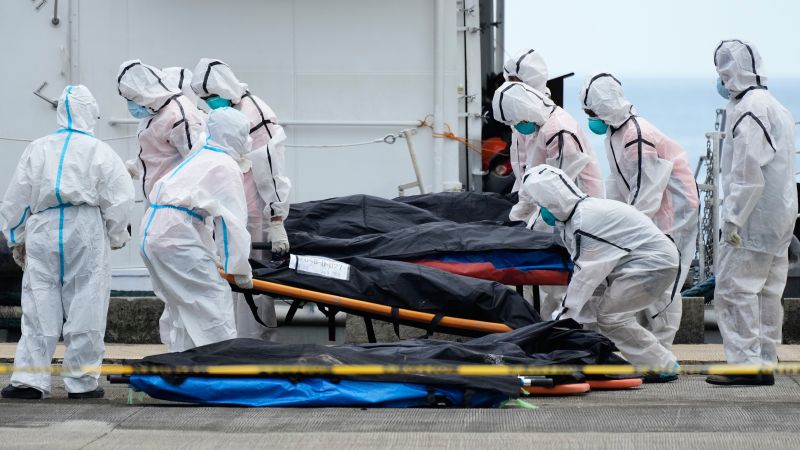
Thirty bodies recovered on Friday were transported to a port in Coron town, where temporary forensic tents were erected. Responders wearing protective clothing carried black body bags from a Philippine Coast Guard vessel into the processing area as relatives waited nearby for any information about missing family members.
Identification is now a central concern for authorities. The condition of the remains is expected to make that process especially challenging, leaving families in a painful period of uncertainty while officials work to confirm who survived, who died, and who may still be missing.
Among those waiting was 37-year-old Anelyn Magbanua. Her husband had been traveling back to Coron after visiting their children in Manila when the ferry caught fire.
“I hope he is not among the dead being brought off the ship. I hope he is alive and has only drifted to another island,” she said.
“It will be very difficult to accept if he’s really gone,” she said. “He loved his children very much.”
Her words reflect the uncertainty confronting many families as rescue and recovery operations continue. In an archipelago where sea crossings are an essential part of daily life, ferry accidents can leave relatives scattered across islands and dependent on incomplete early information.
Search of the vessel reveals severe destruction
Firefighters were able to enter the ferry for the first time on Friday, after bringing the blaze under control more than a day after it began. Thick smoke and extreme temperatures had prevented access to parts of the ship during the initial response.
Burned remains were located in the ferry’s economy accommodation area. Images released by the Coast Guard showed extensive damage within the vessel: metal bed frames had been warped by heat, ash covered the interior, and debris filled the passenger section. Some of the images appeared to show skeletal remains amid the wreckage.
The condition inside the ferry offers a stark indication of how rapidly passengers may have faced danger. A survivor speaking to GMA News described seeing a small amount of smoke that quickly became a fire, spreading through the vessel within seconds.
Survivor accounts have also focused attention on what happened immediately before the fire. The Maritime Industry Authority said that two explosions were heard inside the ship shortly before flames erupted. Determining whether those reports are connected to the cause of the blaze will be part of the investigation.
Cause of fire remains under investigation
Philippine Coast Guard official Geronimo Tuvilla said on Saturday that identifying victims and establishing how the fire began were the immediate priorities. Investigators will need to assess the damaged vessel, survivor testimony and any available operational records as they seek to reconstruct the sequence of events.
Questions also remain about the ferry captain. Coast Guard spokesperson Commodore Noemie Cayabyab said she had received information indicating that he was alive. However, his name did not appear on the list of 43 confirmed survivors at the time of the Saturday briefing.
The difference between the confirmed survivor list, the number of recovered victims and the number of people still missing underscores why authorities are continuing to verify passenger information. In the aftermath of a maritime disaster, early lists can require revision as people are located, identities are confirmed and witness accounts are checked.
A recurring danger for an island nation
The fire adds to a history of fatal maritime accidents in the Philippines, a country made up of more than 7,600 islands. Ferries and small boats are vital links between provinces, communities and major cities, carrying passengers who often have few practical alternatives for long-distance travel.
That dependence makes safety on passenger vessels a matter of broad public concern. Beyond the immediate recovery operation, the tragedy is likely to renew scrutiny of emergency readiness, fire prevention, evacuation procedures and the ability of crews and authorities to respond when an incident occurs far from shore.
For now, the focus in Coron remains on recovery, identification and the families waiting for answers. Each confirmed identity may bring painful certainty, while the continued search offers hope to relatives of the 13 people who had not yet been accounted for.
Related Reading
Frequently Asked Questions
What is Death toll in Philippine ferry fire?
Death toll in Philippine ferry fire is the main topic of this guide. The article explains the context, practical details, and next steps readers should understand.
Why does Death toll in Philippine ferry fire matter?
Death toll in Philippine ferry fire matters because readers are looking for a useful answer, not just a short summary. Good content should match search intent and help them decide what to do next.