
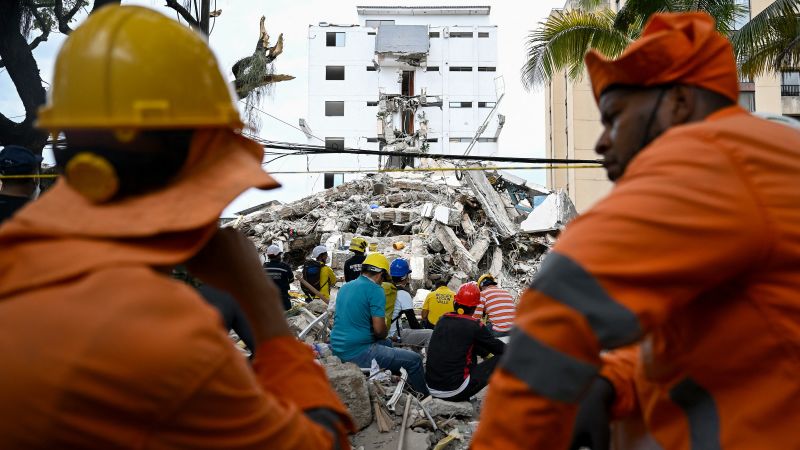
Colombia Restricts Rescue Team Acceptance as Earthquake Recovery Efforts Intensify
Survival Window Narrows Amid Diplomatic Hesitation
Goldlaner.com – Colombia’s emergency response operations have entered a critical phase following the devastating 7.4 magnitude earthquake that struck the nation on Monday. With the crucial 72-hour survival window rapidly closing, the government’s decision to limit rescue team acceptance to just four nations has sparked both domestic and international discussion. The disaster has claimed at least 281 lives, while nearly 380 individuals remain unaccounted for across multiple departments.
The earthquake, described as the most severe to impact Colombia in several decades, caused widespread destruction to infrastructure including residential buildings, educational facilities, transportation networks, and aviation hubs. President Abelardo De la Espriella, who recently took office, faces one of his first major challenges as head of state. His administration’s selective approach to international assistance has surprised observers who expected broader acceptance of offers from neighboring nations.
Four Nations Selected for Rescue Operations
On Wednesday, David Tamayo Roldán, director of the National Unit for Disaster Risk Management, announced that rescue teams would be requested exclusively from the United States, El Salvador, Ecuador, and Israel. According to the government’s assessment, these nations possess rescue personnel with both international and national certifications deemed necessary for the complex recovery operations ahead.
Our main efforts are focused on the missing, said President Abelardo De la Espriella in a statement late Wednesday, calling for unity.
The restriction has created confusion among potential contributors. Organizations such as Mexico’s renowned Topos Tlatelolco Rescue Brigade and various United Nations entities initially reported receiving no formal requests for assistance with search and rescue missions. The Topos brigade, which has extensive experience responding to major disasters worldwide, stated that Colombian authorities would not permit external rescue groups to enter affected areas, asserting that national rescuers could handle the situation independently.
Political Context Shapes Response Strategy
Political analyst Sandra Borda has connected the government’s cautious approach to the ongoing transition between administrations. She noted that the new leadership demonstrates what she characterizes as significant skepticism toward certain segments of the international community—a stance she finds challenging to comprehend given the scale of the disaster.
There was a perception from the beginning that the rescue teams would be sufficient, although a technical assessment was never made public to confirm that they would indeed be enough to deal with all the damage and destruction caused by the earthquake, she said.
Borda also highlighted the absence of clear procedural guidelines, suggesting that uncertainty about the proper channels for accepting international help contributed to the initial hesitation. The government has indicated it is compiling a comprehensive list of specific requirements to communicate to potential international partners through the United Nations Development Programme.
Foreign Minister Defends Selective Approach
Foreign Minister Omar Bula emphasized that Colombia has not categorically rejected any nation’s assistance offers. He clarified that the government’s cooperation extends beyond ideological or political considerations, maintaining that relationships with international partners remain strong regardless of the current selection criteria.
Mexican President Claudia Sheinbaum confirmed ongoing communications with Colombian officials regarding rescue operations. While expressing frustration that her country’s rescue brigade had not received approval to deploy, she noted that food and medical supplies were being transported via Hercules aircraft. Sheinbaum emphasized that Mexican rescuers remained prepared to depart at a moment’s notice.
We are sending, via Hercules planes, food supplies, medical supplies, and other things they’ve requested. But yes, just to clarify: the rescue brigade from the Secretariat of National Defense was not approved by the Government of Colombia, she said.
Local Challenges and International Solidarity
Within Colombia, emergency management officials have issued guidance to volunteers in heavily impacted cities like Cali and Pereira. Fire department authorities in Cali cautioned against unsolicited volunteers approaching damaged structures, citing adequate specialized personnel already engaged in recovery work.
Despite the rescue team restrictions, international solidarity continues to manifest through material aid. The Colombian Foreign Ministry celebrated the arrival of 19.5 tons of supplies from Mexico in Pereira, one of the hardest-hit urban centers. Additional shipments are anticipated in the coming days, with officials expressing confidence that the international community stands united with Colombia during this difficult period.
The earthquake’s timing presents particular challenges for Colombia, a nation situated along the Pacific Ring of Fire with a history of seismic activity. While the country has developed considerable expertise in earthquake response over the years, the combination of infrastructure vulnerabilities and the political transition has created a complex recovery landscape. As the 72-hour window for finding survivors in collapsed buildings narrows, the government’s approach to international assistance will continue to evolve based on operational needs and technical assessments.
Related Reading
Frequently Asked Questions
What is Colombia says it will only accept?
Colombia says it will only accept is the main topic of this guide. The article explains the context, practical details, and next steps readers should understand.
Why does Colombia says it will only accept matter?
Colombia says it will only accept matters because readers are looking for a useful answer, not just a short summary. Good content should match search intent and help them decide what to do next.