
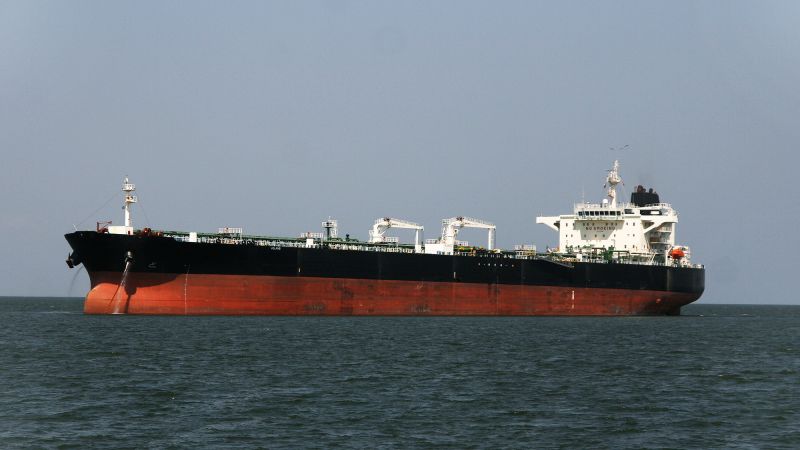
Chevron Commits $7 Billion to Venezuelan Oil, Targeting Production Doubling by 2031
Goldlaner.com – Chevron has formally committed seven billion dollars to expanding its operations in Venezuela, with the stated goal of lifting daily output from approximately 300,000 barrels to roughly 600,000 barrels within five years. The announcement marks the most significant American energy commitment to Venezuela in over a decade and positions the company as the sole major U.S. oil firm maintaining continuous operations in the country through multiple political upheavals.
The decision, long anticipated by industry observers, did not come without internal deliberation. Despite repeated pressure from President Donald Trump urging American energy firms to capitalize on the January removal of former President Nicolás Maduro, U.S. oil companies have remained cautious about committing fresh capital to a nation whose political landscape remains volatile. Chevron’s move stands apart from the broader American energy sector, which has largely stayed on the sidelines.
A Decade-Long Presence and a Deepened Stake
Chevron is the only major American oil company that has sustained an operational footprint in Venezuela across the past several decades. In April of this year, the firm increased its ownership share in its joint venture with Petróleos de Venezuela, S.A. (PDVSA), Venezuela’s state-owned petroleum entity, bringing its stake to 49 percent. That elevated position now underpins the company’s willingness to deploy multi-billion-dollar capital into new development programs.
The Venezuelan government has allocated fresh oil fields to Chevron within the Orinoco Belt, a vast sedimentary basin in the country’s eastern interior. The crude extracted there is notably heavy and viscous — a thick, tar-like material that many refineries along the U.S. Gulf Coast were originally engineered to process. According to Chevron’s own figures, production costs in these fields run below twenty dollars per barrel, a fraction of the roughly ninety dollars per barrel that American domestic crude is currently commanding in global markets.
Leadership Signals Confidence, but Warns Against Short-Term Expectations
Mike Wirth, Chevron’s chairman and chief executive, framed the expansion as a vote of confidence in the country’s geological endowment.
“Our expanded position reflects our confidence in the country’s deep resource potential,” Wirth stated. “This progress reflects the dedication of our Venezuelan employees and our long-standing focus on the responsible development of the country’s resources.”
Speaking on Bloomberg Television on Wednesday morning, however, Wirth tempered expectations about near-term market impact. He emphasized that the Venezuelan buildout operates on a multi-year timeline and should not be conflated with the abrupt supply shocks now rippling through global oil markets due to the ongoing conflict between the United States and Iran.
“These things work on different time cycles. Investment in growth in Venezuela will take years,” he cautioned. “The disruption in the Middle East is taking supply off very abruptly, and so that’s a very different thing.”
Why Other American Majors Stayed Away
The reluctance of other U.S. energy firms to re-enter Venezuela is rooted in painful institutional memory. In 2007, during then-President Hugo Chávez’s sweeping nationalization campaign, the government seized assets belonging to ConocoPhillips, ExxonMobil, and several other foreign operators, effectively expelling them from the country. Those seizures generated tens of billions of dollars in compensation claims that remain unresolved. For many firms, that episode created a durable scar tissue around Venezuelan investment decisions.
Interim President Delcy Rodríguez, who assumed leadership following Maduro’s ouster, has taken initial steps to reform the oil sector — a sector she herself once headed. Yet beyond Chevron, no American energy company has signaled a willingness to redirect capital toward Venezuelan operations.
Venezuela’s Production Trajectory and the Scale of the Challenge
National output has climbed during the current year to approximately 1.2 million barrels per day, up from roughly one million at the start of the year. That recovery, however, remains a small fraction of what the country once delivered. Before the socialist government assumed control in the late 1990s, Venezuela was producing around 3.5 million barrels daily. Decades of underinvestment, operational mismanagement, and sustained international sanctions have eroded infrastructure, expertise, and capital to the point where returning to anything resembling that historical peak would require a massive, sustained investment program spanning many years.
Luisa Palacios, former chair of Citgo and current managing director of Columbia University’s Center on Global Energy Policy, has underscored that the scale of capital needed to rehabilitate Venezuela’s oil sector dwarfs any single corporate commitment. The industry’s decline was not a single event but a compounding process of neglect and external pressure.
A U.S. Government Deal and the Sanctions Backdrop
Adding a layer of institutional reassurance, the Trump administration announced on Monday that the United States has entered an agreement to assume majority ownership in a joint oil venture with a Venezuelan energy company. The arrangement, while unusual in structure, is designed to give multinational operators a degree of governmental backing that may reduce perceived political risk and encourage longer-term capital deployment.
The sanctions architecture surrounding Venezuela has been in place since 2005. The first Trump administration, in 2019, effectively blocked all PDVSA crude exports destined for the United States. President Joe Biden subsequently granted Chevron a specific operating permit in 2022. Trump revoked that license in March of this year but later reissued it under the condition that no revenue flows to the Maduro-era government. Chevron’s current operations proceed under that reissued framework.
For Chevron, the convergence of a deepened ownership stake, newly assigned Orinoco Belt acreage, a favorable cost structure, and a U.S. government-backed joint venture creates a configuration that did not exist even a year ago. Whether the political environment remains stable long enough to realize the full six-hundred-thousand-barrel target by 2031 will depend on factors well beyond any single company’s control. What is clear is that no other American oil major has matched the commitment, leaving Chevron as the singular bridge between U.S. capital and Venezuela’s vast, underexploited hydrocarbon reserves.
Related Reading
Frequently Asked Questions
What is Chevron pledges to double its Venezuelan?
Chevron pledges to double its Venezuelan is the main topic of this guide. The article explains the context, practical details, and next steps readers should understand.
Why does Chevron pledges to double its Venezuelan matter?
Chevron pledges to double its Venezuelan matters because readers are looking for a useful answer, not just a short summary. Good content should match search intent and help them decide what to do next.