
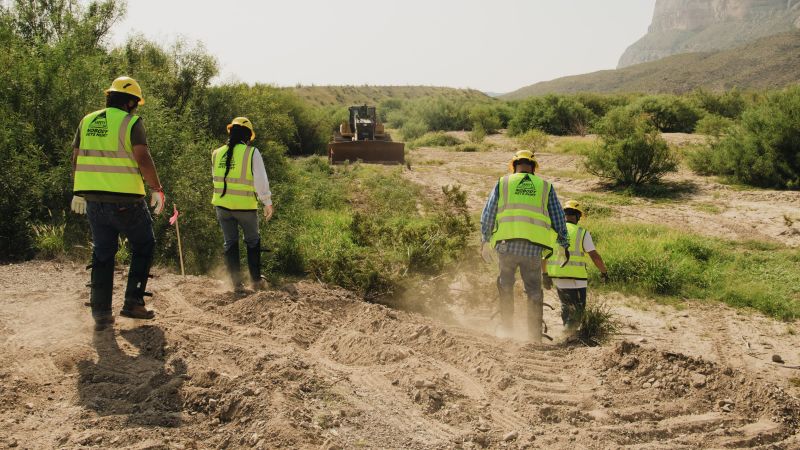
Environmental Concerns Mount as Construction Equipment Enters Big Bend National Park
Goldlaner.com – Heavy machinery has begun carving through one of America’s most pristine wilderness areas, sparking outrage among conservationists and local officials who view the region as naturally fortified against cross-border movement. The arrival of bulldozers in Big Bend National Park represents a dramatic shift in how the United States approaches its southern frontier, transforming a landscape long considered self-sufficient as a natural barrier into an active construction zone.
For decades, residents and park officials alike viewed the rugged terrain of West Texas as more than adequate protection. The combination of steep cliffs, mountain peaks, and harsh desert conditions created what locals describe as a divinely appointed boundary between nations. This perspective dominated discussions about border security for generations, with physical structures deemed unnecessary by many who called such ideas impractical.
A Remote Region Faces Unprecedented Change
The current construction effort targets an area that accounts for merely one percent of all unauthorized crossing apprehensions nationwide. Despite this relatively low traffic volume, the federal government has committed substantial resources to the project. Preliminary earth-moving operations are underway ahead of a $1.72 billion main construction initiative specifically designated for territory within the national park boundaries.
“We didn’t have to worry about any type of barrier. We had a God-made barrier,” said Sheriff Thaddeus Cleveland of Terrell County, a vast and sparsely populated area northeast of the park.
Cleveland, who dedicated twenty-six years to the US Border Patrol, noted that conversations about additional infrastructure were virtually nonexistent during his tenure in the region where he was raised. The transformation he observes now stands in stark contrast to the quiet decades that preceded it.
Legal Waivers Clear Path for Development
The groundwork for this expansion was laid in February when Kristi Noem, then serving as Secretary of Homeland Security, invoked emergency provisions to waive several federal statutes. These exemptions covered environmental safety standards, historic preservation requirements, and wildlife protection measures. The administration cited what it described as an acute and immediate necessity for constructing additional physical barriers and transportation routes throughout the Big Bend region.
While US Customs and Border Protection has clarified that the park will not receive the same thirty-foot-high barriers visible across portions of Arizona, California, New Mexico, and Texas, critics argue the planned modifications remain equally devastating to the landscape. Video footage captured earlier this month showed heavy equipment uprooting mature trees and displacing earth while wild animals moved past the disturbance.
Photographer Documents Growing Concerns
Natalie Newman traveled to Big Bend in February to capture images of the region’s natural splendor. What began as a documentation project focused on showcasing the area’s beauty has evolved into something more urgent. Standing near Santa Elena Canyon, where towering cliffs rise approximately fifteen hundred feet above the Rio Grande, Newman witnessed bulldozers operating within the park for the first time.
“It started out as just documenting the beauty of it, trying to get people to see why it’s special and what makes it special and what makes it so beautiful and worth protecting. But that has transformed just over the last week,” she told CNN.
Newman described feeling profound heartbreak as she watched the landscape change. The park, which exceeds the size of Rhode Island, offers visitors opportunities to encounter wildlife without crowds. She noted that one might see fewer javelinas—mammals resembling small wild pigs despite belonging to an entirely different species—than people in certain areas.
The Chihuahuan desert, encompassing both state and federal lands around Big Bend along with larger preserves across the international boundary, represents the largest such ecosystem in North America. Cacti and wildflowers carpet the terrain, creating a vibrant tapestry that Newman now monitors through her lens. Rather than tracking hundreds of bird species that inhabit the park, she has shifted her attention to road-clearing operations.
“More than anything else, I feel heartbreak over all of this,” she said.
Historical Parallels Drawn by Conservationists
Bob Krumenaker, a retired superintendent of the National Park Service, has characterized the entire initiative as fundamentally misguided. He warned that if construction proceeds as planned, the damage to Big Bend could eclipse the flooding of Hetch Hetchy Valley nearly a century ago—an event that fundamentally altered environmental preservation debates in the United States.
“If they continue with this and build most of the things they have talked about, or even a good fraction of those, this will be the biggest desecration of the national park system — not just Big Bend National Park — since they built a dam in a pristine valley in Yosemite National Park more than 100 years ago. This is a story that our children and grandchildren will be telling,” he told CNN.
The broader border strategy aims to complete the wall or an equivalent structure before the current administration concludes its term. This ambitious timeline encompasses steel walls, vehicle barriers, and hundreds of miles of new roads slicing through some of the most remote territories in the country. Opposition spans political lines, ranging from elected Republicans to young activists, and includes both pro-border control officials and retired park administrators.
Newman remains optimistic that intervention may yet occur. She continues sharing updates about the construction, hoping that someone will take meaningful action to halt the progress. Her daily hope is that the day will come when decisive measures stop the transformation of this ancient landscape.
The controversy surrounding Big Bend reflects larger questions about how the nation balances security priorities with environmental stewardship. As bulldozers continue their work, the region stands as a test case for whether America’s most treasured natural spaces can withstand unprecedented development pressures while fulfilling their role in national security strategy.
Related Reading
Frequently Asked Questions
What is Bulldozers rip into Big Bend National?
Bulldozers rip into Big Bend National is the main topic of this guide. The article explains the context, practical details, and next steps readers should understand.
Why does Bulldozers rip into Big Bend National matter?
Bulldozers rip into Big Bend National matters because readers are looking for a useful answer, not just a short summary. Good content should match search intent and help them decide what to do next.