
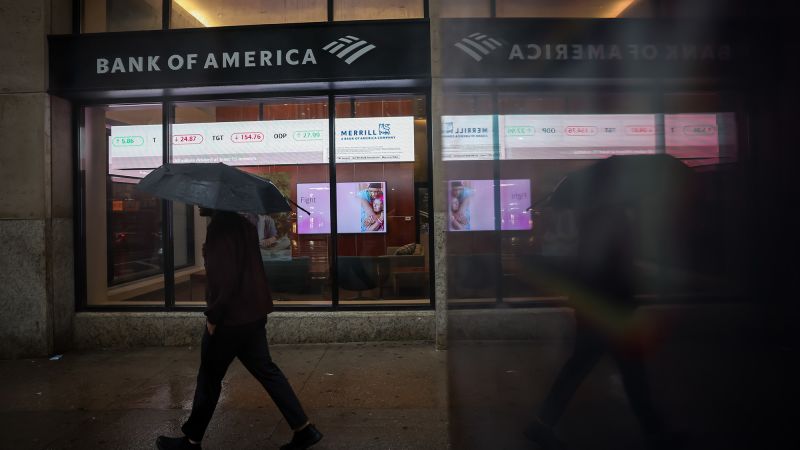
Bank of America Fined $1.2 Billion by Treasury
Goldlaner.com – Bank of America fined 1 2 billion is the central finding of a Treasury Department enforcement action over anti-money-laundering and sanctions compliance failures. The more than $1.2 billion penalty, announced Tuesday, is among the largest imposed by the Treasury Department’s Financial Crimes Enforcement Network, or FinCEN.
Treasury officials said the nation’s second-largest bank failed to adequately identify, address and report priority risks involving Chinese money-laundering networks and illegal financial activity connected to the southwest border. They warned that shortcomings at a bank of this scale can expose the broader US financial system to illicit-finance threats.
“When a bank of this size fails to meet its anti-money laundering and sanctions obligations, the consequences extend far beyond its own walls, exposing the entire U.S. financial system to significant illicit finance risks,” Treasury Secretary Scott Bessent said.
Record OCC Penalty Is Part of Settlement
The settlement includes a $750 million civil penalty for the Office of the Comptroller of the Currency. Treasury said that amount is the largest sanction in the OCC’s history.
Bank of America admitted it deliberately failed to maintain adequate safeguards and did not submit required suspicious-activity reports, according to the Treasury Department. The case focuses on weaknesses in systems intended to detect and escalate potentially illicit transactions.
Compliance employees had raised concerns about questionable customers, including people linked to narcotics trafficking, officials said. The bank did not respond quickly or effectively enough to those warnings.
Bank of America processed more than $9 trillion in transactions last year. Treasury said the failures left more than $5 billion in suspicious activity unreported. A suspicious-activity report does not establish that a crime occurred, but it can alert regulators and law-enforcement agencies to transactions that warrant review.
Sanctions Screening Problems
One issue involved the bank’s sanctions-screening filter. When a transaction matched both the name and date of birth of a person on a Treasury sanctions list, the system did not treat the potential match as high priority.
Those lists cover thousands of people and organizations, including terrorists, drug traffickers and sanctioned companies. US businesses and individuals are generally prohibited from conducting transactions with listed parties, and their assets may be frozen.
Treasury said the screening weaknesses affected US sanctions programs involving Iran and counter-narcotics enforcement. Bank of America fined 1 2 billion reflects the government’s view that these control failures required a major response.
How the Fine Compares
The penalty is FinCEN’s third-largest on record, following a $3.4 billion fine imposed on Binance in 2023 and a $1.3 billion penalty assessed against TD Bank in 2024. Unlike those cases, the Bank of America action does not include a related Justice Department case.
The action is also the largest anti-money-laundering punishment imposed on a major bank by the Treasury Department during the second Trump administration. It is separate from the administration’s attention to allegations of “debanking,” which concern claims that banks restricted customer accounts for political or other non-financial reasons.
The settlement instead centers on banks’ duty to detect money laundering, sanctions evasion, narcotics-related finance and other potentially suspicious activity. Financial institutions are expected to review alerts, investigate significant risks and make required reports to authorities.
Frequently Asked Questions
Why was Bank of America fined?
Bank of America fined 1 2 billion stems from Treasury allegations that the bank did not maintain adequate anti-money-laundering and sanctions controls and failed to file required reports involving suspicious activity.
Does a suspicious-activity report prove a crime?
No. Such a report does not prove criminal conduct. It gives regulators and law-enforcement agencies information about transactions that may need further scrutiny.
What agencies are involved?
The Treasury Department announced the action through FinCEN, and the settlement includes a record $750 million civil penalty for the Office of the Comptroller of the Currency.