
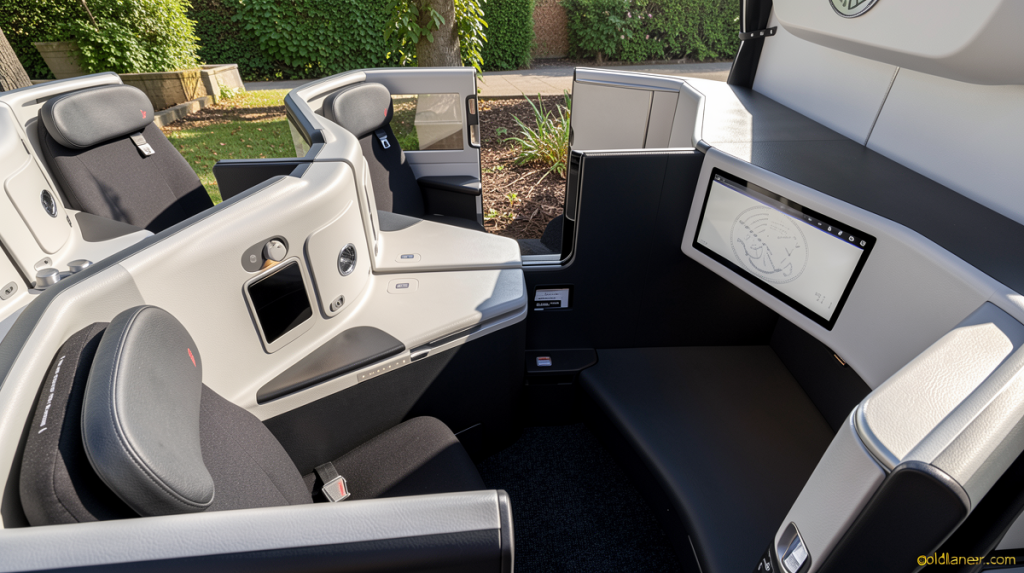
New Premium Airplane Seats Have a Growing Problem
Goldlaner.com – New premium airplane seats have become increasingly difficult to certify, creating a bottleneck that could leave luxury cabins empty. Passengers boarding modern aircraft may find themselves in rows of unoccupied business-class suites despite high demand for premium travel. This paradox stems from regulatory complexities that have grown alongside cabin innovation. As airlines invest billions in sophisticated seating configurations, flight certification timelines have extended significantly. The result is a situation where cutting-edge seats sit vacant while passengers wait for approval processes to catch up with design capabilities.
Why Certification Takes Longer
Industry experts estimate that certifying contemporary premium seats requires at least six additional months compared to pre-pandemic periods, when average lead times spanned one to two years. Ben Minicucci, Alaska Airlines’ chief executive, explained the timeline during a May discussion about introducing the carrier’s first business-class suites: “By the time you imagine it, design it, test it, get it certified, get it built — it is a lengthy three-year process.” He continued, noting that design approval occurred the previous year while manufacturers simultaneously aligned production capabilities. Compounding these challenges, airlines actively resist standardization efforts. Mark Hiller, Recaro’s chief executive, observed that industries experiencing growth typically pursue standardization for scalability. Airlines instead demand custom designs to differentiate themselves in competitive markets. “The interest and need for differentiation … are driving the demand and really lead to bottlenecks in the industry,” Hiller stated.
Safety Standards Tighten
Federal regulators have adopted stricter approaches to crash safety evaluations for custom seating arrangements. FAA Administrator Bryan Bedford informed The Wall Street Journal in May that premium seats frequently fail human factors impact tests. “We see premium seats that just don’t pass our human factors tests for impact,” Bedford explained. Privacy requirements significantly contribute to certification complications. Andrew Nocella, United Airlines’ chief commercial officer, noted the dramatic cabin evolution: “If you went back 10 years ago, there were very few walls in the business-class cabin and today there are a lot.” He added that cabin development has made certification considerably more complicated. United successfully navigated these regulatory challenges, launching updated Polaris suites featuring privacy doors on Boeing 787 aircraft less than twelve months after their 2025 unveiling. Nocella emphasized that close collaboration with safety inspectors and manufacturers enabled this accelerated timeline. For most carriers, however, each additional wall, elevated door mechanism, and technological component creates further testing requirements and documentation burdens.
“We see premium seats that just don’t pass our human factors tests for impact.” — FAA Administrator Bryan Bedford
What Passengers Can Expect
The premium seating bottleneck affects passengers globally, with delays potentially extending through 2027 and beyond. Airlines must balance innovation with certification realities, ensuring that technological advancement doesn’t outpace regulatory approval processes. As passenger expectations continue rising, the industry faces ongoing challenges in delivering the luxury experiences travelers desire. Major carriers including American Airlines, Lufthansa, Riyadh Air, and Singapore Airlines navigate lengthy multi-year approval procedures for custom cabin designs. The transformation of front-row seating began decades ago. When the McCallister family rushes toward their Paris flight in the 1990 movie “Home Alone,” parents wave children into coach before settling into first-class oversized recliners. This configuration remained standard until British Airways launched the world’s inaugural lie-flat seat in 2000. Today’s premium cabins resemble high-tech apartments. Lufthansa’s Allegris suites and Swiss’ Senses represent comprehensive long-haul cabin overhauls. Both feature seat heating, cooling capabilities, and individual climate controls. However, each additional amenity introduces new regulatory requirements, contributing to extended deployment timelines.
Frequently Asked Questions
How long does it take to certify new premium airplane seats? Certification now requires at least six additional months compared to pre-pandemic periods, with total timelines spanning three years or more from design to deployment.
Why are premium seats sometimes empty on flights? Regulatory delays mean airlines cannot immediately fill newly designed cabins. Seats may remain unoccupied until certification is complete and the aircraft enters service.
What safety tests do premium seats need to pass? Premium seats must pass human factors impact tests, which evaluate how passengers interact with the seats during crash scenarios. Privacy doors and additional walls add complexity to these evaluations.
When will certification delays improve? Industry experts project that bottlenecks could extend through 2027 and beyond as airlines work to balance innovation with regulatory approval processes.