
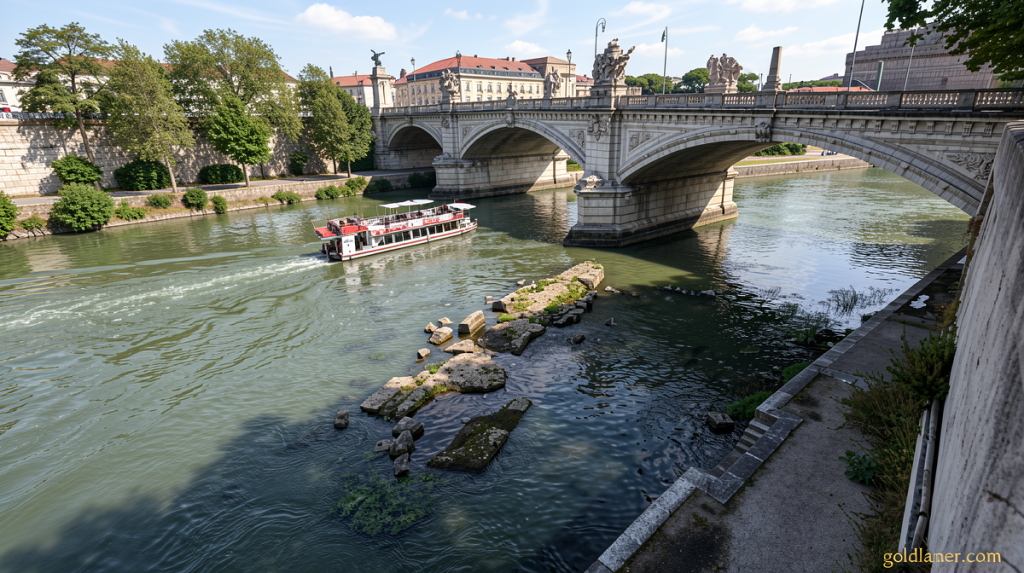
Nero’s Bridge Revealed as Rome’s Tiber River Hits Historic Low Levels
Goldlaner.com – Low water in Rome s drought has transformed the Tiber River into an open-air archaeological site, revealing ancient structures that have remained hidden for centuries. Visitors and locals alike are marveling at the exposed stonework of Nero’s Bridge, a monumental structure that has stood for nearly two thousand years. The dramatic drop in river levels has created conditions rarely witnessed in recent decades, offering unprecedented access to one of Rome’s most significant historical treasures.
Unprecedented River Levels Expose Ancient Heritage
The Tiber River, which originates from mountain streams in the northern Apennines, has experienced a remarkable decline in its flow rate. Current measurements show the river moving at less than 80 cubic meters per second—just half of the normal seasonal flow. This significant reduction has allowed the public to observe structures that typically remain submerged beneath the river’s surface.
We are facing a major water crisis. And it is a crisis that is also due to the fact that this winter we did have quite abundant rainfall, but then the dry periods … were quite long.
Giovanni Giganti, who coordinates civil protection efforts for Rome, explained the complex weather patterns contributing to the current situation.
While the region experienced generous precipitation during the winter months, subsequent extended periods without rain have depleted reservoirs and reduced river levels to concerning proportions. The exposed structure, known historically as Pons Neronianus, represents a fascinating intersection of imperial ambition and architectural innovation. Historical records suggest the bridge was originally constructed as a triumphal monument under Emperor Caligula around 39 AD, though it bears the name of his nephew Nero, who ruled from 54 to 68 AD.
Archaeological Discoveries and Tourism Impact
The bridge’s strategic location connected two of ancient Rome’s most important districts. On one side stood the Campus Martius, an area that today encompasses the Spanish Steps and the prestigious shopping district along Via Condotti. The opposite end reached the Circus of Nero, the stadium where Saint Peter met his martyrdom and where St. Peter’s Basilica now occupies the sacred ground. Tourists can best appreciate the exposed bridge from the Bridge of Angels, which provides access to Castel Sant’Angelo near Vatican City.
Archaeologists have seized this opportunity to conduct detailed examinations of the bridge’s construction techniques and structural integrity. The dramatic water level drop has produced unexpected discoveries beyond the ancient bridge. Further upstream, the receding waters have revealed a collection of modern debris including electric bicycles, motor scooters, household refrigerators, and even an automobile, creating a surreal juxtaposition of contemporary and ancient history.
This is not the first time such conditions have allowed public access to the bridge. A similar drought pattern in 2022 provided another window for observation, though the current exposure appears more extensive and has generated renewed interest from both scholars and visitors. Local businesses and tourism operators have adapted their offerings to accommodate visitors seeking this rare spectacle.
Frequently Asked Questions
When is the best time to visit Nero’s Bridge? The bridge is most accessible during drought periods when water levels drop significantly. The current exposure offers the best viewing opportunity from the Bridge of Angels near Vatican City.
How can I reach the exposed bridge? Visitors can access the bridge from the Bridge of Angels, which connects to Castel Sant’Angelo. The location is easily reachable by public transportation and is located near Vatican City.
What other discoveries have been made? Beyond the ancient bridge, archaeologists have found modern debris including electric bicycles, motor scooters, refrigerators, and even an automobile further upstream along the Tiber River.
Is this the first time the bridge has been exposed? No, a similar drought pattern in 2022 provided another window for observation, though the current exposure appears more extensive and has generated renewed interest from both scholars and visitors.
What causes the low water levels? According to Giovanni Giganti, civil protection coordinator for Rome, the crisis stems from extended dry periods following winter rainfall, depleting reservoirs and reducing river levels to concerning proportions.