
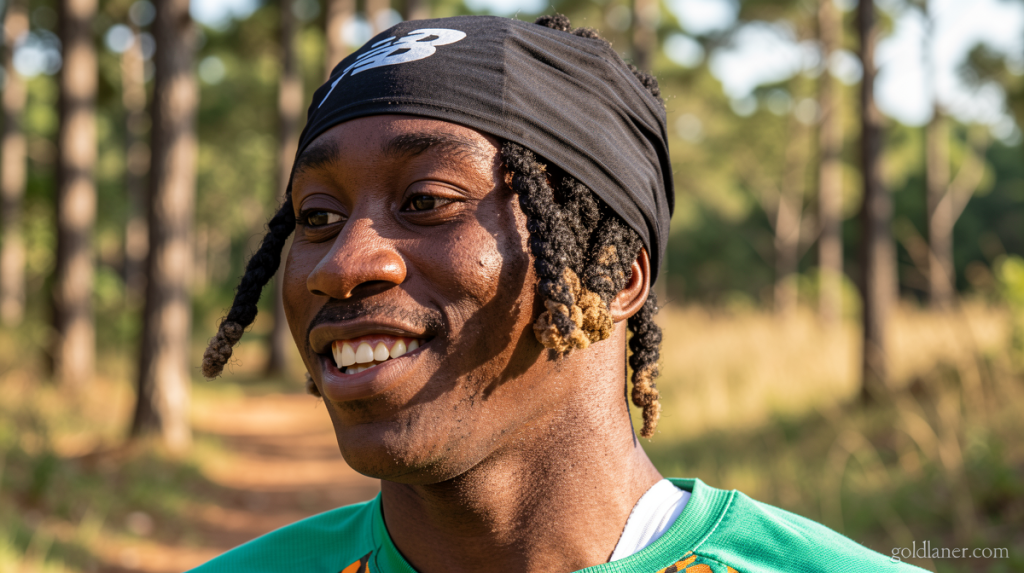
From Dirt Pitches in Abidjan to the Bernabéu: Yan Diomandé’s $144 Million Leap
Goldlaner.com – On Saturday, Real Madrid will take the field against Espanyol, and among the squad for the first time will be a 19-year-old Ivorian winger whose arrival has reshaped the transfer market’s understanding of African talent. Yan Diomandé, who completed a seven-year contract with the Spanish champions this summer for a reported $144.3 million, enters his debut season as the most expensive African footballer ever purchased and one of the largest individual deals in the sport’s history.
The figure alone would be staggering in any context. Set against the backdrop of a player who, barely four years ago, was still a teenager navigating a one-way flight from West Africa to Florida with nothing but a suitcase and a dream, the scale of the transaction becomes almost surreal. Diomandé’s trajectory compresses what most professionals spend a decade building into a handful of seasons, and it carries with it both extraordinary promise and a cautionary tale about the vulnerabilities of young athletes in a globalized industry.
A Childhood Built on Sand and Sandals
Diomandé was born in Abidjan, the commercial capital of Côte d’Ivoire, into a modest household where family bonds and community ties formed the bedrock of daily life. Soccer was not a later interest; it was the first language. As a small child, he could be spotted sprinting across unpaved fields wearing nothing but a pair of white sandals, chasing a ball with an intensity that neighbors found remarkable.
In a personal letter published through The Player’s Tribune, Diomandé recalled being given a nickname in his youth: a reference to Brazilian icon Roberto Carlos, bestowed because of the sheer force with which he struck the ball. Around him, friends and elders already sensed something unusual. He began training more formally with a local club, and it was not long before he was telling close companions that he would become the next Cristiano Ronaldo — a declaration that, in the context of a West African city where football is both religion and livelihood, carried the weight of genuine conviction.
The Ghana Tournament and the Flood of Agents
The inflection point arrived when Diomandé was fifteen. Selected to represent Côte d’Ivoire at an under-17 tournament in Ghana, he performed well enough to draw the attention of scouts operating across multiple continents. Overnight, a boy who had been playing in sandals became a commodity. Agents, coaches, and clubs from several countries moved simultaneously to secure his signature, each seeking a foothold in what they perceived as a once-in-a-generation asset.
What followed was a tangled web of partnerships and intermediaries stretching from Africa to North America. Through that convoluted arrangement, Diomandé was presented with an opportunity to join the DME Academy in Daytona Beach, Florida. The stated purpose was developmental: to immerse him in a professional training environment that would prepare him for top-flight competition. The unstated purpose, as is common in the industry’s handling of teenage prospects, was also protective — to remove him from the reach of competing agencies and clubs while he matured toward the age at which FIFA regulations permit a professional contract, namely eighteen.
Four Hours from Miami, and a Language Barrier
Diomandé left his family and his country on a one-way ticket. Waiting at the Miami airport was Todd Eason, then director of soccer at DME Academy and now general manager of Miami FC, a man who would become something of a surrogate father to a teenager being pulled in every direction by external forces.
“Because he only spoke French, our communication was very limited on our drive back from Miami, which was four hours away. We just exchanged little messages on Google Translate to try to get to know each other. But I also had other French-speaking players on the team, so it was kind of let me just hurry back to campus, let me introduce him to others that speak the language and try to get him comfortable there.”
The four-hour drive from airport to campus was, in effect, the first lesson in patience for both parties. Diomandé, a French-speaking teenager from Abidjan, and Eason, an American football administrator, communicated in fragments stitched together by a translation app. The isolation was temporary, but the adjustment was not trivial.
Development in Daytona: Six Sessions a Week
At DME Academy, a small cohort of players trained up to six times per week while simultaneously managing academic coursework. The structure gave Diomandé the space to absorb English, adapt to an entirely different cultural rhythm, and build relationships within the squad. He remained relatively reserved off the pitch but transformed the moment he stepped onto it.
Eason, who had previously assessed the teenager only through highlight footage, was caught off guard by what he witnessed in person. Speed was expected; tactical intelligence and composure were not.
“I assumed we just had another strong player, maybe a little sharper than some of the other players that we had. But I think once he touched the pitch and started playing, it was like, ‘Wait a minute.’ Once I saw him, it was like, ‘Man, this is a different level than what I have and this is going to be fun.’ To watch Diomandé play, it was just different in every way. I was very excited to have that opportunity and for the boys around him to be able to play with him because it was a considerable difference from the others.”
Under Eason’s guidance, Diomandé continued to refine both his technical repertoire and his personal maturity over the years he spent in the United States. The academy environment, for all its limitations, provided a structured runway that allowed raw ability to crystallize into something more disciplined and repeatable.
The Weight of the Transfer
The $144.3 million fee that brought Diomandé to Madrid places him in a rarefied tier of football economics. Few African-born players have ever commanded a price approaching that magnitude, and the deal underscores how the global scouting apparatus has narrowed the gap between emerging markets and European elite clubs. For Côte d’Ivoire, a nation whose football output has long been undervalued relative to its talent density, the transfer is a validation of a pipeline that once seemed invisible to the sport’s financial centers.
For Diomandé himself, the move represents the culmination of a journey that began on dirt fields in sandals and passed through a four-hour drive in a translation app, a small academy in Florida, and the quiet accumulation of skill over years of disciplined work. The Saturday against Espanyol will be his first chapter in white. What follows, if his development continues along its current arc, could rewrite the ceiling for African players in European football entirely.
Related Reading
Frequently Asked Questions
What is Meet teen superstar Yan Diomandé the most?
Meet teen superstar Yan Diomandé the most is the main topic of this guide. The article explains the context, practical details, and next steps readers should understand.
Why does Meet teen superstar Yan Diomandé the most matter?
Meet teen superstar Yan Diomandé the most matters because readers are looking for a useful answer, not just a short summary. Good content should match search intent and help them decide what to do next.